3 min read
Series · 17 partsStart with Part 1 →
Marks, tuition and the race for rank can turn a child into a project. This series by Dr. Aniruddha Malpani asks what Indian parents and teachers should measure instead, and how AI can help children become independent learners. The scenes with named families are fictional composites. Read the chapters in order, or jump to the one that matters most to you.
Rethinking the Indian Education Race
- A note to readers: Your Child Is Not a Marksheet is for parents, teachers, and anyone who believes education should help children become more capable, not merely more compliant.
- Introduction — Your Child Has Become a Project: Your Child Is Not a Marksheet examines how school routines and marks can turn childhood into a project.
- The Report Card Knows Too Little: examines why marks can miss important parts of a child’s learning.
- The Tuition Trap: examines how extra classes can sometimes reduce learning by replacing diagnosis, practice and rest with more hours.
Learning From Children’s Questions
- Curiosity Is Not a Distraction: This chapter explains how a child’s questions and interests can give formal learning a clear purpose.
- The Mother Tongue Is a Learning Superpower: This chapter explains how children can build strong understanding in a familiar language while gradually becoming confident in English.
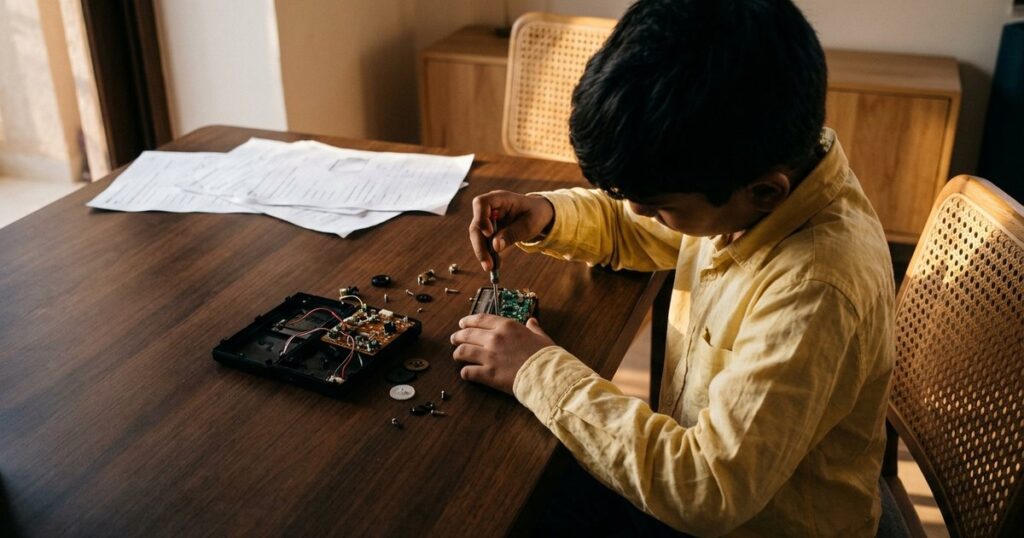
- Make, Mend, Sell, Serve: This chapter explains why practical work deserves the same respect as academic study.
- Different Children, Different Clocks: Different children develop skills at different times, even when they share a classroom and the same lesson.
Learning Beyond the Classroom
- The Best Teacher Is a Coach: This chapter explains why effective teaching depends on coaching, listening and helping children take responsibility for their understanding.
- The City Is a Campus: explains how neighbourhoods, public spaces and mixed-age groups can support meaningful learning beyond school.
- Exams Are Tickets, Not Life Sentences: This chapter explains how exams can support education without becoming a child’s definition of success.
Using AI Without Outsourcing Thought
- Give Every Child an AI Learning Companion: This chapter explains how AI can support children’s learning without replacing their thinking.
- Measure What Matters: This chapter explains how learning dashboards can show genuine growth instead of turning activity into anxiety.
- Start Small—and Demand Evidence: This chapter explains how to test education ideas through small, measured experiments instead of dramatic promises.
Putting the Ideas Into Practice
- Epilogue — A Letter to the Worried Indian Parent: This letter addresses Indian parents worried about their child’s future, education and competition.
- The 30-Day Family Learning Experiment: offers a month-long way to observe learning, practise foundational skills, use real-world tasks and review progress.
- Sources and Acknowledgments: This chapter lists the books, studies, policies, programmes and organisations that informed Your Child Is Not a Marksheet.
Dr. Aniruddha Malpani