Part 11 of 17 in Your Child Is Not a Marksheet← Part 10Part 12 →
This chapter explains how exams can support education without becoming a child’s definition of success. It helps families prepare for entrance tests while also developing practical skills, reflection and evidence of learning.
- Entrance exams help institutions select applicants, but passing one does not guarantee broad competence or responsible citizenship.
- A failed exam does not establish a young person’s intellectual ceiling.
- Students should keep both an academic record and a learning portfolio showing work, improvement and reflection.
- Portfolios should use dated drafts, original data, explanations and independent verification because polished work can be misleading.
- Families considering open-learning routes should verify current requirements with NIOS and relevant education authorities.
Keep qualifications useful without making them the definition of success
A seventeen-year-old in Kota has been preparing for an entrance examination for two years. He can solve familiar patterns at astonishing speed. When a younger cousin asks him to explain why a bridge expands in summer, he knows the textbook term but struggles to give a convincing explanation. His family is proud of his discipline and anxious about his rank. He is becoming anxious about his own worth.
This is an illustrative composite, not a judgment about coaching students. Entrance tests perform a real function. When millions compete for scarce seats, institutions require some method of selection. Professional paths in medicine, engineering, law and other regulated fields cannot simply dispense with credentials. The answer is not to tell an Indian child that examinations are imaginary obstacles. They have consequences, and families are right to plan for them.
The mistake is more subtle: we confuse a ticket with the journey. A successful exam can open a door. It cannot guarantee that the person walking through it can work in a team, learn from failure, communicate with a patient, design a useful product or become a responsible citizen. Nor does one failed exam establish a young person’s intellectual ceiling.
I am not opposed to tests. Good low-stakes quizzes can strengthen memory and reveal gaps. Evidence on retrieval practice supports asking learners to recall information rather than merely rereading it. [2] But an examination designed to rank applicants has a different purpose from an assessment designed to help a child improve. We should not pretend that either does the other's job perfectly.
Every teenager should therefore maintain two records. The first is the conventional academic record needed for relevant examinations and applications. The second is a learning portfolio: things she has made, problems she has solved, writing she has improved, people she has helped, and reflections on mistakes she has corrected. A marksheet is easy to compare. A portfolio is better at showing the texture of competence.
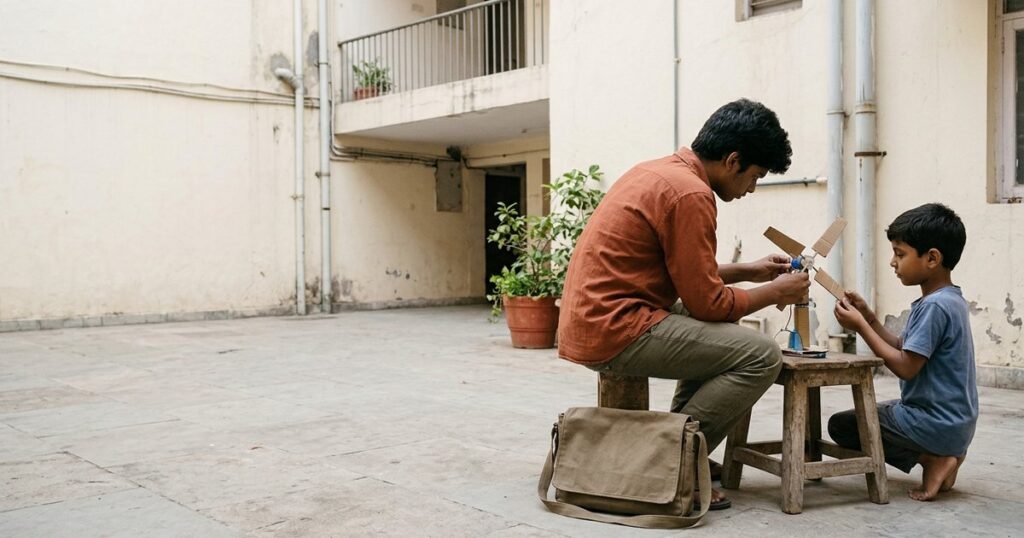
What belongs in that portfolio? A photograph of a repaired bicycle accompanied by an explanation of the fault. A graph based on actual household electricity readings. A short article revised after feedback. A video of the student teaching an idea to someone else—with consent. Code that another person can run. A letter from a community group that used the student's work. And importantly, evidence of the process: the failed first prototype, the abandoned hypothesis and the improved second attempt.
A portfolio can also be faked or beautified. AI makes that easier. Insist on dated drafts, original data, oral explanations and independent verification where appropriate. A glossy website is not evidence that the learner did the work. A simple notebook can be more honest.
Families interested in alternatives to conventional schooling should research the pathway before making irreversible decisions. India has recognized open-learning routes, including the National Institute of Open Schooling, whose official admissions guidance describes eligibility and course requirements for secondary studies. [9] The Right to Education framework and local administrative practices also matter for younger children. Parents should verify current rules with NIOS and the relevant education authorities rather than assuming every informal arrangement automatically provides an accepted credential.
Use AI this week. Prompt: “Help a Class X student make a two-track plan: board-exam preparation and a portfolio project on air pollution in our neighbourhood. Identify what must be memorized, what must be understood, and what can be demonstrated. Build in retrieval practice, rest and one independently checked output. Do not invent university admissions rules.”
A parent may still hope for a child to enter IIT, AIIMS or a prestigious university. That is a legitimate hope. But the child must know that her dignity is not conditional on admission. The exam is a gateway, not a measure of the entire human being.
Frequently asked questions
Why are exams important if they do not measure the whole person?
Entrance exams help institutions select applicants when many people compete for limited places. They can open a door, but they do not show every ability needed for work and citizenship.
What should a student include in a learning portfolio?
A portfolio can include projects made, problems solved, revised writing, people helped, corrected mistakes, original data, explanations and evidence of improvement.
How can families check if portfolio work is genuine?
Families can keep dated drafts, original data, oral explanations and independent verification where appropriate. A simple notebook may be more honest than a glossy website.
What should families know before choosing open schooling in India?
Families should research the pathway and verify current rules with NIOS and relevant education authorities. The chapter mentions NIOS and the Right to Education framework as relevant considerations.