Part 8 of 19 in Why Schools are Broken: and How to Fix Them← Part 7Part 9 →
This chapter examines how real work and apprenticeships can help adolescents learn practical skills while contributing to their families. It focuses on existing Indian apprenticeship models, their problems, and ways to improve recognition and conditions.
- Adolescents can learn through genuine workplace contributions rather than make-work projects inside school.
- India has informal apprenticeships in tailoring, carpentry, electrical work, cooking, beauty services, and small manufacturing.
- Many informal arrangements are exploitative and lack formal recognition, although the learning method can be effective.
- High-quality apprenticeships could combine earning with learning in digital skills, healthcare support, and renewable energy installation.
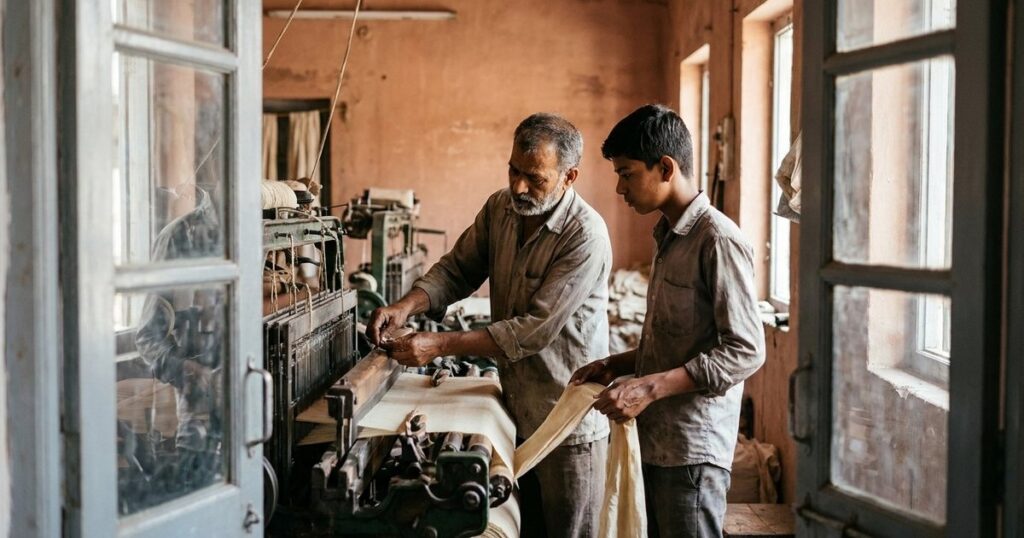
- Imran's work in a Surat textile workshop helped him learn production, earn a wage, and support his family.
One of Goodman’s strongest proposals was that adolescents should do real work. Not make-work projects inside school, but genuine contributions in workplaces. In India, this idea faces legal and cultural obstacles, yet it remains powerful.
Existing Indian Models
India already has informal apprenticeships in many trades: tailoring, carpentry, electrical work, cooking, beauty services, and small manufacturing. Young people learn by doing, under the eye of a skilled adult. These arrangements are often exploitative and lack formal recognition, but the learning method itself is sound. The challenge is to improve the conditions and the recognition without destroying the learning.
Formal apprenticeships under the Apprentices Act exist but reach only a small fraction of young people. Expanding high-quality apprenticeships, especially in emerging fields such as digital skills, healthcare support, and renewable energy installation, would give adolescents a path that combines earning with learning.
Story: A Workshop in Surat
In a small textile workshop in Surat, 17-year-old Imran works alongside experienced craftsmen. He started as a helper at 15. He now operates a machine and understands the production process. He earns a modest wage. He is learning faster than he ever did in school, and he is contributing to his family. His parents are proud, even if some relatives still ask why he did not continue to Class 12.
Frequently asked questions
What kinds of apprenticeships already exist in India?
Informal apprenticeships exist in tailoring, carpentry, electrical work, cooking, beauty services, and small manufacturing. Young people learn by doing under the supervision of a skilled adult.
What are the problems with informal apprenticeships in India?
They are often exploitative and lack formal recognition. The challenge is to improve their conditions and recognition without destroying the learning method.
How could apprenticeships help adolescents?
High-quality apprenticeships could give adolescents a path that combines earning with learning, including in digital skills, healthcare support, and renewable energy installation.
What did Imran learn through his apprenticeship in Surat?
Imran learned to operate a machine and understand the production process while earning a modest wage. He learned faster than he did in school and contributed to his family.