Part 9 of 16 in The Tuition Trap
This chapter examines how PhysicsWallah built trust through free teaching, focused exam preparation and accessible pricing, then expanded into a more complex online and offline business. It helps founders identify which parts of that model can be applied elsewhere without copying its surface features.
- PhysicsWallah connected free content, trusted teaching, community and clear examination goals.
- Its growth brought meaningful scale but also offline costs, including centres, staff and a reported loss.
- The model's original strengths included low customer acquisition costs, recognisable teachers, affordable prices and measurable outcomes.
- AI can improve search, doubt support, practice, teacher insight and translation, but unreliable or unclear content can damage trust.
- Founders should find a narrow problem where trust and demand already meet, then add costly services only when economics support them.
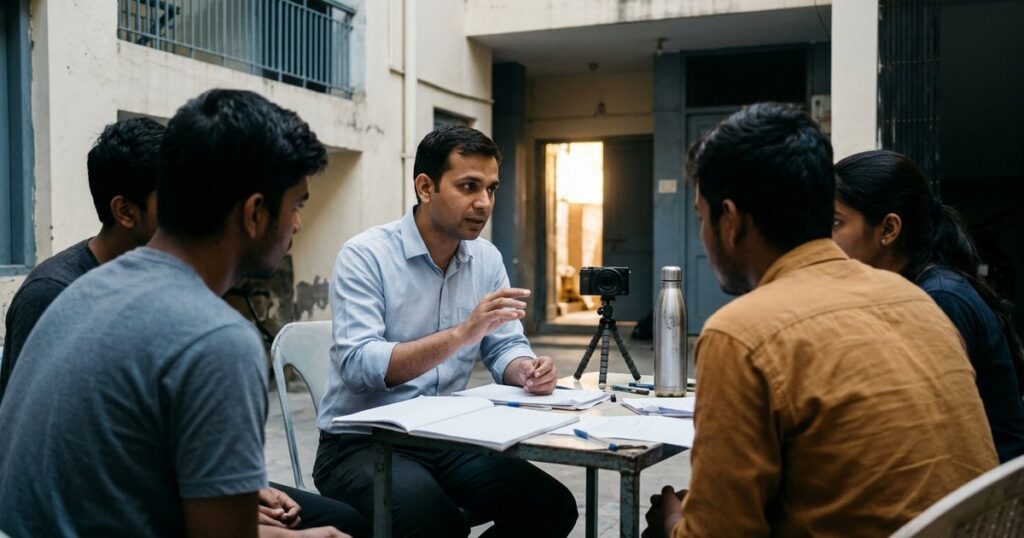
PhysicsWallah began with a teacher, a camera and a clear audience. That origin matters.
The company built trust through free lessons, focused on high-stakes examinations and charged relatively accessible prices for online products. It did not need to persuade parents that an unfamiliar category mattered; JEE and NEET already concentrated demand. The teacher's style and credibility provided distribution before large marketing budgets arrived.
This is a better starting structure than buying customers with fear and financing. It connects content, community and a measurable goal.
The company's 2025 prospectus also shows how quickly the model became operationally complex. Revenue from operations rose from about ₹744 crore in fiscal 2023 to about ₹2,887 crore in fiscal 2025. Online and offline revenue were nearly equal by fiscal 2025. The company reported 198 offline centres and about 3.3 lakh offline enrolments at the end of that year, alongside a loss of roughly ₹243 crore.
These numbers contain both a success and a warning.
The success is that an Indian education brand can combine low-priced digital reach with paid services at meaningful scale. The warning is that demand for physical support brings back the economics of real estate and people. Students do not live inside a pitch deck. Many want a timetable, peers, doubt support and an adult who notices their absence. Offline expansion meets that need, but it reduces the fantasy of software margins.
PhysicsWallah should not be turned into a morality play opposite Byju's. Companies change. Public-market pressure creates new incentives. Rapid category expansion, acquisitions and centre growth can dilute the original focus. The proper lesson is structural, not devotional.
The original engine had several advantages. Free YouTube content lowered customer acquisition cost. A recognisable teacher created trust. The examination category made outcomes legible. Affordable pricing expanded the addressable paying market. Community increased persistence.
AI can reinforce this engine. A lecture can be indexed so a learner jumps to the exact explanation needed. A doubt system can answer routine questions and escalate uncertain ones to a human. Practice can adapt to errors. Teachers can see which concepts confused a batch. Translation can widen access.
AI can also damage the engine if it floods the platform with mediocre content, impersonates faculty without clear consent, or gives unreliable answers under the brand's authority. Trust accumulates slowly and can be spent quickly.
For founders, the practical question is not, “How do we copy PhysicsWallah?” Copying the surface will produce another video platform with centres. The question is, “What is our narrow wedge where trust and demand already meet?” It might be nursing exam preparation in one language, remedial mathematics for low-fee schools, apprenticeship assessment for electricians, or teacher planning for multigrade classrooms.
Start where the problem is specific enough that a customer can recognise improvement. Earn organic distribution by being genuinely useful. Add expensive human service only when the customer values it and the unit economics can carry it.
Frugality is not spending less on everything. It is refusing to spend on activities that do not improve the product, distribution or evidence.
Frequently asked questions
What did PhysicsWallah get right?
It began with free lessons from a recognisable teacher, focused on JEE and NEET examinations, and offered relatively accessible prices. This connected content, community and a measurable goal.
Why did PhysicsWallah's offline expansion create a warning?
Offline centres met students' needs for timetables, peers, doubt support and adult attention. They also brought back the costs of real estate and people, reducing the expectation of software-like margins.
How can AI support PhysicsWallah's original model?
AI can index lectures, answer routine doubts, adapt practice to errors, show teachers which concepts confused students and widen access through translation. Unreliable answers or unclear faculty impersonation could damage trust.
What should founders copy from PhysicsWallah?
They should not copy its surface features. They should find a narrow problem where trust and demand already meet, provide genuine value, and add expensive human service only when customers value it and the economics support it.