Part 7 of 15 in Degrees Don’t Do the Job← Part 6Part 8 →
This chapter explains how parents can assess career options with their children when qualifications and technical apprenticeships are being considered. It helps families compare costs, learning, safety, supervision and future prospects using shared evidence.
- Compare routes by cost, earnings, learning, evidence and what happens if the plan fails.
- Include travel, accommodation, meals, equipment and foregone income when assessing an offer.
- Assess employers by supervision, complaints procedures, instruction, feedback and previous learners' experiences.
- Use review points and learning logs to replace repeated arguments with shared evidence.
- Consider transport, shifts, household work and safety, especially when daughters are making career decisions.
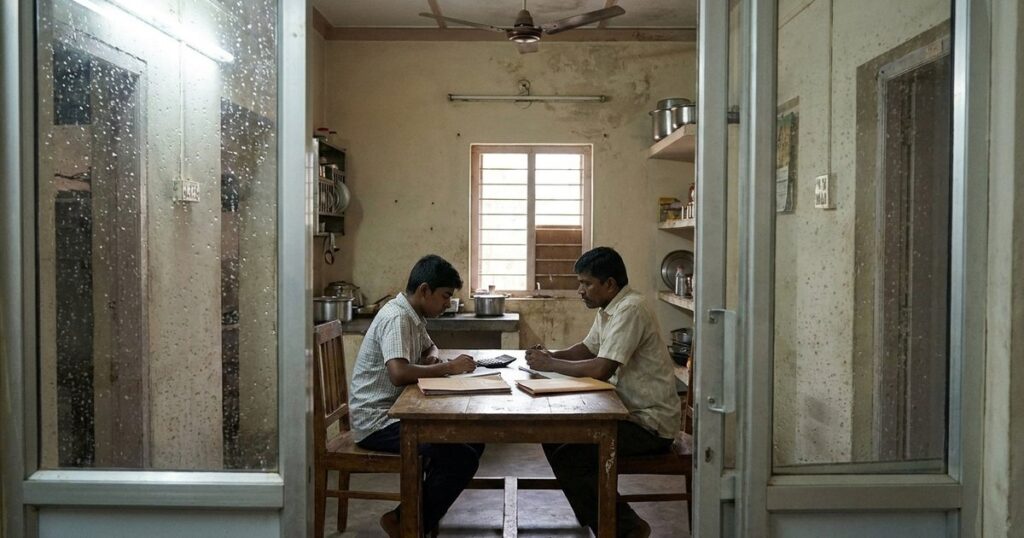
In a fictional household in Coimbatore, Arjun’s parents want him to pursue another qualification. He wants a technical apprenticeship. Their disagreement is partly about dignity and partly about risk. The family has limited savings, and an uncertain pathway can threaten everyone’s plans. Dismissing their concern as old-fashioned would be unhelpful.
Begin with a joint comparison. What will each route cost? When might earnings begin? What learning will occur? What evidence will be available? What happens if the route fails? Include travel, accommodation, meals, equipment and foregone income. A stipend that looks adequate on paper may leave little after rent.
Suppose, purely for illustration, an offer pays ₹12,000 monthly while travel and meals cost ₹3,000 and accommodation costs ₹5,000. Only ₹4,000 remains before other needs. These invented numbers are a budgeting exercise, not a statement of legal stipend rates or typical living costs. Replace them with actual quotations and the written offer.
The family should also ask whether Arjun can continue recognised education if he wants to. Apprenticeship and academic study need not be permanent opponents. The best route may combine practical development with foundations and a credential required for future progression.
Parents can help by assessing an employer’s conduct rather than relying on prestige. Visit where possible. Ask who supervises beginners, how complaints are handled and whether previous learners will speak candidly. Look for a timetable that includes instruction and feedback. A workplace that cannot explain how learning occurs deserves further scrutiny.
Agree on review points rather than daily interrogation. At the end of the first month, Arjun can show a learning log and explain one task. After the next review, the family can reconsider the budget and progress. This turns anxiety into shared evidence instead of a recurring argument about status.
For daughters, career decisions often include transport, shift timing, household work and personal safety in ways that families ignore for sons. Address these constraints directly. Restricting opportunity is not the only way to manage risk; reliable transport, appropriate facilities and accountable supervision can change what is feasible.
AI can help a family turn an offer into a list of questions and compare budgets. Remove personal identifiers first. Any interpretation of programme rules must be checked against official guidance and the actual agreement.
The most useful parental message is neither “Take any job” nor “Only a degree matters.” It is: we will examine the opportunity carefully, support serious effort and judge the route by learning, conditions and realistic prospects.
Frequently asked questions
How should parents compare an apprenticeship with another qualification?
They should compare costs, when earnings may begin, what learning will occur, what evidence will be available and what happens if the route fails. Travel, accommodation, meals, equipment and foregone income should be included.
What should families check before accepting an apprenticeship offer?
They should use actual quotations and the written offer, assess the employer's conduct, ask who supervises beginners and how complaints are handled, and look for instruction and feedback in the timetable.
Can an apprenticeship and academic study be combined?
They need not be permanent opponents. Families should ask whether recognised education can continue and whether the route combines practical development with foundations and a credential needed for future progression.
How can parents support daughters' career decisions safely?
Families should address transport, shift timing, household work and personal safety directly. Reliable transport, appropriate facilities and accountable supervision can help manage risk without restricting opportunity.