Part 6 of 19 in Why Schools are Broken: and How to Fix Them← Part 5Part 7 →
This chapter examines how weak schools and rigid age-based systems waste years for children from poor families. It helps readers understand why children may remain in school while learning little, and how this affects their families and opportunities.
- Poor children often attend the weakest schools and fall behind early.
- Rigid age-graded systems make it difficult for students to catch up.
- Families may keep children in school hoping certificates will improve their fortunes.
- Meena could learn practical skills, but school, law, and social pressure keep her in the classroom.
- Poorly resourced classrooms can replace opportunities to learn agriculture, animal husbandry, or entrepreneurship locally.
Goodman was especially concerned about poor children. For them, he argued, the mismatch between what schools offered and what they needed was greatest. The same is true in India. Children from poor families often attend the weakest schools. They fall behind early. Once behind, the rigid age-graded system makes it almost impossible to catch up. They remain in school for years, learning little, while their families continue to hope that a certificate will somehow change their fortunes.
Story: Meena in a Rural School
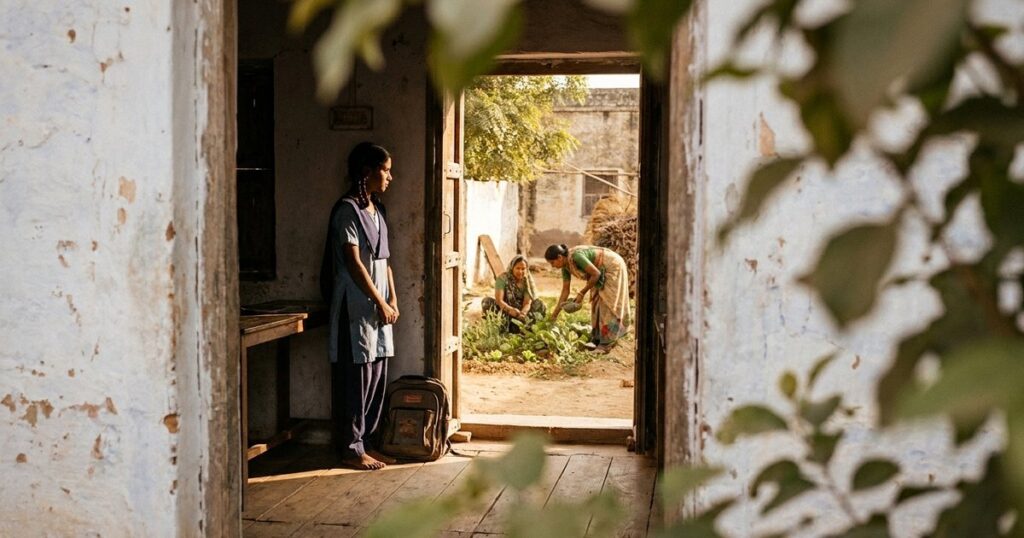
Meena is 11. She lives in a village in Rajasthan. She walks two kilometres to school. The school has two teachers for five classes. Meena can read simple sentences but struggles with comprehension. Her mother wants her to stay in school because she herself never went beyond Class 5 and believes education is the only way out of poverty. Meena herself would prefer to help her mother with the family’s small vegetable patch and learn practical skills, but the law and social pressure keep her in the classroom.
For Meena, the years spent in a poorly resourced classroom are years of lost opportunity. She could be learning agriculture, animal husbandry, or basic entrepreneurship from people in her own village who actually practise these skills. Instead, she is being processed through a system designed for a different world.
Frequently asked questions
Why do poor children often fall behind in school?
They often attend the weakest schools and fall behind early. Rigid age-graded systems then make it almost impossible to catch up.
Why do families keep children in school when they learn little?
Families may continue hoping that a certificate will change their fortunes. Meena's mother believes education is the only way out of poverty.
What is Meena's situation in the rural school?
Meena is 11 and lives in a village in Rajasthan. She walks two kilometres to a school with two teachers for five classes, and she struggles with comprehension.
What practical skills could Meena learn instead?
She could learn agriculture, animal husbandry, or basic entrepreneurship from people in her village who practise these skills.