Part 4 of 7 in Righteously Wicked: How to Solve the Problems Nobody Owns← Part 3Part 5 →
This chapter applies George Pólya's four-step method for solving maths problems to air pollution. It helps readers think about pollution through clearer definitions, smaller problems, practical action and fair results.
- Pollution results from unmindful production and consumption, and doing less is part of the answer.
- Start with a smaller problem, such as one ward, one source and one winter.
- Treat crop residue as a resource, not waste, and involve every group holding part of the solution.
- Begin at home, then expand from wards and villages to districts and airsheds.
- A solution is incomplete if farmers alone pay for everyone's clean air.
Instead of inventing a new framework, Roshan reaches back to 1945 and George Pólya's classic maths book, How to Solve It. Pólya wrote four steps for students stuck on geometry problems. They turn out to work for smog too.
- Understand the problem. Restate it until it's right. Roshan's version: pollution is the result of unmindful production and consumption. Mass and energy are conserved, so if we make more, more comes out. Doing less is part of the answer. That's an uncomfortable sentence in a country chasing growth, and worth sitting with.
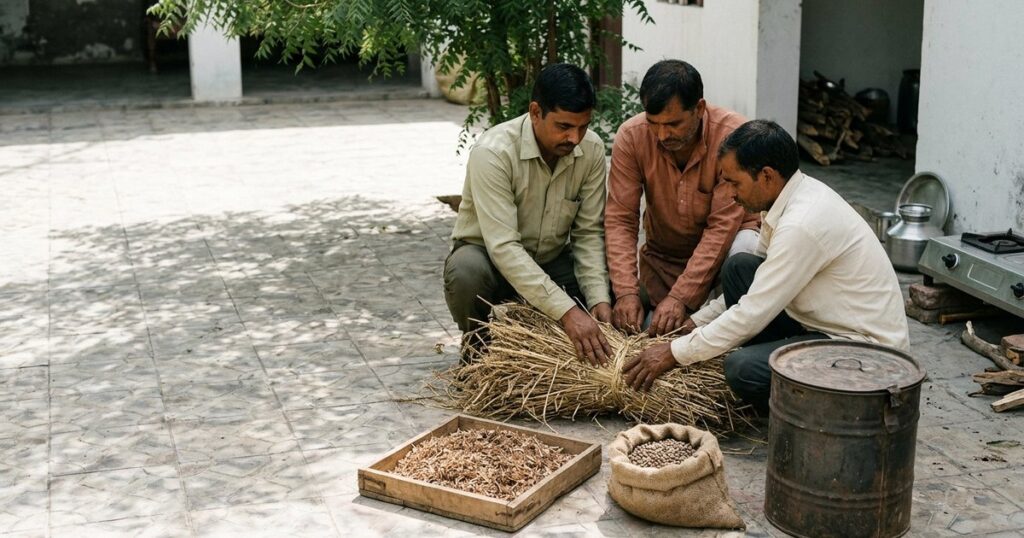
- Devise a plan. Solve a simpler problem first: one ward, one source, one winter. Use symmetry: a chulha, a brick kiln and a field fire are all the same incomplete burn. And treat crop residue as a resource (biochar, pellets, mulch), not waste. The state, the market, civil society, academia and the media each hold a piece.
- Carry out the plan. Have patience. Start small, start now. Begin with the home, then the ward and the village. Add them up to the district and the airshed. Work all year, not only in November.
- Look back. Who actually breathes easier? Who did the work, and who bore the cost? Roshan's line here is the moral core of the talk: if the farmer alone pays for everyone's clean air, the solution is not finished.
Frequently asked questions
How can George Pólya's method help solve air pollution?
Its four steps are to understand the problem, devise a plan, carry out the plan and look back. The chapter applies these steps to smog.
What is a simpler way to approach air pollution?
Start with one ward, one source and one winter. The chapter also compares a chulha, a brick kiln and a field fire as examples of incomplete burning.
How should crop residue be treated?
Crop residue should be treated as a resource, including for biochar, pellets and mulch, rather than as waste.
Who should pay for clean air?
The chapter says the solution is not finished if the farmer alone pays for everyone's clean air. It asks who did the work and who bore the cost.