Part 12 of 19 in The Patient Owner: Charlie Munger’s Ideas, as Rakesh Jhunjhunwala Might Have Taught Them to an Indian Investor← Part 11Part 13 →
This chapter explores the investment strategies of Rakesh Jhunjhunwala through the lens of Charlie Munger's principles. It examines eight businesses and three failed ventures, analyzing what could have been anticipated before market outcomes became clear.
- Titan Trust succeeded by offering organized jewelry with receipts and returns.
- Asian Paints built a moat with distribution density and dealer loyalty.
- HDFC Bank's culture of refusal was key to its underwriting success.
- Satyam's failure was due to incentive-driven concealment and related-party deals.
- Paytm's listing was overpriced despite India's digital growth.
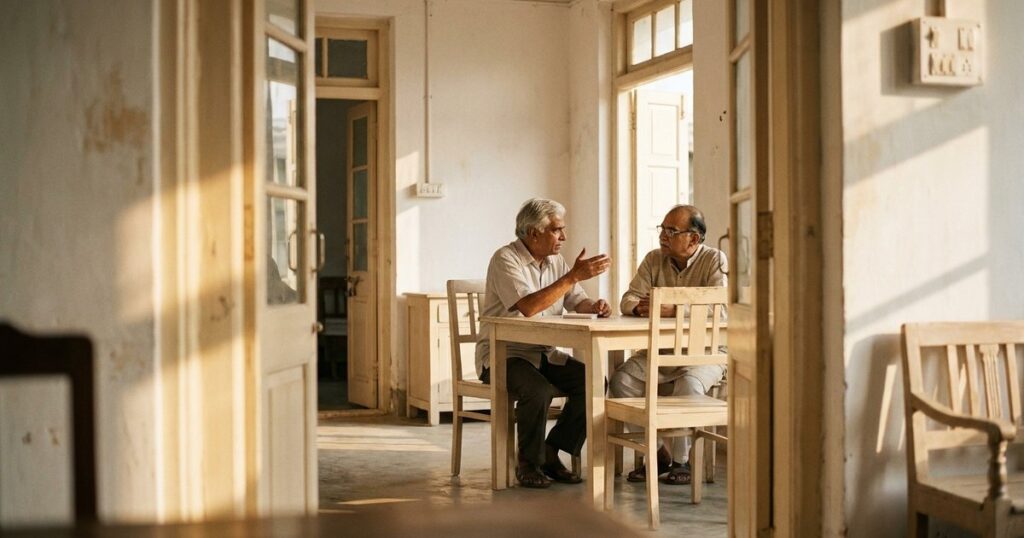
Aniruddha. Give me wards, not slogans. Eight businesses and three autopsies. I will take them as a doctor takes a case conference — what was the mechanism, what would have been visible, what was only obvious afterwards?
Rakesh. Afterwards is where the market writes its memoirs. We will try to stay in the beforehand.
|
Case |
What the conversation asks you to see |
|---|---|
|
Titan |
Trust as a product. Organised jewellery taking share from a shop that could not offer a receipt, a design, or a return. The hard part was the fifteen quiet years. |
|
Asian Paints |
Distribution density plus a dealer who does not want a second relationship. A moat you can see in a small town, not in a slide. |
|
HDFC Bank |
A culture of refusal, for a long time. Underwriting was the product. Culture is perishable; that is part of the lesson. |
|
CRISIL |
A tollbooth on being believed. He owned it for years. Reputation, if it is real, compounds like a brand. |
|
Page Industries |
A licence that behaved like a brand. Jockey in India was distribution, fit, and a habit. A licence alone is not a moat; a habit is. |
|
Nestlé, 2015 |
Maggi was a scare, not a funeral. Temporary impairment versus permanent capital loss. The question was trust, and whether trust could be re-earned. |
|
Satyam, 2009 |
Cash that was not cash. The confession is not the lesson. The lesson is the questions that were impolite before the confession. |
|
Yes Bank, DHFL |
Growth as a target, leverage as a personality. When the cycle asked for the money, the personality had nothing to say. |
|
Paytm, 2021 |
A true habit, an unearned price. Digital India was real. The residual claim on it was the thing to price. |
|
March 2020 |
The only shop where a sale clears the building. He had said versions of this for years. The virus made it literal. |
Asian Paints, and the moat you can walk into
Rakesh. A moat is not ‘brand’ as a word. A moat is a painter in Nashik who does not want to explain a new can to a customer who is already annoyed about the sofa. Asian Paints built a relationship with the dealer, a colour memory, a supply habit, and a set of products around the can. Competitors with good paint have spent decades learning that the can is not the business. The business is the nod. Charlie would have recognised it instantly: a scale and a psychology advantage reinforcing each other. You do not need to have owned the share to learn the shape. You need to stop calling every advertised name a moat.
Page, Nestlé, and the difference between a scare and a scar
Aniruddha. Page Industries took an American innerwear brand and made it an Indian habit, at a price that assumed the habit was shallow. It was not shallow. That is the anatomy. Maggi in 2015 is the scare. A lead-and-labelling crisis, a ban, a national argument about a noodle. The brand looked, for a season, like a ruined consumer franchise. It was a test of whether trust had been rented from advertising or earned from a child’s lunchbox. It came back. The investor’s job was not to be brave. It was to decide whether the impairment was to a batch and a headline, or to the reason for buying.
Rakesh. Temporary and permanent are the only two medical words an investor needs. Charlie’s margin of safety is what lets you survive the misclassification, because you will misclassify. I misclassified. Everyone who has a real record has a drawer of scares he treated as scars, and scars he treated as scares.
Three autopsies, without the pleasure of hindsight
Satyam. The mechanism was incentive plus concealment: a promoter group that needed a rising share, accounts that supplied it, property that absorbed the reality, and a proposed related deal that finally did not fit through the door. The beforehand questions were cash confirmation, related-party appetite, and the simple indecent query of why the margins looked like a different industry. The afterwards lesson, which India recites and does not practise, is that a charming technology story is not a control system.
Yes Bank and DHFL. The mechanism was credit growth in a system that paid for growth and audited the smile. Yes Bank could show capital and low reported stress close to the cliff; by the March 2020 moratorium the cliff was the story, and a reconstruction led by State Bank of India had to be assembled in a weekend mood. DHFL’s creditors learnt what a housing-finance narrative owes a cycle. The beforehand tool was not a better macro view. It was a refusal to treat disbursement as destiny, and a suspicion of any financial firm whose explanation for asset quality required you to admire the manager.
The Paytm listing. The mechanism was a lollapalooza of true facts in service of a false price. India was digitising. Merchants did want a QR code. The issue still asked the public to pay for a future industry structure that regulators, banks and competing apps had not agreed to. Star Health, which he had backed as a business, taught a cousin of the same lesson from the other side of the table: a pre-IPO ownership and a listing-day price are different decisions. Do not let a great investor’s earlier cheque launder a later valuation.
March 2020, the sale that emptied the shop
Rakesh. I used to say the market is the only shop where the goods go on sale and the customers run out. In March 2020 they ran. If you had done the work before the virus, the virus was a price. If you had not done the work, the virus was a feeling, and feelings do not compound. Charlie’s advice and mine meet here. The preparation is the courage. People who ‘got brave’ in the crash without a list simply bought whatever was loud.
Aniruddha. We saw the same thing in the clinic in a different costume. Families demanding a treatment because the alternative was waiting in uncertainty. Uncertainty is not an indication.
Evening question. Pick one anatomy and one autopsy from the table. Write the single fact that would have been enough, beforehand, either to hold or to refuse. If the fact is ‘everyone knew’, it is not a fact. It is a memory edited by the outcome.
Frequently asked questions
What is the main lesson from Asian Paints?
The main lesson is that a business moat is built through dealer relationships and distribution density, not just brand recognition.
Why did Maggi recover after the 2015 crisis?
Maggi recovered because trust was re-earned, proving that the impairment was temporary and not a permanent loss of consumer trust.
What caused the failure of Yes Bank and DHFL?
The failure was due to a focus on credit growth without proper risk management, leading to financial instability when the cycle turned.
How does this chapter relate to Charlie Munger's investment philosophy?
The chapter applies Munger's principles by analyzing businesses based on their fundamental strengths and weaknesses, emphasizing the importance of foresight and preparation.