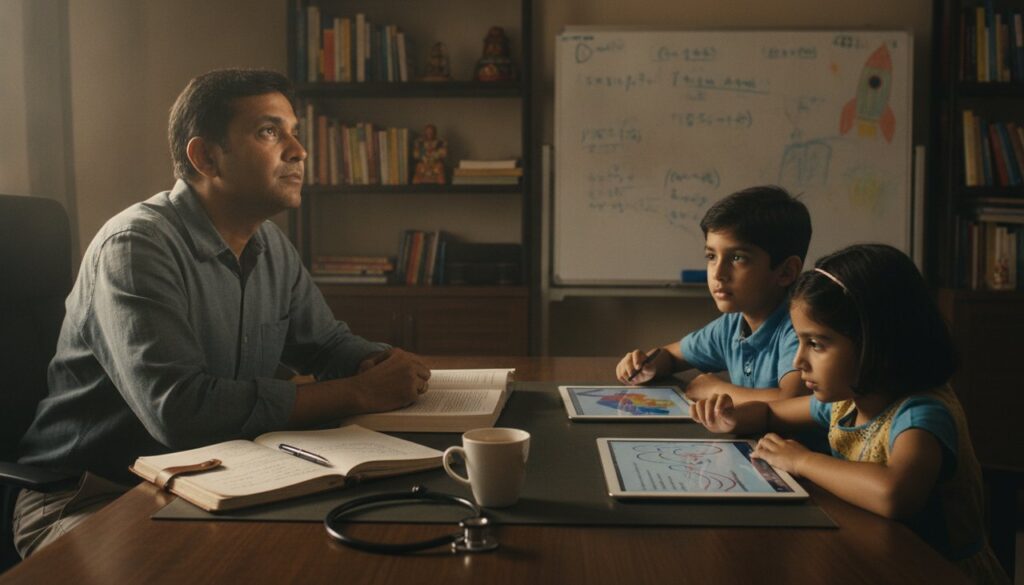
I’ve always believed that the true test of any technology is how it affects the next generation. As a parent who happens to be deeply entrenched in both the fields of IVF and angel investing, I’ve had the unique opportunity to witness firsthand how my children interact with AI tools. It’s been a fascinating journey, and I’ve learned quite a bit just by observing them—lessons that stretch far beyond the walls of our home.
The Unexpected Teachers
One evening, I watched my daughter, a curious 12-year-old, argue with a chatbot over the capital of a lesser-known country. She was adamant that it had given her the wrong answer, and she was right. What struck me was not her persistence but her skepticism. It reminded me of the way founders I’d backed questioned market assumptions, never taking things at face value. This skepticism, a valuable trait in both entrepreneurship and learning, was being sharpened by her interactions with AI.
AI, like any tool, is only as good as the data it’s trained on. My daughter learned that AI doesn’t “know” anything in the way humans do—it makes educated guesses based on patterns in data. This is a fundamental lesson, not just for kids but for anyone engaging with AI. It teaches them to question, to verify, and to think critically—a skill that is invaluable in today’s world.
AI as a Companion, Not a Replacement
My son, on the other hand, uses AI for his math homework. He inputs problems into a chatbot and analyzes the solutions it provides. But I’ve made it clear to him: AI is there to support his thinking, not replace it. In the same way, I advise startup founders to use data analytics to inform their decisions, not dictate them. The moment you let AI do the thinking for you, you’re in trouble.
It’s similar to the approach I take in my IVF practice. AI can assist in identifying patterns in patient data, but it cannot replace the nuanced understanding that comes from years of medical experience. In both fields, AI is a tool—a powerful one—but it should never overshadow human intuition and expertise.
The Importance of AI Literacy
I’ve come to realize that AI literacy is as important as learning to read and write. In my household, we regularly discuss what AI is, how it works, and its limitations. This is crucial because, as parents, we need to ensure our children don’t see AI as an omniscient entity. Instead, they should understand it as a tool created by humans, with all the imperfections that entails.
One weekend, I sat down with my kids to explore AI’s role in content creation. We asked it to write a short story, critiqued the outcome, and discussed how it could be improved. This exercise was eye-opening for them. They saw firsthand that while AI could produce text, it lacked the depth of human emotion and creativity. This is a lesson I wish more founders would learn early on: technology can assist, but it cannot replicate the human touch.
Privacy and Ethics
In the digital age, privacy is a concern, and AI tools are no exception. I’ve always emphasized the importance of not sharing personal information with AI platforms. It’s a rule in our house, just as it is a rule that companies I invest in must prioritize data security. Whether you’re dealing with patient records in an IVF clinic or user data in a startup, the principles of privacy and ethics remain the same.
The Unseen Benefits
Interestingly, watching my children interact with AI has also taught me about resilience. AI is unforgiving in its accuracy (or lack thereof), and it doesn’t sugarcoat its responses. This can be a tough lesson, but an important one. Life, whether in business or personal endeavors, rarely goes according to plan. Learning to deal with setbacks and failures is crucial, as I have discussed in my reflections on unsuccessful IVF cycles.
AI and Human Interaction
One of the more surprising insights has been the way AI can sometimes enhance human interaction. My kids often use AI as a springboard for deeper conversations. They’ll ask it a question, get an answer, and then turn to me or their mother to discuss it further. It’s a reminder that while AI can provide information, the real learning and understanding come from human dialogue.
This is a lesson I’ve taken to heart in my own work. Whether it’s guiding a patient through an IVF cycle or advising a startup founder, the real value lies in the conversation. AI can provide data and insights, but it’s up to us, as humans, to interpret and act on them.
Conclusion: The Road Ahead
As I continue to watch my kids navigate this AI-driven world, I am both optimistic and cautious. AI has the potential to be a powerful ally, but it is not without its pitfalls. The key lies in how we choose to use it. As parents, educators, and mentors, it is our responsibility to guide the next generation in using AI responsibly and effectively.
In the end, what I’ve learned from watching my kids use AI tools in real time is this: the future will always be shaped by those who are curious, skeptical, and willing to question the status quo. AI is just another tool in their arsenal, and it’s up to us to ensure they use it wisely.
For those interested in the intersection of technology and education, I invite you to read more about my thoughts on why AI tools in education can’t replace teachers. And for those pondering the future of learning, my reflections on AI tutors versus human curiosity might offer some food for thought.