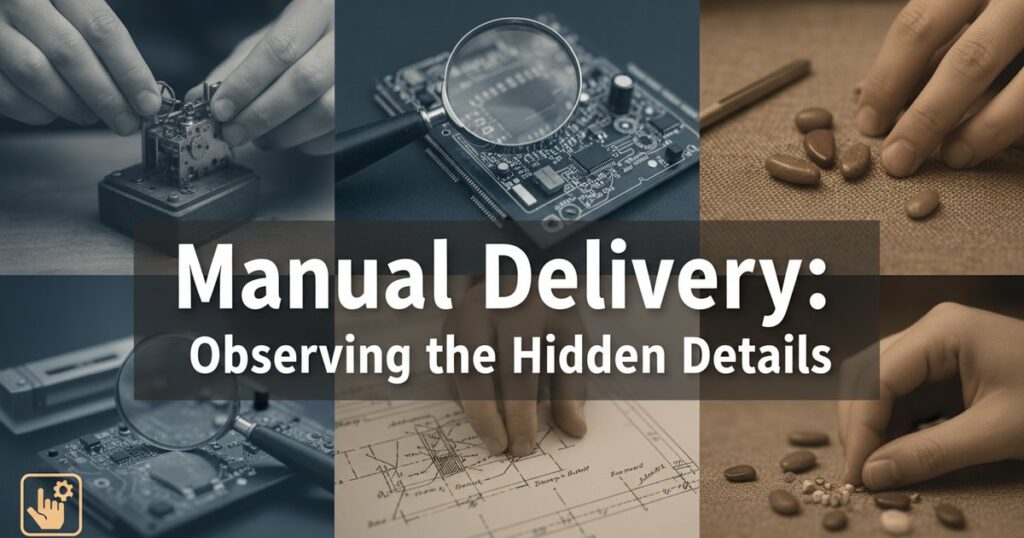
I once sat across from a founder who was eager to automate every aspect of her fledgling business. She had secured her first few customers, and the allure of shiny new software that promised to streamline operations was tempting. But I couldn’t help but counsel caution. You see, there’s a peculiar charm in manual delivery that often goes unnoticed — a charm that reveals the hidden intricacies of a business and offers insights that no automated process can replicate.
In my experience, both in the realm of IVF and in the turbulent waters of startup investing, there’s a wisdom in taking it slow at the beginning. Much like the delicate process of nurturing an embryo, the early stages of a business require a hands-on approach. Manual delivery isn’t just about getting your hands dirty; it’s about understanding the nuances that automation can easily overlook.
For instance, consider the case of Asha, a founder I backed during her pilot phase. She encountered a retailer who used an informal name for a product, another who sent amendments after the deadline, and yet another who approved a list without even glancing at it. On the surface, these might seem like annoying interruptions, but delve deeper, and they reveal the operational demands of the business.
It’s essential to meticulously track these anomalies. For each order batch, keep a log — note the arrival time, processing period, ambiguities, customer corrections, and final approvals. This record becomes your compass, guiding you through the maze of manual operations. But remember, only collect data that serves your purpose. Explain the necessity of this record-keeping to all participants and ensure that access is appropriately restricted.
Now, separate the ordinary from the extraordinary. If most orders follow a predictable path, you might have a candidate for basic automation. But if each order requires a unique conversation, you’re likely developing a specialized service rather than a generic software product. This realization isn’t a setback; it’s an opportunity to tailor your business model, provided your pricing strategy and staffing reflect the actual workload.
Here’s a trap many founders fall into: manual delivery can mask inefficient processes through sheer personal effort. Asha might make countless calls, burn the midnight oil, and resolve issues using relationships that future employees might not have. While the customer receives a commendable service, this performance is unsustainable at scale.
To expose this dependency, record the time and interventions of the founder. Once you refine the process, let a trained assistant handle a specific portion of it. Compare the results. If performance falters, identify the missing knowledge before scaling up. Sometimes, the next step isn’t another software screen but an operational checklist.
Transparency with your customers is non-negotiable. When you tweak the process, inform them. Discuss any limitations affecting the outcome and provide a direct channel for feedback. Trust, cultivated during a pilot phase, is a treasure worth safeguarding.
As the delivery period concludes, juxtapose your promises with the actual outcomes. Pinpoint the elements that added value, those that incurred costs, and the bits the customer disregarded. These observations furnish a far more insightful development brief than any initial wish list. Build on the tangible work you’ve witnessed, always keeping in mind that a handful of customers only unveil a fraction of the market.
The parallels between manual delivery in startups and the hands-on care in IVF are striking. Both domains emphasize the importance of personal touch, the need for adaptability, and the value of deep understanding. The lessons learned from one can profoundly inform the other. In both investing and medicine, the devil truly is in the details.
Manual delivery also offers a unique vantage point to observe the dynamics of customer interaction. Just as in an IVF clinic, where every patient’s journey is distinct, every customer in a startup has unique needs and quirks. This close interaction can uncover patterns and preferences that might have otherwise gone unnoticed. Founders can use these insights to refine their value proposition and address pain points more effectively.
Moreover, when you’re in the trenches, dealing with the nitty-gritty of manual operations, you develop a keen sense of intuition about the business. This intuition, born from firsthand experience, can be your guiding light when making critical decisions. It’s akin to how a seasoned doctor might diagnose a condition based on subtle cues that a machine might miss.
There’s also a profound sense of accomplishment that comes from manual delivery. When you see the direct impact of your efforts on customer satisfaction, it fuels your passion and commitment. It’s a reminder of why you embarked on this entrepreneurial journey in the first place.
However, as with any approach, there are potential pitfalls. The manual process can become a crutch, preventing progress if not managed properly. Founders must strike a balance between maintaining personal involvement and gradually introducing automation when the time is right. The key is to automate processes that are repetitive and predictable while preserving the human touch where it truly matters.
Reflecting on my journey as both an IVF specialist and an angel investor, I’ve come to appreciate the beauty of manual delivery. It’s a stage where potential is realized, lessons are learned, and the foundation for future success is laid. It’s the perfect opportunity for founders to immerse themselves in their business, gaining invaluable insights that will guide them in the years to come.
So, to my fellow founders and investors, I urge you to embrace manual delivery in your ventures. It’s not merely a phase to be hurried through on the way to automation. Rather, it’s a crucial period of discovery and refinement. In the end, it’s the details you observe during this process that will set your business apart and pave the way for sustainable growth.