Part 3 of 24 in Reclaiming Education: The Micro-School Revolution← Part 2Part 4 →
I remember sitting across from a young couple in my clinic, their faces a mix of hope and anxiety. They weren’t there for fertility advice but for guidance on a completely different path—education for their child. This conversation stuck with me because it echoed a growing sentiment among many Indian parents: the traditional schooling system is failing our children, and it’s time to take matters into our own hands.
The term “micro-school” might sound like just another educational fad, but in my view, it’s a lifeline for those of us who refuse to let our children’s curiosity be stifled by rote learning and exam-centric teaching. I was introduced to this concept through the American handbook by Dr. Mara Linaberger, which brought to light that a micro-school is not just a smaller version of a traditional school. It’s a fundamentally different approach—one that’s small, personal, and most importantly, child-centric.
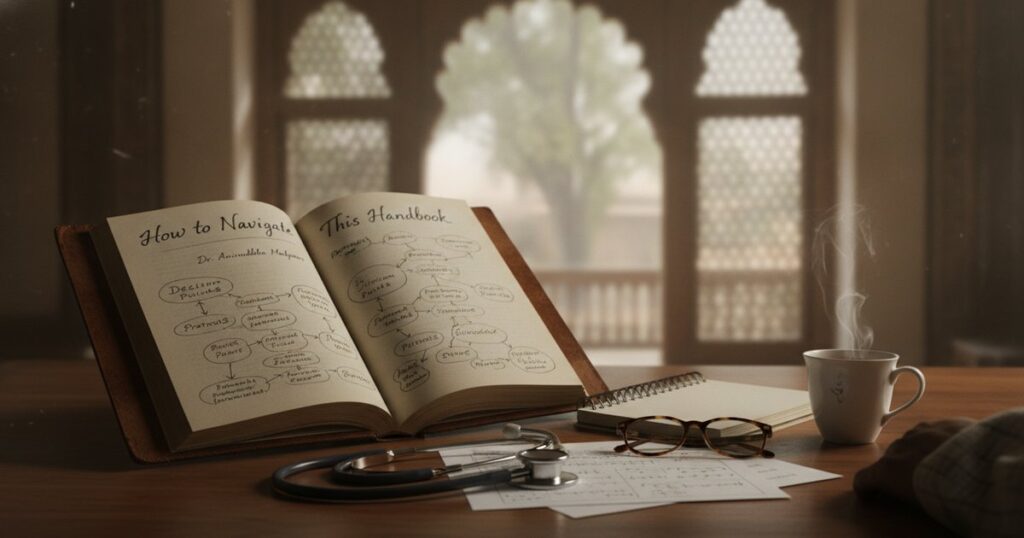
As I delved into the handbook, I realized that the western model couldn’t be transplanted wholesale into the Indian context. Our challenges—be it the coaching industry, the joint family system, or the societal pressure of “what will relatives say”—are uniquely ours. These require uniquely Indian solutions. So, how do we navigate this handbook and adapt its insights to our reality?
First, let’s address the elephant in the room: fear. The fear of the unknown, of deviating from a system that’s been in place for generations, is paralyzing. But isn’t this the same fear that holds back our startups from innovating? In both education and entrepreneurship, we need to embrace the unknown. In my experience with startups, those who succeed are not necessarily the ones with the best business plans but those willing to learn, adapt, and pivot when necessary. The same applies to education reform.
Reading this handbook is not a passive activity; it’s an invitation to engage. Each chapter ends with a small action you can take immediately. Talk about it with your partner, your child, and your neighbors. This kind of grassroots discussion is what transforms ideas into movements. Just as in the startup world, where a single conversation can lead to a breakthrough, these discussions can catalyze real change in how we educate our children.
Let’s consider the practicalities. Many parents worry about the legalities of setting up a micro-school. Education regulation in India varies by state, and it’s crucial to understand these nuances. Before you charge fees, hire staff, or call yourself a school, consult with a local education lawyer or chartered accountant familiar with your state’s regulations. A parent-led pod is not the same as an unrecognized school, and it’s essential to navigate these waters carefully.
In the realm of medicine, I’ve learned that transparency is more valuable than a facade of perfection. This principle holds true here as well. When I counsel my IVF patients, I emphasize the importance of understanding the process and being realistic about outcomes. Similarly, when setting up a micro-school, being upfront about what you can and cannot offer will set the right expectations and build trust within your community.
A key takeaway from the handbook is the power of stories. The family stories included are composites, drawn from patterns that many Indian parents recognize: the early morning van rides, the late-night tuitions, and the heartbreaking shift from curiosity to exam-centric questioning. These stories are not just anecdotes; they’re a mirror to our collective experience. They remind us of what’s at stake and why this change is necessary.
In conclusion, this handbook is not just a guide; it’s a call to action. It’s about reclaiming the joy of learning for our children and challenging a system that has, for too long, prioritized conformity over creativity. As I tell the founders I mentor, the most significant innovations often arise from the most significant challenges. Education is no different. So, let’s roll up our sleeves and get to work. Our children’s future depends on it.