Part 4 of 26 in What I Want to Tell My School Teacher: An Indian Adaptation of Letter to a Teacher← Part 3Part 5 →
This chapter compares the school experiences of Raju, a village child in eastern Uttar Pradesh, and Aryan, a child in a gated community outside Delhi. It helps readers see how family circumstances, language, school resources, and extra classes shape educational opportunity in India.
- Raju’s school has overcrowded classrooms, irregular teacher attendance, and limited learning support at home.
- Aryan benefits from smaller classes, school facilities, tuition, additional classes, and access to books.
- Raju can copy and recite but struggles to explain textbook meanings in his own words.
- By Class 10, the boys face a large gap in knowledge, examination language, and access to opportunity.
- The school system does little to close the difference and largely suits privileged children like Aryan.
Consider two boys, both ten years old, both enrolled in school in India.
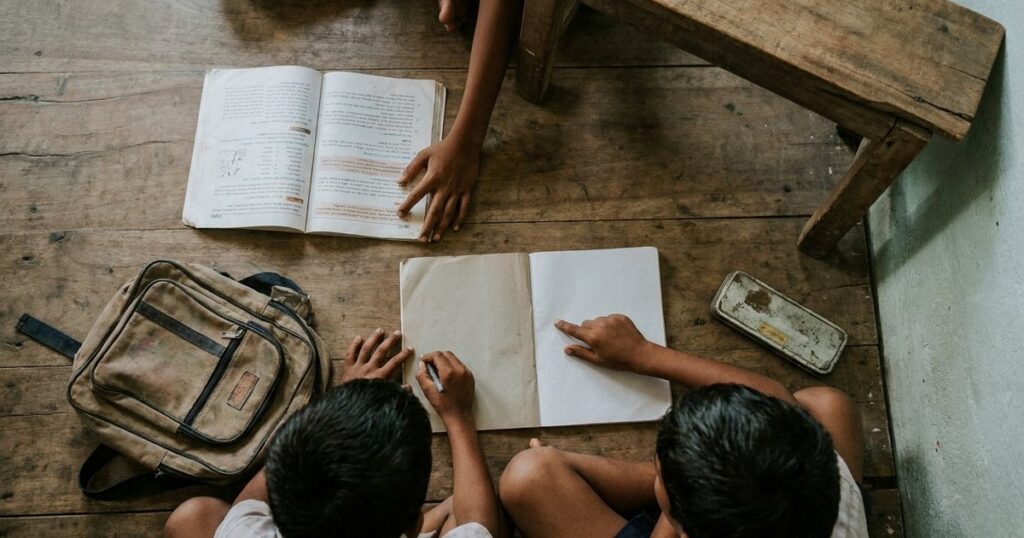
Raju lives in a village in eastern Uttar Pradesh. His father works as a daily labourer on other people’s land and sometimes travels to the nearest town for construction work. His mother manages the house and the younger children. At home they speak Awadhi. The government primary school has more children than usable benches. Teacher attendance is irregular. When class happens, it often consists of reading aloud from the textbook and copying answers from the blackboard. Raju can copy. He can recite. He cannot always explain the meaning in his own words. By Class 4 he is already behind in reading. No adult at home can help him with the textbook. He is promoted each year. The gap grows.
Aryan lives in a gated community outside Delhi. His father works in information technology. His mother teaches in a private school. They speak English and Hindi at home. Aryan attends a private school whose annual fees exceed Raju’s family income. Classes are smaller. There is a library and a computer room. After school he goes to tuition three times a week. On weekends there are additional classes. He reads chapter books for pleasure. He speaks confidently. When examinations come he scores well. Adults describe him as bright.
Neither boy chose his parents, his language, or his neighbourhood. By the time they reach Class 10 the difference in what they know, how fluently they handle the language of examinations and interviews, and how easily they can access further opportunity is very large. The school system did not invent this difference, but it has done little to close it and much to ratify it.
The Barbiana boys called the privileged child “Pierino, the doctor’s son.” In India the names change—coaching-class child, English-medium child, metro child—but the structure is the same. The school is largely designed for Pierino. Raju is expected either to become like Pierino through extraordinary effort and luck, or to leave.
Frequently asked questions
How are Raju and Aryan’s school experiences different?
Raju attends a government primary school with too many children, few usable benches, and irregular teacher attendance. Aryan attends a private school with smaller classes, a library, a computer room, tuition, and additional classes.
Why does Raju fall behind in reading?
Raju can copy and recite, but he cannot always explain textbook meanings in his own words. No adult at home can help him with the textbook, and he is promoted each year as the gap grows.
What advantages does Aryan have in education?
Aryan speaks English and Hindi at home, attends a private school, receives tuition three times a week, takes additional weekend classes, and reads chapter books for pleasure.
What does the chapter say about inequality in Indian schools?
It says the school system did not create the difference between the boys, but has done little to close it and much to ratify it. The system is largely designed for the privileged child.