Part 22 of 26 in What I Want to Tell My School Teacher: An Indian Adaptation of Letter to a Teacher← Part 21Part 23 →
This chapter describes a school that measures success by keeping children learning, not only by counting passes. It helps Indian teachers, parents, and students consider practical ways to support children who fall behind.
- Schools can track who remains and provide extra time when children fall behind.
- Older students can be formally scheduled to teach younger students.
- Weekly newspaper discussions can support reading, writing, and argument.
- AI tutors in each child's language can help students who are stuck at home.
- Schools must reject the belief that some children are not made for school.
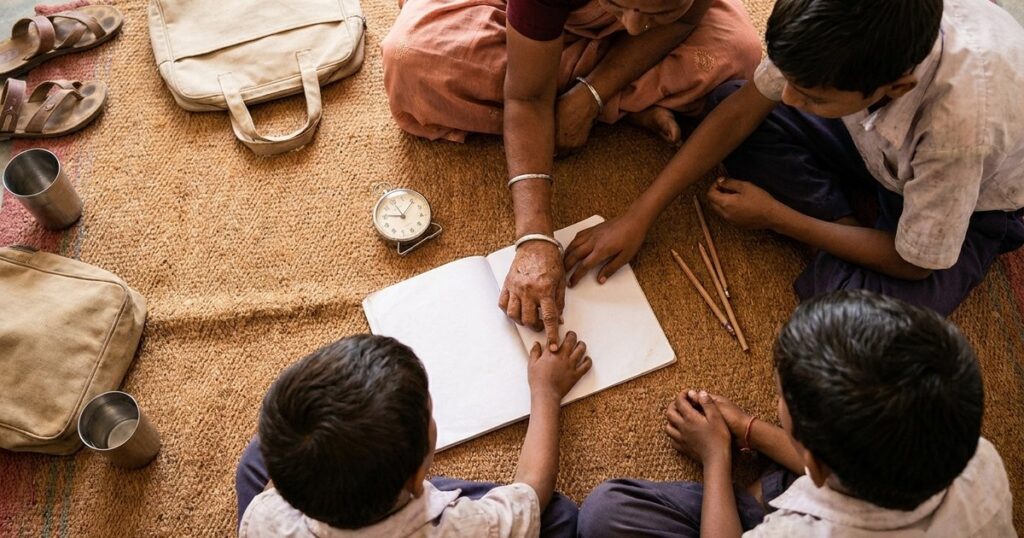
Imagine a school whose central question each month is not “How many passed?” but “Who is still with us, and who has fallen behind?” Imagine that the answer to the second question triggers automatic extra time rather than a mark of failure. Imagine older students formally scheduled to teach younger ones. Imagine one newspaper discussion a week. Imagine every child able to open a simple AI tutor in their own language when they are stuck at home. Imagine parents who meet and ask what the next skill is, and teachers who can answer clearly.
None of these elements is utopian. Each has been practised somewhere. Barbiana combined many of them under difficult conditions and produced both learning and a book that still speaks. Indian schools, with far more resources and with new tools, can combine them again.
The obstacle is not mainly technical. It is the lingering belief that some children are simply not made for school, and that the proper work of the institution is to identify them early and let them go. That belief is what the boys of Barbiana refused. It is what this book asks Indian teachers, parents, and students to refuse as well.
When the refusal becomes widespread, the numbers will change. More children will still be in Class 10 able to read, write, and argue. More of them will recognise that the school finally cared whether they learned. And the letter that once had to be written from outside the system can become, at last, unnecessary.
Frequently asked questions
How can a school help students who fall behind?
It can ask who has fallen behind and provide automatic extra time instead of treating the situation as failure.
Can older students teach younger students at school?
Yes. The chapter describes formally scheduling older students to teach younger ones.
How can AI help children with schoolwork at home?
A simple AI tutor in each child's own language can help when the child is stuck at home.
What belief should schools refuse?
Schools should refuse the belief that some children are not made for school and should be identified early and allowed to leave.