Part 17 of 26 in What I Want to Tell My School Teacher: An Indian Adaptation of Letter to a Teacher← Part 16Part 18 →
This chapter explains how parents and students can work together to improve attendance and learning in their school. It helps communities replace individual pleading with organised, respectful action and practical local support.
- Parents can meet monthly and ask schools about reading difficulties, extra support, and ways to help at home.
- Organised questions should demand partnership, not accuse teachers or schools.
- Older students can teach younger children, create a wall newspaper, and document students who have left.
- Local groups can begin acting without waiting for distant authorities to reform schools.
- The boys of Barbiana built an alternative and wrote about it so others could see.
The Barbiana letter was explicitly a call for parents to organise. Individual pleading with a single teacher has limits. Collective voice has more.
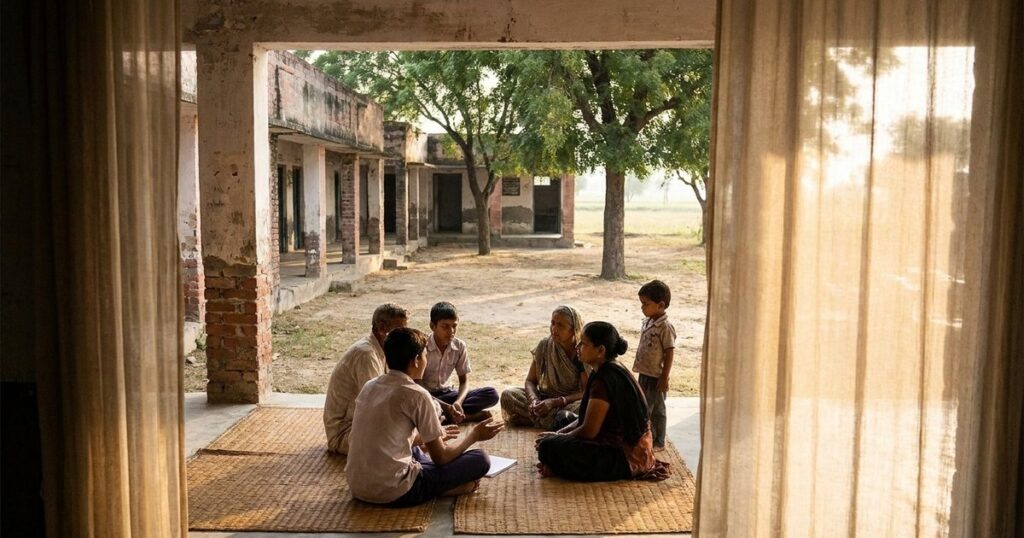
Parents in a village or a basti can meet once a month and ask three concrete questions of the school: Which children are still unable to read a simple paragraph? What extra time is being given to them? What can we do at home or in the neighbourhood to help? The questions are not accusations. They are a demand for partnership. Where schools have responded to such organised, respectful pressure, attendance and learning have sometimes improved.
Students themselves can organise. Older students can formally take responsibility for teaching younger ones for fixed hours. They can produce a wall newspaper. They can document, without names if necessary, the number of children who have left and the reasons. Such documentation, shared carefully, makes the pattern visible and harder to ignore.
None of this requires permission from distant authorities to begin. It requires a small group that decides the present situation is not acceptable and that begins to act locally. The boys of Barbiana did not wait for the Ministry of Education to reform itself. They built the alternative they needed and then wrote about it so others could see.
Frequently asked questions
What can parents do to help improve learning in a school?
Parents can meet once a month and ask which children cannot read a simple paragraph, what extra time they receive, and how families or neighbours can help.
How can students support younger children at school?
Older students can take formal responsibility for teaching younger students for fixed hours.
How can a community document students leaving school?
Students can record, without names if necessary, how many children have left and the reasons, then share the information carefully.
Do parents and students need permission to organise locally?
The chapter says they do not need permission from distant authorities to begin. They need a small group willing to act locally.