Part 15 of 26 in What I Want to Tell My School Teacher: An Indian Adaptation of Letter to a Teacher← Part 14Part 16 →
This chapter explains how older students can teach younger students, strengthening learning for both while giving teachers more time for advanced support. It also shows how this approach can work in Indian multi-grade classrooms, with AI used as a supporting tool.
- Older students learn more deeply when they explain lessons to younger students.
- Peer teaching gives younger students simpler explanations and more individual attention.
- Class 8 students can help Class 5 students practise topics such as fractions.
- AI can help older students check understanding, create examples, and prepare explanations in the home language.
- Peer teaching works best when older students receive clear guidance and preparation.
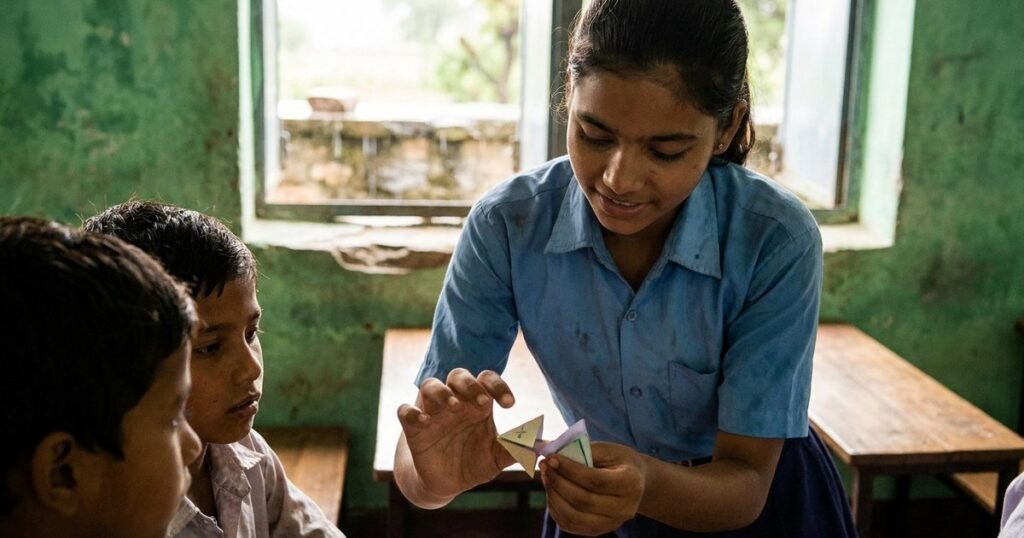
One of the most practical inventions at Barbiana was the systematic use of older children as teachers of younger ones. A sixteen-year-old who had finally mastered a topic spent mornings explaining it to twelve-year-olds. There was only one copy of many books; the group crowded around it. The older student learned more deeply by teaching. The younger student received explanations in language closer to their own. The teacher-priest was freed to work with those who needed the most advanced help.
This practice travels well to India. In multi-grade classrooms, which are common in small rural schools, it is already an informal necessity. It can be made deliberate. A Class 8 student who has finally understood fractions can spend twenty minutes three times a week with two Class 5 students who are stuck. The older student must prepare, must find simple words, must notice when the younger ones are lost. All of these acts strengthen the older student’s own grasp. The younger students receive attention that one adult cannot give to forty children at once.
AI can support this arrangement. The older student can use an AI tutor to check their own understanding before teaching, to generate extra examples, or to prepare a short explanation in the home language. The younger students can later practise with the same AI. The human relationship remains central; the technology removes some of the friction.
Schools that have tried structured peer teaching often report gains for both the tutors and the learners, provided the older students are given clear guidance and are not simply left to “help” without preparation. Barbiana showed that the method can be the core of the school rather than an occasional extra.
Frequently asked questions
How does peer teaching help older students?
Teaching younger students makes older students prepare, use simple words, and notice confusion. These actions strengthen their own understanding.
Can peer teaching work in Indian rural schools?
Yes. It suits multi-grade classrooms, which are common in small rural schools, and can be made deliberate rather than remaining an informal necessity.
How can AI support peer teaching?
An older student can use an AI tutor to check understanding, create extra examples, or prepare a short explanation in the home language. Younger students can later practise with the same AI.
What makes structured peer teaching effective?
Older students need clear guidance and preparation. They should not simply be left to help without support.