Part 1 of 15 in How to Find a Job: Stop queuing on portals. Show an employer the value you can add.Part 2 →
This chapter introduces the book's approach to job hunting for Indian graduates. It challenges traditional methods and suggests a tailored strategy for the Indian job market.
- Traditional job hunting methods are often ineffective for Indian graduates.
- Richard N. Bolles' job search method is adapted for India.
- India's unemployment rates for graduates are significantly high.
- The book suggests creating a personal website to showcase skills.
- Composite stories illustrate common patterns in Indian job searches.
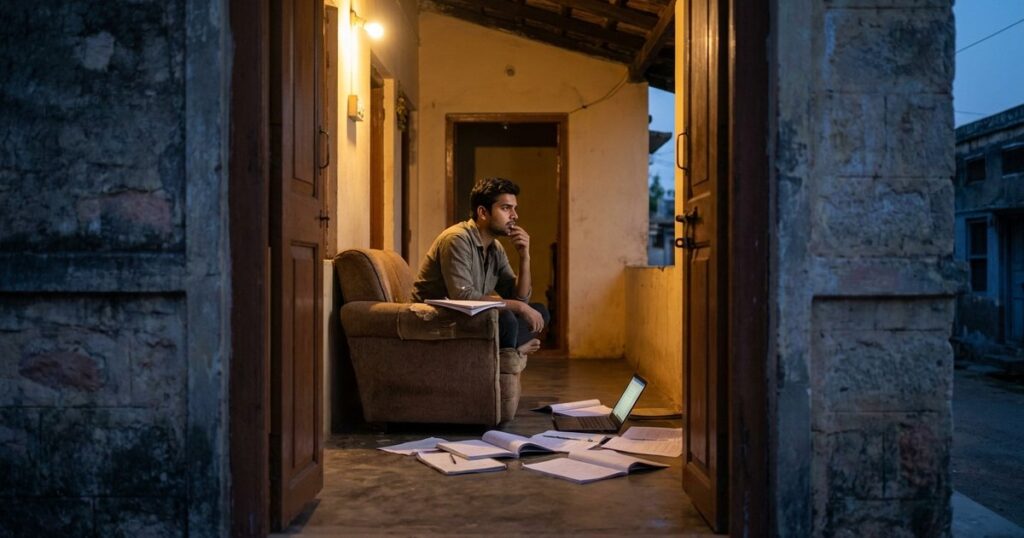
This book is written for the Indian graduate who has done what everyone told them to do, and is still waiting. The degree is framed. The resume is on Naukri. The LinkedIn headline says Open to Work. The family WhatsApp group has been sent the same PDF three times. The replies, if they come at all, are polite and empty.
Richard N. Bolles spent decades arguing, in What Color Is Your Parachute?, that the usual way of hunting for work is the least effective way. People spray applications at advertised vacancies, then blame themselves when the silence arrives. His method was different. Know what you can do. Know where that would be useful. Talk to people who already do that work. Offer proof, not a plea. Treat the job search as a small research project you control, not as a queue you join.
That method was written for American readers, with American institutions, American salaries, and American manners. This book keeps the spine of the method and rebuilds the body for India. The campus placement cell is not the American career office. The joint family is not a footnote. A Tier-3 college in Akola does not have the same door as an IIT. A referral here often means a cousin, a colony uncle, or a senior from the same coaching batch. The advertised vacancy is frequently already half-decided. And the graduate is often competing with several lakh people who have the same degree, the same resume template, and the same three projects from the same syllabus.
The numbers are no longer a private worry. The Periodic Labour Force Survey for 2025 put unemployment among graduates at 11.2 percent, against about 3.1 percent for the workforce as a whole. Youth unemployment, ages 15 to 29, was 9.9 percent. The State of Working India report has tracked a harder long trend: graduates aged 20 to 29 rose from about 50 lakh in 1983 to 6.3 crore, while unemployed graduates rose from about 7 lakh to 1.1 crore. Among graduates under 25, unemployment was already about 35 percent in 1983 and about 39 percent in 2023. Education expanded. Salaried work did not expand at the same pace. Campus surveys tell the same story from the other end. Unstop’s Talent Report 2026, drawn from a large student and employer sample, found hiring budgets still active and yet about 84 percent of undergraduates in that sample still unplaced.
Two things are true at once, and this book refuses to pretend otherwise. The education system leaves many graduates poorly equipped for the work employers will pay for. And there are not enough good jobs for every person who has been told that a degree is a ticket. A method cannot invent a lakh missing roles. It can stop you from spending a year in the noisiest, least effective queue, and it can make you visible to the employer who does have a problem worth paying to solve.
The practical centre of this Indian adaptation is a simple one. Do not only apply. Build a small public website that acts as your digital brand. Put proof on it. Send that link to a named person inside a company you have chosen. Show them, in their language, how you can add value. A website will not charm a company that has no work. It will separate you from the thousand identical PDFs that arrived the same morning.
The stories in this book are composite. Neha, Karthik, Sana, Imran, Divya and Arvind are not real named clients. They are built from patterns that repeat across Indian campuses, CA firms, shop floors, startups and family businesses. Use them as patterns, not as biographies.
Each chapter is written so it can stand on www.indianangels.in as one instalment. Read them in order the first time. The later chapters assume you have done the earlier exercises. If you only have one evening, read Chapter 7 and build the first version of the site. Then come back and do the work that makes the site true.
Frequently asked questions
What is the main focus of this book?
The book focuses on an alternative job search method for Indian graduates, emphasizing personal branding and direct engagement with employers.
How does the book adapt Richard N. Bolles' method for India?
It retains the core of Bolles' method but adapts it to Indian cultural and economic contexts, such as family dynamics and the job market.
Why are traditional job applications ineffective in India?
Traditional methods often lead to high competition and low response rates, as many graduates share similar qualifications and application styles.
What practical advice does the book offer for job seekers?
The book advises building a personal website to demonstrate skills and directly contacting potential employers with tailored messages.