Part 8 of 16 in The Rupee Trap: Stop Chasing Crores. Start Building a Rich Life.← Part 7Part 9 →
The Rupee Trap: Stop Chasing Crores. Start Building a Rich Life examines how monthly instalments can hide the full cost of borrowing and spending. This chapter helps readers compare total costs, protect future flexibility and make debt decisions that fit their values and income stability.
- An affordable EMI does not reduce the total obligation or its effect on the household budget.
- Compare down payment, interest, recurring costs, maintenance, insurance, taxes and missed saving opportunities.
- Consider necessity, income stability, repayment terms, emergency buffers and what happens if income falls.
- List existing EMIs with their end dates and test the household budget against a three-month loss of one income.
- Spend intentionally on pleasures that improve life and cut repeated impulses that are barely enjoyed.
The most dangerous four words in an Indian showroom are not 'limited period offer'. They are 'affordable monthly instalment'.
THE INDIAN STORY
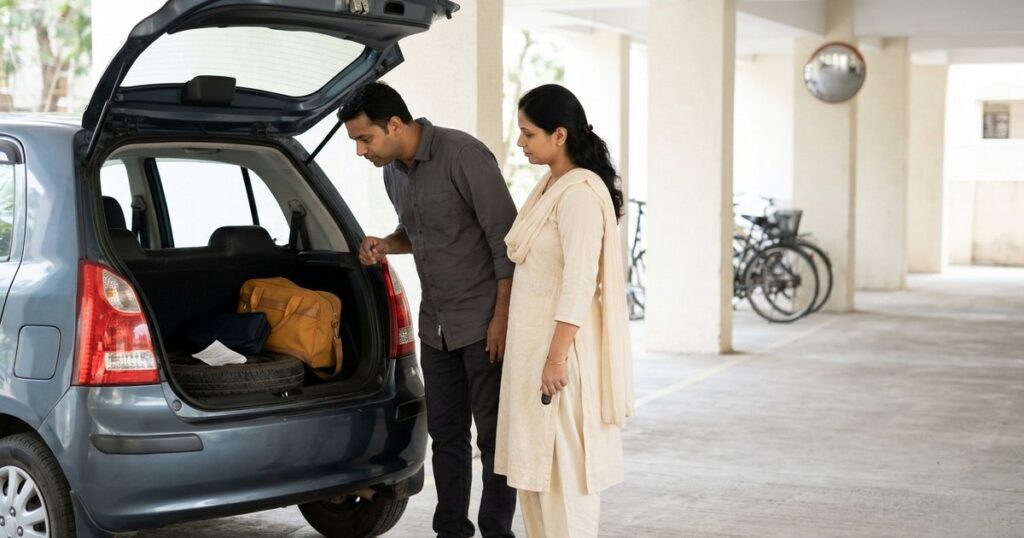
A couple in Mumbai are debating whether to upgrade their car. They can manage the EMI, the salesman assures them, particularly if they extend the tenure. They sign. Then they calculate parking, insurance, fuel, service, tolls and the occasional dent. The 'manageable' payment has quietly acquired a family. Meanwhile, the parents reduce their weekend visits to friends because the car leaves less room in the monthly budget than anticipated.
The story is fictional. The arithmetic trap is real. An EMI divides a price into smaller pieces; it does not divide the obligation. The relevant question is not 'Can we afford the monthly payment?' but 'What future flexibility are we surrendering?' A housing loan can be an appropriate tool for a family building a home. A business loan may be sensible if its risks and cash flows are understood. Debt for a wedding performance or a repeatedly upgraded gadget is a more suspicious proposition.
This is where values collide. We want to be prudent and generous, independent and comfortable, present-minded and responsible to our future selves. Good finance is not the elimination of tension. It is the art of making those tensions visible before they become signatures.
Original sketch #43, “When Values Collide” — Carl Richards, Your Money (2025). © Carl Richards.
THE MONEY LESSON
When comparing a large purchase, count its total cost of ownership: down payment, interest, recurring costs, maintenance, insurance, taxes, and the money you might otherwise have saved or used. Think in years, not just months. Also ask the counterfactual question: If we did not buy this, what else could we make possible?
This is not an argument against all debt. India contains families who benefit profoundly from a home loan and entrepreneurs whose borrowing creates livelihoods. The right test considers income stability, the interest rate and repayment terms, the necessity of the purchase, emergency buffers and the consequences if income falls. A loan that is comfortable in a good month may be intolerable in a bad one.
The same discipline applies to everyday spending. A ₹299 subscription may seem trivial; a collection of twenty forgotten subscriptions is no longer trivial. A convenient delivery app can save valuable time; it can also turn impulse into a daily habit. The problem is rarely the technology. It is our reluctance to look at the accumulated bill.
Spend intentionally on the things that make your life better. Cut ruthlessly from the things that merely repeat yesterday's impulse. Financial freedom is often won not by refusing every pleasure, but by noticing which pleasures you barely enjoy.
TRY THIS TONIGHT
Before your next purchase financed by debt, write its full cost and what you are giving up. If you already have EMIs, list them together with their end dates. Ask what happens to the household if one income stops for three months.
COPY-AND-PASTE AI PROMPT
“I am comparing a purchase now, a lower-cost alternative and waiting one year. Build a neutral table showing upfront, monthly and long-term costs, including fees and maintenance. Use only my hypothetical numbers, state assumptions clearly and show a stress case with a 20% income drop. Do not make the decision for me.”
Frequently asked questions
What should I include when calculating the real cost of an EMI purchase?
Include the down payment, interest, recurring costs, maintenance, insurance, taxes and money you might otherwise have saved or used. Think in years, not only months.
Is all debt bad?
No. A housing loan may suit a family building a home, and a business loan may make sense when its risks and cash flows are understood. The right test also considers income stability, repayment terms, necessity and emergency buffers.
How can I test whether an EMI is affordable?
List all EMIs together with their end dates and ask what happens if one income stops for three months. A payment comfortable in a good month may be intolerable in a bad one.
What can I ask before buying something with debt?
Write the purchase's full cost and what you are giving up. Also compare buying now, choosing a lower-cost alternative and waiting one year.