Part 5 of 26 in What I Want to Tell My School Teacher: An Indian Adaptation of Letter to a Teacher← Part 4Part 6 →
This chapter examines how school language can exclude children when formal or high-status languages replace the languages spoken at home. It helps readers understand why schools must teach powerful languages well while respecting children’s existing languages.
- Formal school language is often treated as superior, while poor children’s dialects and home languages are treated as defects.
- English opens access to higher education, desirable jobs, higher courts, and much of the digital world.
- Children learn better when their home language is used as a bridge to languages that open doors.
- Schools should teach dominant languages seriously without humiliating or erasing a child’s language of home.
- Laughing at a child’s accent tells the child that school is not meant for them.
In Italy the central violence of the school, as the Barbiana boys saw it, was linguistic. The formal, written Italian of the educated bourgeoisie was treated as language itself. The dialects of the poor were treated as defects. Mastering the dominant language was the price of being taken seriously as a citizen.
India’s linguistic situation is more layered and, for many children, more punishing. English remains the language of the highest-status higher education, of many desirable jobs, of the higher courts, and of much of the digital world. State languages or Hindi serve as the medium in large numbers of government schools. The child’s actual home language may be a regional variety, a dialect, or a tribal language that has little presence in the textbook.
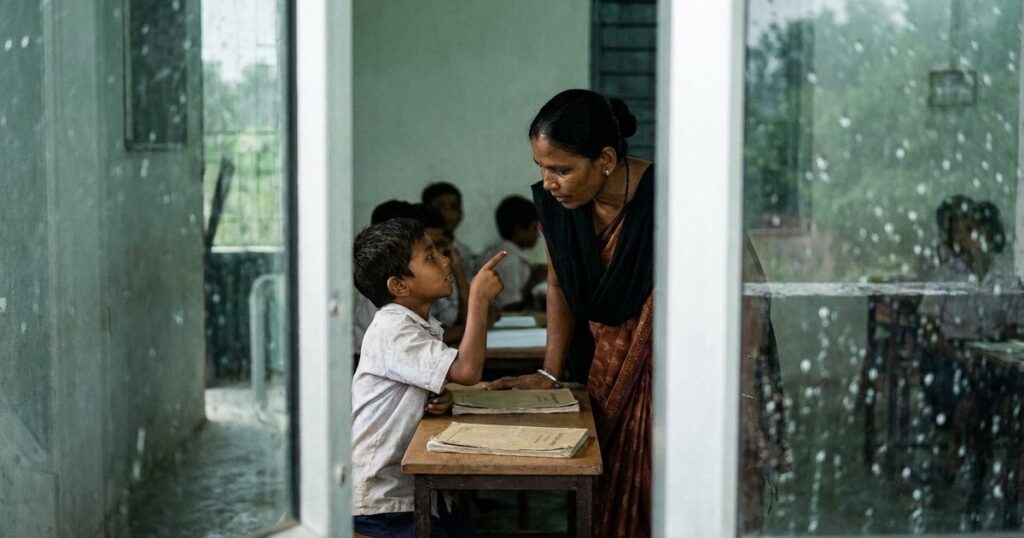
A child in Jharkhand or Odisha whose home language is Santhali, Ho, or Kui is frequently taught through Hindi or English. The textbook assumes vocabulary, examples, and a cultural world the child does not yet share. The child is labelled slow. The same dynamic affects millions of rural children whose spoken language differs from the standard written form used in school. Caste can intensify the barrier: some children have been told, in small daily ways, that the world of books and formal argument is not for people like them.
Don Milani’s response was not to abandon the dominant language. It was to teach it seriously and deliberately, precisely so that the poor could use it to defend their interests. At Barbiana they taught multiple languages, read the newspaper every day, and practised writing until the boys could produce clear, forceful prose. They understood that linguistic power is political power.
An Indian school that wishes to follow the same logic must do two things at once. It must allow children to think and speak first in the language they already own, using it as a bridge. And it must give them patient, high-quality instruction in the languages that open doors—without ever humiliating the language of home. A school that laughs at a child’s accent or treats the home language as a problem to be erased is a school that is telling the child to leave.
Frequently asked questions
Why can school language be a barrier for children?
The textbook may use vocabulary, examples, and cultural references that children do not yet share. Children can then be labelled slow when the language of instruction is unfamiliar.
Why is English important in Indian education?
English remains the language of the highest-status higher education, many desirable jobs, the higher courts, and much of the digital world.
How should schools use children’s home languages?
Schools should let children think and speak first in the language they already own, using it as a bridge to languages that open doors.
What happens when a school mocks a child’s accent?
It humiliates the child and treats the home language as a problem to be erased. The chapter says this tells the child to leave.