Part 3 of 26 in What I Want to Tell My School Teacher: An Indian Adaptation of Letter to a Teacher← Part 2Part 4 →
This chapter examines how schools can reward children who arrive prepared while leaving behind those facing language, attendance, family, or material barriers. It helps readers understand why equal treatment is not enough when children begin with unequal support.
- Schools often serve children who already have language, books, confidence, and help at home.
- Children facing hunger, migration, illness, irregular attendance, or unfamiliar languages need more time and repetition.
- ASER and PARAKH assessments show low learning levels and widening gaps by social group.
- A school committed to equality must teach until children who are behind have caught up.
- School success should be measured by how many unprepared children learn, not by the strongest students' performance.
The boys of Barbiana put the central accusation in one unforgettable image: schools are like hospitals that tend to the healthy and reject the sick.
The child who arrives already able to recognise letters, who has heard standard Hindi or English at home, who has a parent who can look at the homework, who does not miss weeks of school for harvest or migration or illness in the family—this child is easy. The teacher notices this child. This child gets answers right and is praised. The school feels successful when this child succeeds.
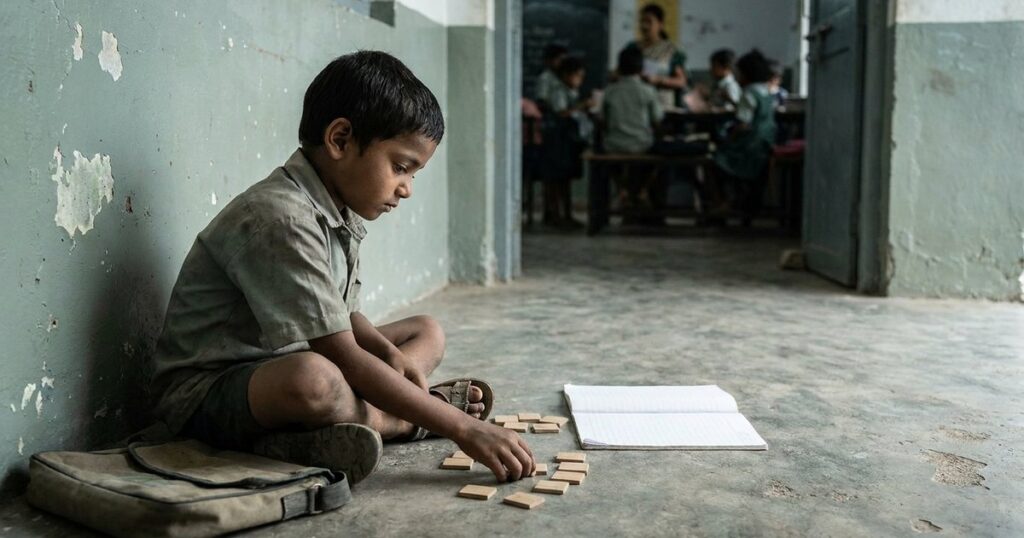
The other child arrives with a different spoken language, with irregular attendance, with parents who cannot read the textbook, with a body that is sometimes hungry or tired. This child needs more time, more repetition, more bridges between the known and the new. The ordinary school does not provide them. The lesson moves on. The exam arrives. The child is promoted without having learned, or is failed and discouraged. The gap widens. Eventually the child stops coming.
ASER (Annual Status of Education Report) surveys have documented this for two decades. Large proportions of children in Class 5 cannot read a Class 2 level text fluently or do basic arithmetic. These findings are not a verdict on the children. They are a verdict on a system that has not taught them. PARAKH and other assessments show the same pattern: learning levels are low, and the gaps by social group often widen rather than narrow as children move up the grades.
The privileged child does not need the public school as much. Culture, language, books, and confidence arrive at home or through paid coaching. The school’s distinctive duty, if it is to be a force for equality, is to give to the others what the privileged already possess. Instead, it often measures everyone with the same instrument and treats the resulting difference as proof of natural ability.
Barbiana refused this logic. They said the school must not fail the child who is behind. It must give more time. It must keep teaching until the child has learned. Success is measured by how many of the children who arrived unprepared have caught up, not by how brilliantly the already-prepared children perform.
Frequently asked questions
Why does the chapter compare schools to hospitals that treat healthy people?
The comparison describes schools that work well for children who already recognise letters, know the school language, and receive help at home, while failing children who need more support.
What barriers can make it harder for a child to learn at school?
Different spoken languages, irregular attendance, parents who cannot read the textbook, hunger, tiredness, migration, harvest work, and illness in the family can all create barriers.
What do ASER and PARAKH assessments show?
They show that many children in Class 5 cannot fluently read a Class 2 level text or do basic arithmetic, and that learning gaps by social group often widen in higher grades.
How should schools measure success according to the chapter?
Schools should measure how many children who arrived unprepared have caught up, rather than judging success by how well already-prepared children perform.