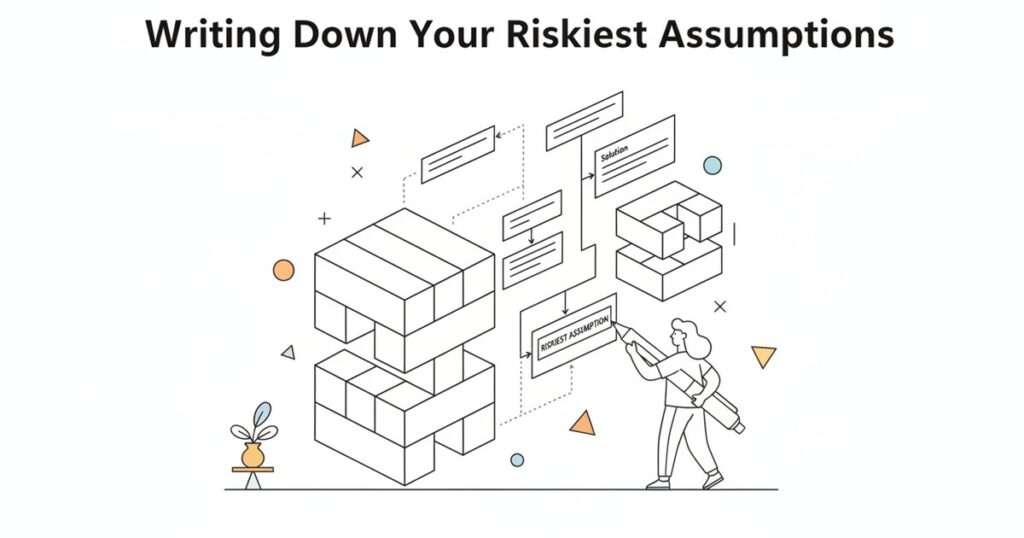
I’ve been thinking a lot about assumptions lately. Not the kind we make in casual conversations or even those we rely on in our day-to-day lives, but the ones that truly matter—the ones that can make or break a startup. I’ve witnessed firsthand how unchecked assumptions can derail even the most promising ventures. This isn’t a philosophical musing; it’s a practical concern that every entrepreneur should take seriously.
A few weeks ago, I was sitting with a founder I had backed a couple of years ago. Let’s call her Asha. Her startup was struggling, and she couldn’t quite put her finger on why. The product seemed solid, the team was competent, and initial feedback was encouraging. But something wasn’t clicking. “Have you written down your riskiest assumptions?” I asked. She looked puzzled, as if I had just asked her to solve a complex equation without a calculator.
Many founders, like Asha, get swept up in the excitement of their ideas. They focus on the vision, the product features, the potential market size. But they often overlook the assumptions that underpin their entire business model. And when assumptions are left unexamined, they become silent saboteurs.
In my experience, both as a doctor and an investor, assumptions are the hidden pitfalls that can catch you off guard. In medicine, assuming without verifying can lead to misdiagnosis, and in investing, it can lead to misguided decisions. The stakes are high in both fields, and the lessons are transferable.
Let’s dig into what I mean by writing down your riskiest assumptions. This isn’t just about jotting down a few thoughts on a napkin. It’s about a disciplined process that forces you to confront the realities of your business. It’s about clarity and accountability.
For Asha, several assumptions were critical. She believed that order corrections occurred often enough to merit attention. She assumed that employees could share the necessary information without excessive extra work and that owners would pay for a dependable result. But these were just beliefs, not verified facts. Which assumption should she prioritize testing? That depends on the evidence she already has. If owners regard corrections as trivial, her sophisticated processing prototype might be premature. If the problem is severe but information can’t leave the customer’s premises, her delivery design needs a rethink.
This is where a short experiment record comes into play. Asha’s record might read: “We believe a distributor in this cluster will pay Rs 1,500 for a two-week assisted order-checking pilot. We will make the same written offer to ten qualified owners. The pilot will cover one defined order stream. We will proceed to delivery if at least three accept the terms and pay by the agreed date. We will spend no more than Rs 5,000 acquiring these commitments.”
Writing down assumptions like this serves multiple purposes. First, it forces you to be specific. Vague beliefs can’t be tested, but specific ones can. Second, it makes your assumptions visible, allowing you to evaluate and prioritize them. Third, it provides a basis for discussion with mentors or investors, who can challenge your reasoning and offer valuable insights.
I’ve seen many founders stumble because they cling to assumptions that don’t hold water. It’s not that they’re foolish or naive; it’s that they’re human. Our egos get attached to our ideas, and we often see what we want to see. That’s why it’s crucial to establish decision rules before your ego becomes entangled. A useful experiment record gives your future self something firmer than “the response felt encouraging.”
But what if the result is inconclusive? This is a reality we must all face. In Asha’s case, an inconclusive result might occur if she speaks mainly to employees who can’t approve a purchase, or if the proposed dates clash with a planned closure. These limitations should be documented, not quietly rewritten after seeing the results. This discipline prevents us from fooling ourselves into thinking a poorly executed test is a clear answer about the market.
To drive this point home, let me share a personal anecdote from my IVF practice. A patient once challenged my assumption that a particular fertility treatment was the right choice for her. She had done her homework and presented evidence that contradicted my initial plan. It was a humbling moment, but it reinforced the importance of questioning assumptions and being open to new information. You can read more about this experience in my post, The Reality Check My Last Patient Gave Me on Startup Assumptions.
In the startup world, founders can learn a lot from such experiences. Just as my patients teach me to challenge my medical assumptions, founders should embrace the courage to question their business assumptions. This mindset not only prevents costly mistakes but also fosters innovation and resilience.
In conclusion, writing down your riskiest assumptions isn’t just a step in the entrepreneurial process; it’s a commitment to rigor and honesty. It’s about taking a hard look at what you believe and being willing to change course if the evidence demands it. This practice separates the successful startups from those that falter. So, the next time you’re tempted to rush into the next big thing, pause and ask yourself: What are my riskiest assumptions, and have I truly tested them?
In the end, the clarity you gain from this exercise can be transformative. It can provide the insight you need to make informed decisions, pivot when necessary, and ultimately, build a business that stands the test of time. Don’t let your assumptions remain unexamined shadows in the background. Bring them into the light, and you’ll be better equipped to navigate the complex and ever-evolving landscape of entrepreneurship.
Part of the Building Frugal Startups: Lessons from the Trenches series — read the full guide.