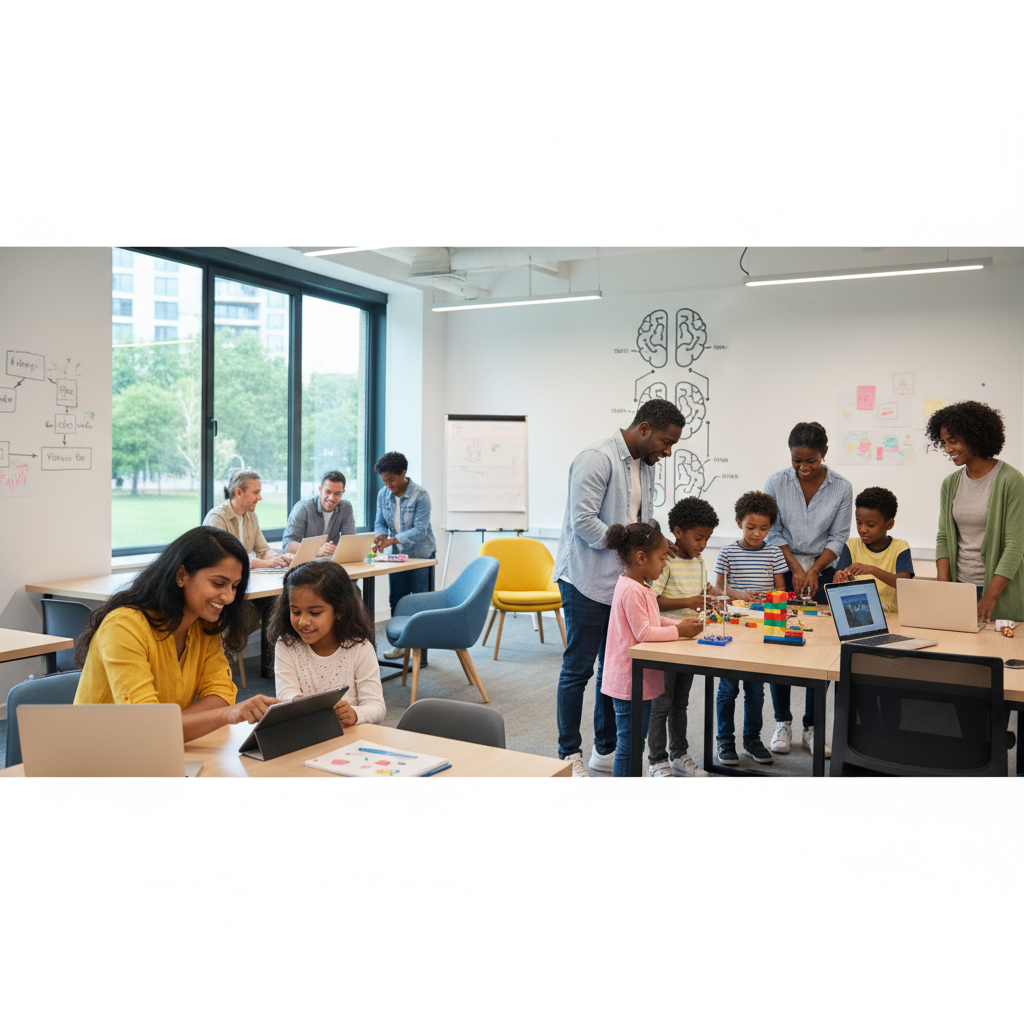
To encourage parents to start Teach to Earn community-based digital learning centers, we can leverage some TRIZ (Theory of Inventive Problem Solving) principles. Here’s how we can apply TRIZ to overcome barriers and inspire participation:
1. Introduce Resources Gradually
– Flexible Start-Up Models: Offer parents a “starter kit” for a basic digital learning center setup. They can begin small, using fewer resources or lower-cost equipment, then expand as they become more comfortable and successful.
– Tiered Curriculum: Provide tiered lesson plans, from beginner to advanced, allowing parents to build confidence before taking on more advanced tech skills or topics. This gradual scaling can make the process feel manageable.
2. Leverage Existing Community Spaces
– Partner with Local Centers: Encourage parents to host digital learning sessions in community centers, libraries, or schools after hours. This not only reduces setup costs but also makes the concept familiar to parents by utilizing existing resources.
– Use Shared Spaces: Foster collaboration by encouraging parents to set up joint learning centers with other families, reducing costs and logistical hurdles.
3. Make It Self-Sustaining
– Subscription Model for Equipment: Offer a subscription or rental model for PCs and digital equipment, allowing parents to start without a large upfront investment. Regular payments can support affordability, especially if complemented by Teach to Earn’s PC subscription model.
– Micro-Rewards System: Implement a small rewards program for center achievements, where active parents or students earn points toward free or discounted equipment upgrades or resources. These periodic rewards will encourage continued engagement.
4. Enhance the Center’s Value with Minimal Effort
– Multi-Use Equipment: Ensure PCs and equipment used in the centers are multipurpose—suitable for basic education, creative projects, and job skills training. This universality makes the investment more appealing to parents who want practical, versatile tools for their children.
– Flexible Curriculum: Design a flexible curriculum that can be adapted for varying age groups or skills, so centers don’t need separate resources for each age or grade. This makes it easier for centers to serve a diverse group of students.
5. Collaborative Community Events
– Community Demonstrations: Organize demonstration days where families can try out the digital learning experience, bringing visibility to the concept in a hands-on way.
– Parent-Child Workshops: Run workshops where parents and children learn side-by-side, illustrating the benefits of tech-driven learning and empowering parents to understand the setup better.
6. Incorporate Parent Training
– Parent-Led Training Programs: Provide resources or training sessions for parents who want to manage these centers, with simple “how-to” modules to build their confidence in running a learning space. By training parents themselves, we reduce dependency on outside experts.
– Create a ‘Lead Parent’ System: Establish a system where experienced parents help onboard new ones. By creating a mentorship model, parents will feel more supported in starting a center.
7. Minimize Financial Risk with Shared Resources
– Shared Resource Pools: Promote resource-sharing arrangements for parents in the same locality who wish to set up a center together. Sharing responsibilities, resources, and costs can reduce each family’s financial risk and make the centers more sustainable.
– Local Sponsorships: Engage local businesses to sponsor equipment or materials in exchange for recognition or advertising, lowering the initial costs for parents.
8. Ease Legal and Administrative Burdens
– Provide Ready-Made Guides: Equip parents with easy-to-follow setup guides, templates for permission letters, and FAQs for local authorities to smoothen any administrative processes.
– Legal Support Hotline: Establish a support line or forum to address any legal concerns parents might have, reducing uncertainty about the center’s operation.
9. Create Emotional Value and Sense of Impact
– Emphasize Social Impact: Show how digital learning centers positively impact the community, instilling pride and purpose. Emphasizing that parents can make a difference in their neighborhood can attract more participants.
– Gamify Impact Metrics: Implement a system where centers can “level up” based on impact metrics, such as the number of children reached or improvements in digital skills. Parents could then see a tangible measure of the center’s influence.
By addressing practical, emotional, and financial aspects through these inventive TRIZ-inspired strategies, parents will likely feel more motivated and prepared to start Teach to Earn centers, contributing to a broader educational impact. Start Here : https://www.teachtoearn.in/start-a-teach-to-earn-learning-pod/