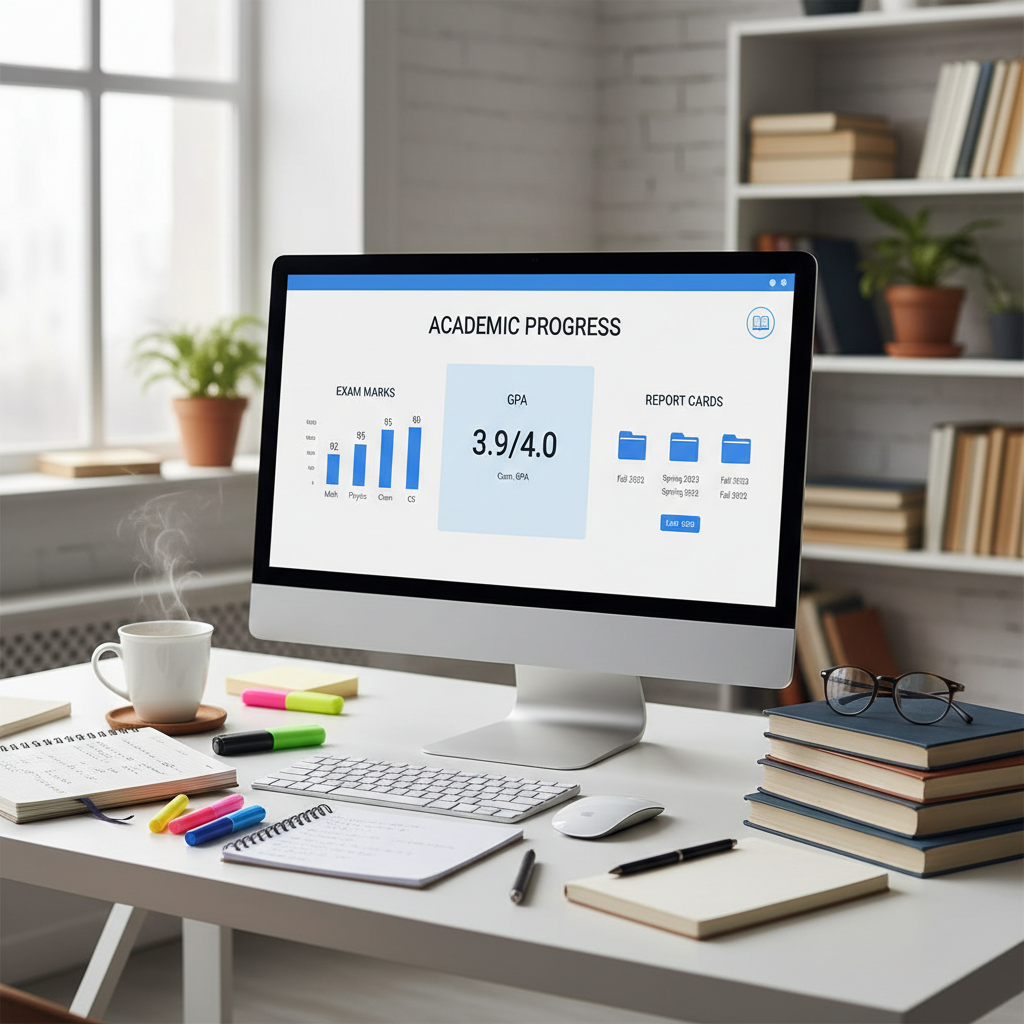
❓ Why do we still rely on GPAs, report cards, and exam marks?
Because that’s what the system is comfortable with. Schools and colleges have used the same yardsticks for decades: marks, transcripts, recommendation letters, and “character certificates.” They’re easy to standardize, file, and compare. The problem? They measure compliance, not curiosity; memory, not mastery.
❓ So what’s wrong with these traditional tools?
They’re static snapshots, not living stories. A report card tells you what a student scored on one test day. A letter of recommendation tells you what one teacher thinks about the student. Both are subjective, narrow, and often inflated.
Even worse, they’re easy to game. Students learn how to write “perfect” essays that impress committees, or collect extracurricular badges like Pokémon cards. The result: a glossy façade that hides genuine learning.
❓ How about for jobs? Don’t employers need grades and degrees?
Employers increasingly know that grades don’t guarantee grit, and degrees don’t ensure depth. A candidate’s portfolio—what they’ve built, solved, or contributed to—matters far more than their GPA. A glowing transcript may show diligence, but a personal website proves capability.
When you’re hiring, would you rather see “8.7 CGPA” or browse a site showing projects, reflections, failures, and improvements? Exactly.
❓ If all these are flawed, what’s the better alternative?
A personal website. It’s the most authentic, dynamic, and comprehensive mirror of a student’s journey. It grows with you. Unlike a PDF résumé or a LinkedIn profile, a website lets you express not just what you did but why you did it—and what you learned along the way.
❓ How is a personal website better than a traditional résumé?
Think of a résumé as a movie trailer. Your website is the full film—complete with backstory, director’s commentary, and behind-the-scenes footage.
A website gives you:
- Depth — You can show projects in detail, link code, essays, or art.
- Breadth — You can highlight everything from volunteering to side hustles.
- Reflection — You can blog about your thought process, not just outcomes.
Evidence — Instead of saying “I’m passionate about AI,” you can show your model, your dataset, your learnings.
❓ But what if I’m not a “tech” student? Do I still need a website?
Absolutely. Your subject doesn’t matter—your story does. Writers can post essays, artists can showcase portfolios, teachers can document methods, and students can reflect on learning journeys. Even a commerce student can explain the stock simulation they ran or how they analyzed a company’s balance sheet.
Your website is your digital home. In the 21st century, not having one is like living without an address.
❓ How does a personal website empower students?
It flips the power dynamic. Instead of being passive recipients of grades, students become authors of their own narrative.
You’re no longer waiting for teachers or recruiters to “evaluate” you—you’re curating your evidence, shaping your personal brand, and showcasing growth on your own terms. That’s real autonomy and agency—and that’s what education should aim for.
❓ Does this mean teachers and schools become irrelevant?
Not at all. Their role shifts—from being judges to becoming mentors. Instead of stamping grades, teachers can guide students to reflect, write, and build. Schools can host “website fairs” instead of just “science fairs.” Colleges can assess learning portfolios instead of exam scripts.
When education focuses on creation, not memorization, everyone wins.
❓ What should I include on my website?
Start simple:
About Me – Your background, values, and interests.
Projects – Anything you’ve built, researched, or explored.
Reflections – Short blogs on what you learned and how you struggled.
Showcase – Photos, certificates, presentations, or community work.
Contact – Make it easy for people to reach out.
Keep it honest. Authenticity beats polish. Visitors should feel your curiosity, not your editing skills.
❓ I’m worried about being judged. What if my work isn’t perfect?
Good! That means you’re learning. Perfection is boring. Growth is interesting. Colleges and employers respect people who document the journey, not just the destination. The version 1 of your website doesn’t have to impress anyone—it just has to exist.
Every few months, update it. As your work improves, your website becomes living proof that you’re a lifelong learner.
❓ Do universities or employers really look at personal websites?
Increasingly, yes. Many selective programs now ask for digital portfolios. Recruiters routinely google applicants—and what they find defines you. Would you rather they see your curated website or your old Instagram posts?
Your website lets you control your digital narrative. It’s your first impression—and in the digital world, first impressions last forever.
❓ What skills do I gain by building my website?
Plenty: writing, design, self-reflection, digital communication, and technical literacy. You’ll learn to present your ideas clearly—skills that matter far beyond school or college. More importantly, you’ll gain confidence in your voice.
When students learn to express themselves publicly, they also learn to think clearly.
❓ What platforms can I use to build it?
You can start with free tools like Notion, Google Sites, or WordPress. As you grow, explore GitHub Pages or your own domain (for example, yourname.in). Teach to Earn will soon publish guides and workshops to help you set it up quickly—even if you’ve never coded before.
❓ So this becomes my “report card for life”?
Exactly. A personal website is your living report card—one that evolves, deepens, and travels with you wherever you go. It’s not just a portfolio; it’s proof that you own your learning.
In a world drowning in degrees, your authenticity will be your biggest differentiator. Your personal website is your digital handshake—firm, confident, and uniquely you.
🌐 Final Thought:
Your GPA fades. Your website grows. Start building today and take ownership of your learning journey.