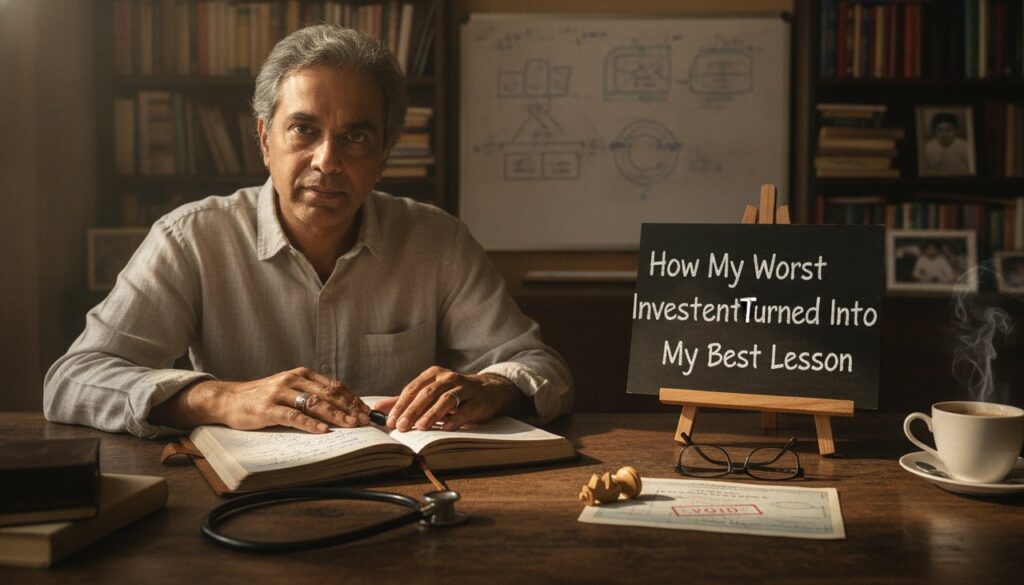
I’ve often found that some of the most valuable lessons in life come wrapped in the bitter packaging of failure. This is as true in the world of investing as it is in medicine. Today, I want to share with you the story of my worst investment — a story that, despite its painful outcome, taught me lessons that have become cornerstones of my investment philosophy.
When I first stepped into the realm of angel investing, I was filled with the same enthusiasm and optimism that I often see in young founders. I had a background in medicine, a successful IVF practice, and a desire to make a difference in the startup landscape. I believed I had the insight needed to back winners. How wrong I was.
My first venture was into a promising tech startup. The founders were charismatic and their vision, intoxicating. But here’s where my first mistake lay: I confused charisma for competence. Much like in medicine, where a patient’s confidence in a treatment shouldn’t overshadow the clinical evidence supporting it, I let the founders’ zeal cloud my judgment about the viability of their business model.
I invested heavily, driven by the fear of missing out on the next big thing. This is a trap many investors fall into, and I was no exception. The startup promised revolutionary technology, but promises are not enough. As I realized later, they had no clear path to revenue. The more I think about it, the more I am reminded of the importance of fundamentals, whether in assessing a startup or diagnosing a patient. In both fields, the basics are critical to success.
As the months went by, the startup struggled to gain traction. Their technology, while innovative on paper, faced significant implementation challenges. I had failed to dig deep into the technical feasibility, a rookie mistake that I now caution every new investor against. In one of my earlier posts, I talked about how founders often forget the basics. In hindsight, it wasn’t just the founders who forgot the basics; I did too.
My investment dwindled as the company burned through its cash reserves. Watching this unfold was akin to witnessing a complicated IVF cycle fail — each setback more disheartening than the last. But just as in medicine, where each failure teaches you something new, I began to see the silver lining.
First and foremost, I learned the importance of due diligence. In medicine, we conduct thorough investigations before reaching a diagnosis. This same rigor is necessary in investing. Understanding the market, the competition, and the startup’s unique value proposition is non-negotiable. I also realized the criticality of having a diversified portfolio. Putting all your eggs in one basket — or all your funds in one startup — can lead to disaster.
Another poignant lesson was the need for an exit strategy. In IVF, we always have a plan B for our patients. Similarly, investors must have a clear exit strategy. Not every investment will be a success, and knowing when to cut your losses is crucial. This experience taught me to be cautious about letting emotions dictate my investment decisions.
But perhaps the most profound lesson was about humility. This investment reminded me that failure is a part of the journey. Just as I’ve seen patients remain resilient after numerous IVF attempts, I learned to pick myself up, reassess, and try again. In my post “A Bad Investment I Made (And What It Taught Me)“, I dive deeper into how such experiences shape us.
To all fellow investors, especially those just starting out: embrace your failures. They are your greatest teachers. As I’ve discovered, the hard path often leads to the most rewarding destinations. Remember, every investment, like every medical endeavor, comes with its risks. But with each risk comes the opportunity for growth and learning.
In conclusion, while my worst investment was financially draining, it was intellectually enriching. It taught me lessons that no textbook or lecture ever could. I am a better investor today because of that failure, and I continue to apply these lessons not just in investing but in my medical practice and educational reform efforts. As I often say, the most valuable investment is in our ability to learn and adapt.