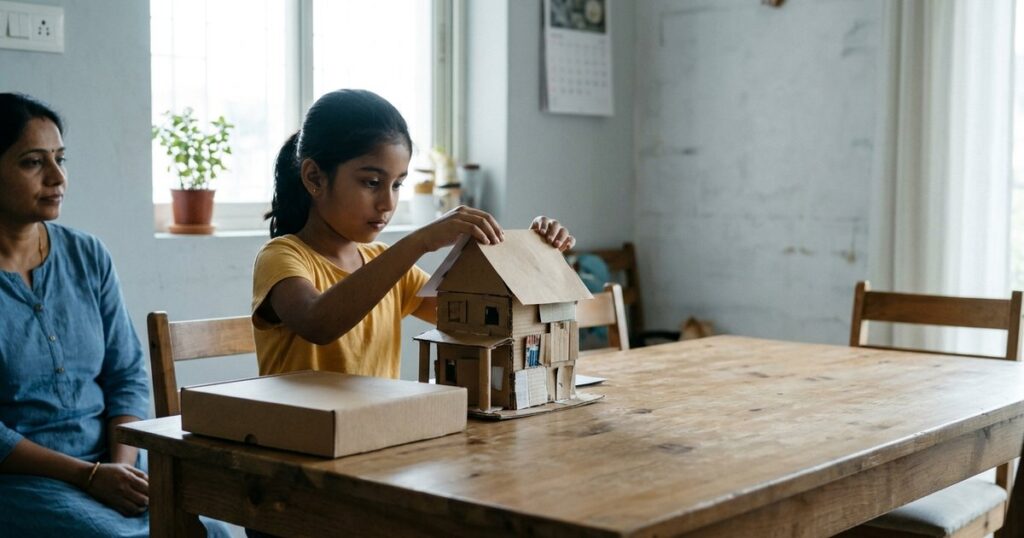
I recently spoke to a parent who had enrolled her nine-year-old daughter in three different weekend classes: robotics, Scratch programming and “artificial intelligence for children”. The child enjoyed none of them. She preferred drawing, reading stories and making elaborate paper houses. Her mother was worried that she was falling behind.
I told her that the child was not falling behind. The parent was.
For parents searching for coding for kids in India, my short answer is this: coding can be a useful way to teach children how to think, make and solve problems, but it is not a compulsory passport to a good career. A child need not learn Python at six, build a robot at eight or attend a coding academy simply because every other child in the apartment complex does.
I am an IVF doctor, an angel investor and a parent. In all three roles, I see the same mistake repeatedly: adults confuse an activity with an outcome. We assume that if a child attends the right class, buys the right kit or learns the right language, success will follow. It rarely works that way.
Coding is valuable when a child uses it to make something she cares about. It becomes another form of tuition when the only objective is to add one more certificate to the school file.
What does “coding for kids” actually mean?
Coding is writing instructions that a computer can execute. A child may use those instructions to create a game, animate a story, control a robot, analyse a small dataset or build a simple website.
But for a young child, the most useful part is not memorising commands. It is learning to break a large problem into smaller steps, test an idea, notice an error and try again. That is often called computational thinking. It is not confined to computers. A child planning a treasure hunt, organising a cricket team or explaining the steps in a recipe is already practising parts of it.
I would therefore separate three things that are often bundled together under the label “coding”:
| Activity | What the child is really learning | When it works well |
|---|---|---|
| Block-based programming, such as Scratch | Sequences, loops, conditions, cause and effect | When the child enjoys visual stories, games or animation |
| Text-based programming, such as Python | Syntax, abstraction, debugging and more formal problem-solving | When the child is ready to read instructions carefully and tolerate frustration |
| Robotics and physical computing | Connecting software instructions with physical results | When the child likes building, experimenting and working with her hands |
| App or website projects | Design, communication, iteration and understanding users | When the child has a real idea she wants to share |
A child who spends an hour changing the behaviour of a character in Scratch may be learning more than a child who mechanically copies a Python program from a worksheet. The tool matters less than the quality of the engagement.
Why should an Indian child learn to code?
There are three reasonable arguments.
The first is that technology is now part of almost every profession. A doctor may need to understand electronic medical records, diagnostic software and data. A farmer may use sensors and weather information. A small business owner may depend on digital payments, online distribution and automated customer support. A lawyer, teacher, designer or journalist will increasingly work with software, even if none of them becomes a professional programmer.
Children should not grow up believing that technology is magic performed by another caste of people. A little coding can help them understand that software is made by humans, can contain errors and can be questioned.
The second argument is that programming gives immediate feedback. A child writes something, runs it, sees what happens and then changes it. This is a useful contrast to much of Indian schooling, where the child writes an answer, waits for a teacher to mark it and is rewarded for reproducing the expected response.
The third argument is creative ownership. A child who only consumes YouTube videos and mobile games is in a passive relationship with technology. A child who creates a small game or animation discovers that the screen can be a canvas, not just a vending machine for entertainment.
These are good reasons. They are not a guarantee of employment.
Learning to code is not the same as becoming employable. A child becomes capable by learning to think clearly, communicate well, persist through difficulty and make things that other people find useful.
I have met many founders who began programming early. I have also met excellent founders who never wrote code as children. What they share is curiosity and a habit of making things. One built a small business in school. Another organised a college event and discovered that she enjoyed solving people’s logistical problems. A third learnt to code only after identifying a problem he wanted to solve.
The lesson I draw as an investor is simple: early exposure can help, but early specialisation is not necessary.
What age should a child start?
There is no magic age. Five-year-olds can play with sequencing and visual programming, but that does not mean every five-year-old needs a coding class. At that age, a child may get more from puzzles, building blocks, drawing, pretend play and listening to stories.
I would use readiness rather than age. A child is probably ready for a structured coding activity when she can:
- follow a short sequence of instructions;
- use a mouse, keyboard or tablet without constant adult rescue;
- explain what she wants the computer to do;
- accept that the first attempt may not work;
- remain interested long enough to change and test an idea.
For some children this may happen at six. For others it may happen at ten or twelve. There is no developmental prize for starting earlier.
For younger children, I prefer visual tools such as Scratch, where blocks fit together and the child can focus on logic rather than punctuation. Later, Python is a sensible next step because it is readable, widely used and useful for many kinds of projects. But the language should follow the project, not become the project.
A child who wants to analyse cricket scores might enjoy Python. A child who wants to animate a comic may thrive in Scratch. A child who wants to make a robot move may be happier with a physical computing kit. I would not make a six-year-old learn Java because a coaching centre has printed it on a brochure.
How I would test whether coding is right for my child
I would not begin with a one-year course or an expensive kit. I would run a small experiment at home.
- Choose one project. Ask the child what she would like to make: a game in which a cat catches a ball, a quiz about animals, a digital birthday card or a simple animation.
- Use a free tool first. Scratch is free. There are also beginner-friendly lessons on Code.org. Sit beside the child, but do not take over the keyboard.
- Allow several short sessions. Twenty to thirty minutes is enough initially. Stop before the child becomes exhausted or resentful.
- Look at the response to failure. Does the child want to know why the character did not move? Does she change something and try again? Or is she interested only while the adult is doing the work?
- Ask what she would change next. This is more revealing than asking whether she “liked coding”. A child may dislike a lesson but still have an idea for improving her game.
If the child remains curious after two or three weeks, then a class may be worthwhile. If she does not, I would stop. We do not need to turn every hobby into a curriculum.
This is similar to how I think about angel investing. I do not invest a large amount in a founder merely because the pitch deck is attractive. I make a small initial commitment, observe how the founder behaves when something goes wrong and then decide whether to continue. Parents should apply the same discipline to extracurricular education.
How should parents choose a coding class in India?
The Indian market is full of coding academies making extravagant promises. Some claim that a child will become an app developer in a few months. Others imply that coding classes will guarantee admission to a prestigious college or a high-paying job. I would treat these claims as warning signs.
A good beginner programme should have the following features:
- children create projects instead of merely watching demonstrations;
- the teacher asks children to explain their thinking;
- the class is small enough for the teacher to see each child’s work;
- mistakes are treated as part of the process;
- parents can see the actual work, not just a certificate;
- the course does not rush children through several programming languages;
- the child has some choice about what to build.
I would ask the centre to show me three unfinished projects, not three polished marketing videos. I would ask how the teacher helps a child who is stuck. I would ask whether children work independently or simply follow a projected screen. I would also ask what happens when a child loses interest after three sessions.
The last question matters. Many programmes are designed to retain the paying parent rather than serve the child. A certificate at the end is easy to produce. Genuine understanding is harder to measure.
Parents should also check the practical details: class size, teacher experience, device requirements, refund policy and whether the course is live or recorded. A recorded class can be useful for a motivated older child. It is a poor substitute for patient guidance when a younger child is learning how to debug.
What are the common mistakes?
The first mistake is starting because everyone else has started. This is the same anxiety that drives parents to send children for JEE coaching in Class 6, even when the child has not yet discovered whether she enjoys mathematics. I have written elsewhere about whether coding belongs in school. The answer depends less on the subject and more on how it is taught.
The second mistake is believing that a certificate has value by itself. It does not. A child who has completed ten courses but cannot explain what she built has not gained much. A child who has made one simple game and can describe its rules, bugs and possible improvements has learnt something real.
The third mistake is parental interference. I have watched parents sit beside a child and correct every line of code. They cannot tolerate the child being stuck for five minutes. They then wonder why the child does not develop confidence.
In medicine, I have learnt that a patient needs information and support, but not constant intervention. The body must do some of the work itself. Children are similar. If I solve every small problem for them, I may produce a correct result while preventing learning.
The fourth mistake is confusing screen time with coding time. Programming is screen-based, but not all screen time is equivalent. Still, a child needs sleep, exercise, conversation, books, unstructured play and time outdoors. Coding should not displace these simply because it sounds educational.
The fifth mistake is turning a child’s interest into a family investment thesis. A ten-year-old who enjoys Scratch does not need a personal brand, a YouTube channel and a start-up registered in her name. Let her make things privately. Not every activity needs to be monetised.
What about artificial intelligence?
Parents now ask whether children should learn artificial intelligence instead of ordinary programming. My answer is that the question is premature for most young children.
A child who understands how to break down a problem, write clear instructions, inspect an output and question an error will be better prepared for AI than a child who has memorised the phrase “machine learning” without understanding any of those things.
Older students can certainly experiment with simple datasets, image classifiers and generative AI tools. They should also learn that these systems can be confidently wrong, reproduce bias and expose private information. The ability to use AI responsibly will require judgement, not just clever prompts.
I would rather see a fourteen-year-old build a small project, document what went wrong and explain the limitations than attend an “AI boot camp” and emerge with a certificate and no working understanding.
What if my child does not like coding?
Nothing terrible will happen.
A child who dislikes coding may love biology, music, carpentry, theatre, languages, sport or history. These interests can also lead to meaningful work. Even within technology, many important roles involve design, research, sales, teaching, operations, writing or understanding users.
I worry when parents treat coding as the new compulsory English. English became important because it is a medium for communication and access to knowledge. Coding is useful, but it is not the only way to understand technology or earn a living.
We should also be careful about gender stereotypes. Girls should not be told that coding is for boys, and boys should not be pushed into it because they are expected to be technically inclined. I have seen girls produce more thoughtful projects because they pay close attention to the user’s experience. I have seen boys lose interest because they were enrolled without being asked.
The child’s temperament matters more than the child’s gender. Patience, curiosity and a willingness to experiment are better predictors of enjoyment.
My practical recommendation
If I were advising a parent, I would do this:
- Do not enrol a child merely because other parents are doing so.
- Give the child a free, small project before paying for a course.
- Choose a teacher and a project, not a fashionable programming language.
- Prefer making and debugging over lectures and worksheets.
- Review the child’s actual work every few weeks.
- Stop if the activity produces only anxiety, unless the child wants to continue.
- Protect reading, play, sleep and face-to-face conversation as fiercely as coding time.
For a child who enjoys it, coding can become a wonderful medium of expression. It can teach patience because errors are unavoidable. It can teach humility because the computer does exactly what we told it to do, not what we intended. It can teach collaboration because worthwhile projects quickly become too large for one person. These are useful lessons for children and founders alike.
But I would not make coding the latest parental arms race. Indian parents have already converted examinations, music, sport and even hobbies into competitive scoreboards. We do not need to do the same with programming.
The nine-year-old girl who disliked her three coding classes did not need another course. She needed permission to draw. Perhaps, after drawing for a year, she will want to animate her characters and discover Scratch on her own. Perhaps she will never write a line of code. Either outcome is perfectly acceptable.
My job as a parent is not to predict the exact skill that will secure my child’s future. I cannot do that. My job is to give her enough exposure to the world, enough freedom to choose and enough confidence to keep learning when the first attempt fails. If coding helps with that, I am all for it. If it merely adds another certificate to her folder, I would rather she spend the hour making a paper house.