Part 18 of 19 in Why Schools are Broken: and How to Fix Them← Part 17Part 19 →
This chapter argues that Indian education needs both anger at wasted young lives and hope for smaller, more human arrangements. It offers practical steps for parents, young people and community educators who want to improve learning without waiting for the schooling system to reform.
- Use AI tutors for individualised teaching that classrooms cannot provide.
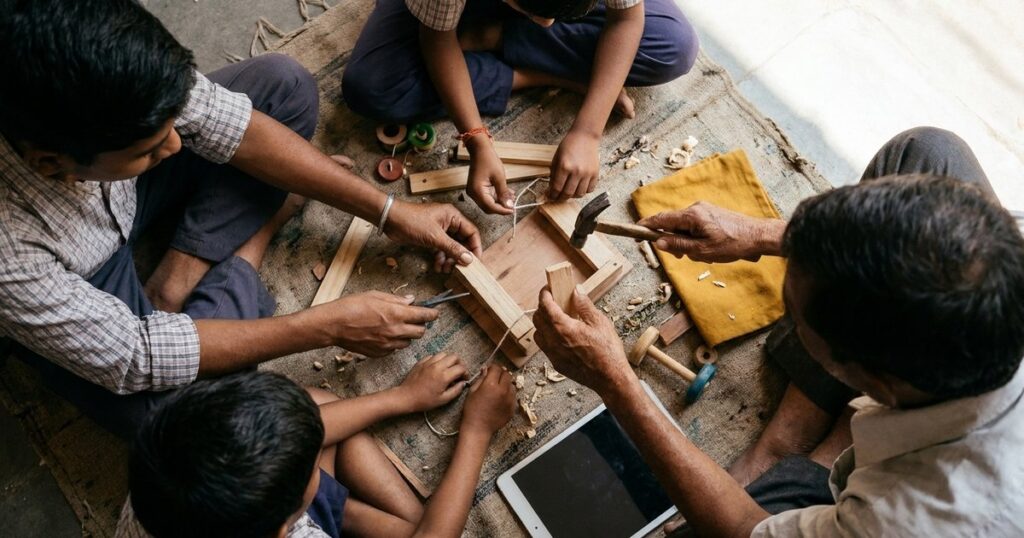
- Create small learning pods, microschools, apprenticeships and neighbourhood learning.
- Value demonstrated skill over paper credentials where communities have influence.
- Protect children’s time for play, reading, making and contributing.
- Education is a community responsibility, and AI provides better tools for Indian communities.
Paul Goodman wrote in a spirit of both anger and hope. He was angry that society was wasting young lives. He was hopeful that smaller, more human arrangements could do better. Both emotions are appropriate in India today.
The schooling system will not reform itself quickly. Credential requirements will not disappear overnight. Coaching institutes will continue to thrive on anxiety. Yet parents, young people and community educators do not have to wait. They can:
- Use AI tutors to provide the individualised teaching that classrooms cannot.
- Create small learning pods and microschools.
- Arrange real apprenticeships and neighbourhood learning.
- Value demonstrated skill over paper credentials wherever they have influence.
- Protect children’s time for play, reading, making and contributing.
Education, in Goodman’s sense, has always been a community responsibility. AI simply gives Indian communities better tools than they have ever had.
Frequently asked questions
How can communities improve education in India?
They can create learning pods and microschools, arrange apprenticeships and neighbourhood learning, and use AI tutors for individualised teaching.
Can AI tutors replace classroom teaching?
The chapter says AI tutors can provide individualised teaching that classrooms cannot.
Why should schools value skills over credentials?
The chapter recommends valuing demonstrated skill over paper credentials wherever parents, communities and educators have influence.
What should children have more time for?
Children’s time should be protected for play, reading, making and contributing.