Part 12 of 17 in Work-Life Balance for Indian Founders: A Practical Guide for the Indian Entrepreneurial Family← Part 11Part 13 →
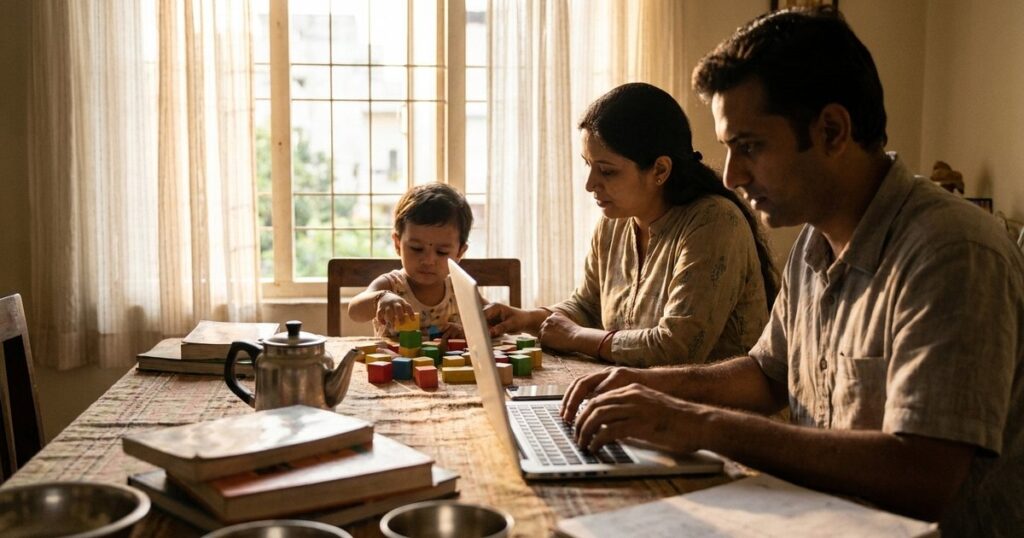
The YourDOST story of Puneet and Richa Manuja remains one of the clearest recent illustrations of intentional integration. Facing the dual demands of a newborn and a growing mental-health platform, they experienced the classic guilt of not giving 100 percent to either role. A friend’s suggestion—bring the child to the office—changed the dynamic. Rudra’s presence reduced the artificial separation and allowed the founders to model both entrepreneurship and parenting for their team. By the time the child was 1.5 years old, both the company and the family had found a workable rhythm. The lesson is not that every founder should bring children to the office; it is that Indian founders can invent solutions that fit their particular family structure rather than importing a rigid Western separation.
PC Musthafa’s journey with iD Fresh Food shows the power of structured family capital. Starting from extreme poverty, he built the company with cousins who supplied both early labour and the trust networks required for a fresh-food business. The family’s involvement was not informal favour; it was an operating system. Today the brand is a significant revenue generator, and the next generation already interacts with the products. The risk of blurred lines was managed by professionalising operations while retaining the family core. Founders who follow this path must still document roles and compensation so that success does not breed later entitlement or resentment.
Amrisha Agarwal’s relocation from Kolkata to Rishikesh to open Bistro de Lavenia represents the opposite strategy: deliberate shrinkage of the environment to protect a child’s development. After personal loss and marital strain, she chose a quieter town and built a small hospitality business around her daughter’s name. The story reminds us that “support system” need not mean a large joint family; it can mean a chosen community and a simpler operating environment. Indian founders have geographic and cultural flexibility that many Western founders lack.
Women founders such as Namita Thapar, Ghazal Alagh, and Sakshi Kapahi add another layer. They navigate not only the ordinary entrepreneurial pressures but also gendered assumptions about who is “really” running the company and constant negotiation of visibility with children and extended family. Their public reflections—that perfect balance does not exist and that one must make peace with daily choices—offer practical permission for other founders, male and female, to stop waiting for an ideal schedule that never arrives.
Finally, the quiet solopreneurs who build products after 9-to-5 jobs, the Uber driver who left a corporate role for more family time and higher earnings, and the countless founders who keep Sunday sacred illustrate that Indian work-life practices are already more diverse than the 70-hour debate suggests. The common thread is intentionality: deciding what matters, protecting it, and using every available tool—including family and AI—to defend it.