Part 4 of 17 in Work-Life Balance for Indian Founders: A Practical Guide for the Indian Entrepreneurial Family← Part 3Part 5 →
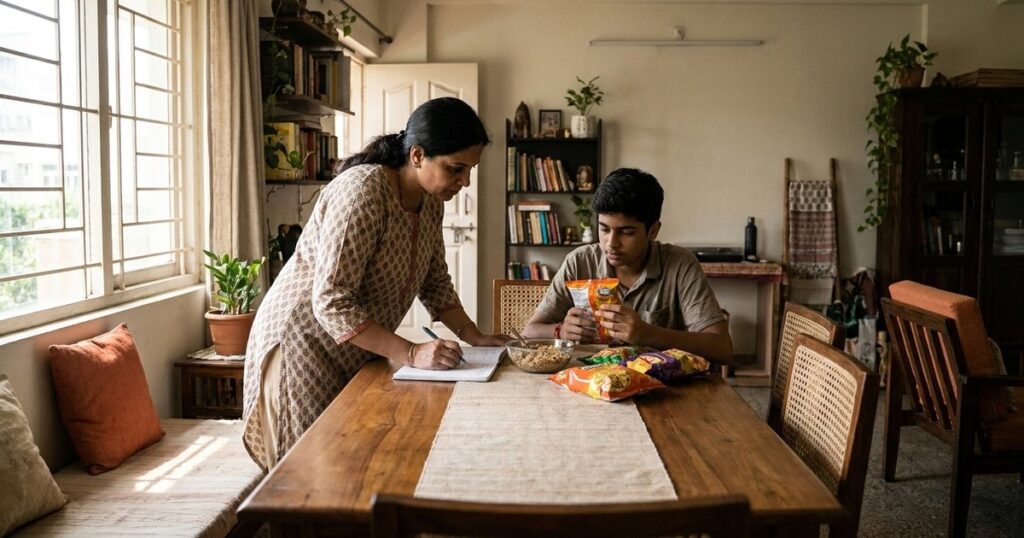
Hirshberg writes vividly about the trials of co-habiting with a home-based business: employees wandering into the kitchen, the near-impossibility of true separation, and the constant negotiation of family space. In India the problem is amplified by joint or multi-generational households. The dining table becomes the conference table; the children’s study room becomes the packing or call station; WhatsApp groups with uncles, aunts, and cousins become informal board meetings. Physical and emotional boundaries must be drawn more deliberately.
Sahil Jain and his nutritionist mother Meena joined forces to build a millet-based snack brand. Early stress was real—she managed production while running her practice—but they learned to separate roles and today describe themselves as closer than before. Arushi’s mother-daughter co-founding experience required conscious boundary-setting: co-founders at work, mother and daughter at home. These Indian stories show that family involvement can be a competitive advantage when roles, decision rights, and communication norms are made explicit.
At the other extreme, Amrisha Agarwal left the chaos of Kolkata after personal loss and marital strain and relocated with her young daughter to Rishikesh. There she opened Bistro de Lavenia, named after her child. The move deliberately shrank the social and spatial environment to protect the daughter’s development. Both paths—deep family integration and deliberate relocation—are valid Indian strategies depending on the family’s needs and the nature of the business.
Things to Talk About
- Which physical spaces in the home are permanently off-limits to the business, and how will we enforce that with both nuclear and extended family?
- How will we signal to relatives when a conversation has shifted from personal to business so that expectations remain clear?
Things to Do
- Designate one room or one daily time window as “business only” and post a simple visual schedule—generated if needed with AI—on the fridge or family WhatsApp group.
- Ask an AI to draft a one-page “family operating agreement” that lists roles, decision rights, compensation (even if zero), and communication norms for any relatives involved in the venture. Review and sign it.