Part 7 of 17 in How to Program Your Brain so You Can Win: Reframes, Systems, and AI for Indian Success← Part 6Part 8 →
Luck is not entirely random. You can increase the surface area on which luck can land. India already has a cultural concept that points in this direction: jugaad. Too often jugaad is treated only as a response to scarcity. It can also be a deliberate method of manufacturing additional opportunity.
Usual frame: Luck is random and I have very little of it.
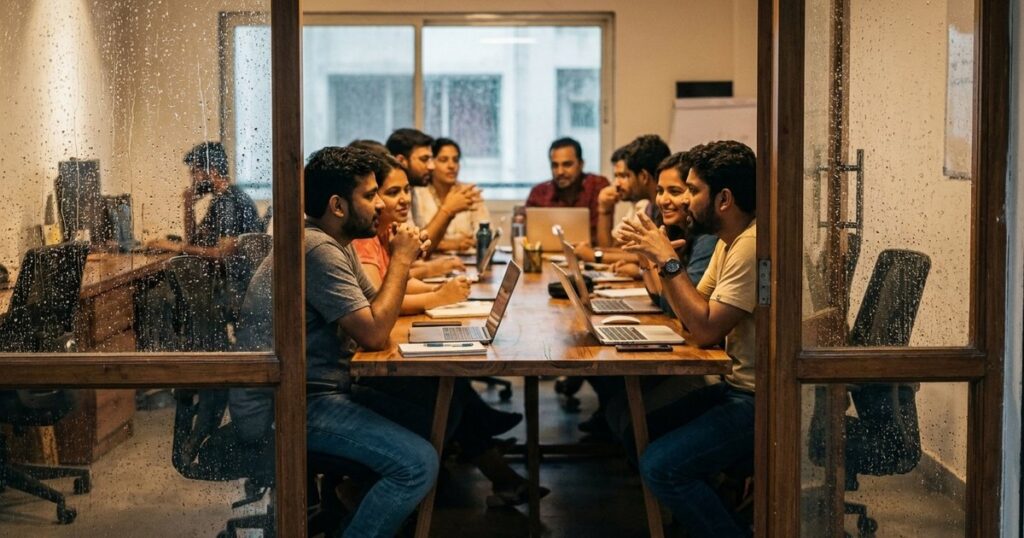
Reframe: I will place myself in environments where more luck exists — more talented people, more information flow, more experiments, more capital.
For many Indians this means both physical and digital movement. A developer in a smaller city who contributes regularly to open-source projects, attends virtual communities, and applies to remote roles is deliberately expanding their luck surface. A student who joins a serious study group rather than remaining isolated is doing the same. A founder who spends time in higher-density startup ecosystems is placing themselves where accidental collisions are more likely.
Many early employees of companies such as Flipkart, Ola, and Paytm did not possess dramatically superior credentials. They were simply present in higher-energy environments at the right moments. Part of their “luck” was designed through location and network choices.