Part 8 of 29 in Helping Your Children Learn: What Parents Need to Know← Part 7Part 9 →
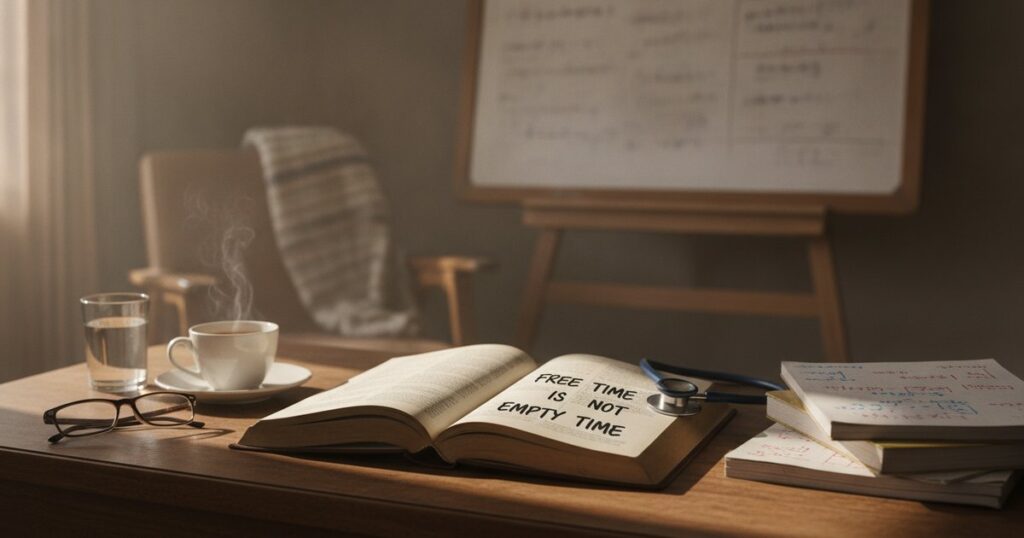
Free time isn’t an absence of activity; it’s a space for imagination and growth.
What free time needs, though, are the right conditions. It’s not simply plopping a child in front of a screen while you finish a Zoom call. Genuine free time requires a stretch long enough to allow boredom to set in. Twenty minutes between activities doesn’t qualify — that’s a corridor, not a room.
Children also need materials that invite creativity without demanding a specific outcome. Things like paper, cloth, old tools, or even a kitchen can become arenas for exploration. And while mess is often a byproduct, it’s important to allow it with the understanding that it will be tidied up later. Saying “don’t start, it will make a mess” is akin to banning experiments.
Adults play a role too, but not as directors. They should be nearby, present, but not programming the activity. The first few minutes of free time might often be filled with complaints and whining, but that’s the prelude to the real work, the creative work, which surfaces once the child has moved past immediate demands. If we continually rescue them from boredom, they never learn to engage their own ideas.
Take Kabir’s example — a ten-year-old living on the fourteenth floor in Mumbai. There’s no cricket in the lanes for him, and the society garden has rules against ball games. Instead of filling this time with structured activities, Kabir’s father gave him three pots, a marked mug, and the job of learning how much water a money plant needs during April’s heat. It wasn’t labeled a science project, but Kabir learned through trial and error that afternoon sun differs from morning sun, and that vague measurements like “a little water” are inadequate. When he later encountered the school chapter on water, he already had a personal stake in it.
In city environments where childhoods are constrained, it’s tempting to fill every spare moment with structured activity. But it’s precisely these constrained environments that make free time more critical, not less. The world isn’t offering free exploration in the lanes anymore, so we must create spaces for it within our homes.
- Identify the longest unstructured stretch in your child’s week. If it’s hard to find, that’s the first insight.
- Create conditions for genuine free time: sufficient duration, available materials, permission to make a mess, and an adult who is present but not directing.
- Observe what emerges after the initial boredom and complaints. This is where the child’s self-driven learning begins.