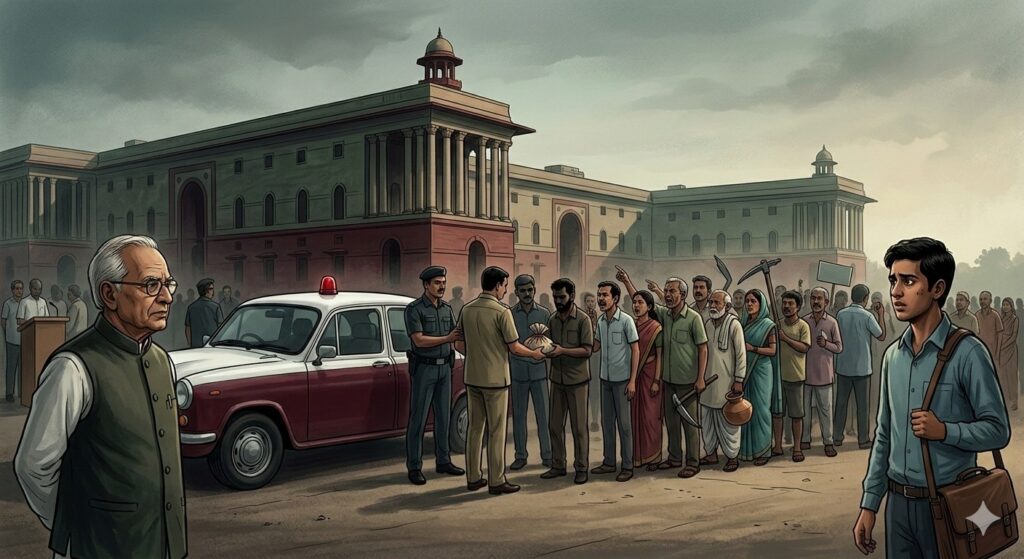
Student: Dr. Malpani, my grandfather always used to say that becoming an IAS officer was the highest honor in India. He would tell me that IAS officers ran the country, and that they were respected everywhere. But today, I hardly see anyone admiring them. Why has the respect for IAS officers declined so much?
Dr. Malpani: That’s a very perceptive question. You’re right—there was a time when IAS officers were considered demi-gods. They were the elite of the elite, chosen through the toughest exam in the country. They symbolized integrity, power, and the ability to make a difference. But today, the story is very different.
Student: What changed?
Dr. Malpani: Several things. Let’s start with corruption. While not every IAS officer is corrupt, the sad reality is that the default assumption today is that most of them are. Even the honest ones are guilty of turning a blind eye to the corruption happening right under their noses. By remaining silent, they become complicit. Silence in the face of wrongdoing is not neutrality—it’s encouragement.
Student: But isn’t it difficult for an honest officer to fight the system? Maybe that’s why they stay quiet?
Dr. Malpani: True, the system is stacked against them. But think about this—these are the same people we hail as the “best brains of India.” If the best brains can’t stand up for what’s right, then who will? Their silence is not just cowardice, it’s betrayal. Citizens expect them to be guardians of public interest, not mute spectators.
Student: I see your point. But then why do people still rush to prepare for UPSC? The craze is still there.
Dr. Malpani: That’s because the IAS is still seen as a ticket to power, status, and security. Families encourage their children to become IAS officers, not because they’ll serve the country, but because they’ll get a big bungalow, a red beacon car, and unquestioned authority. It has become less about service, and more about privilege. That shift in motivation is at the heart of the problem.
Student: So you’re saying it’s not just corruption, but also this hunger for power and perks that makes the service lose respect?
Dr. Malpani: Exactly. Respect comes from sacrifice, from serving others selflessly. But when citizens see officers prioritizing their personal comforts over public duty, respect naturally erodes. People see officers siding with corrupt politicians, harassing whistleblowers, or sitting quietly while public money is looted. That image sticks.
Student: But surely there must be some good officers still?
Dr. Malpani: Of course, there are. I personally know IAS officers who are dedicated and upright. But sadly, they are the exception, not the rule. And here’s the tragedy—even the good ones rarely speak out against their corrupt colleagues. Out of fear, or out of misplaced loyalty to the “system,” they keep quiet. And that silence makes citizens lose trust in the entire service.
Student: Isn’t that harsh? Why should an honest officer be blamed for what others do?
Dr. Malpani: Let me give you an example. Imagine a classroom. If one student cheats and the teacher ignores it, what happens? Soon, everyone assumes cheating is acceptable. Similarly, if one officer takes bribes and the rest remain silent, the entire cadre is tainted. Society doesn’t have the time or energy to separate the good from the bad—it paints them all with the same brush.
Student: That explains why the respect is fading. But then, Dr. Malpani, what’s the solution? Should we just give up on expecting anything from IAS officers?
Dr. Malpani: Not at all. As citizens, we must continue to demand accountability. The IAS is a powerful institution—if used well, it can transform India. But for that to happen, we need officers with courage, who put principles above perks. And we, the people, must stop glorifying the system blindly. Instead of admiring officers for their status, we should admire them for their integrity.
Student: That sounds tough. Most people don’t even know how the system works.
Dr. Malpani: That’s where citizen activism comes in. We must ask questions, file RTIs, expose corruption, and hold officers accountable. Respect should be earned, not demanded. If officers know that citizens are watching closely, they’ll think twice before looking away from corruption.
Student: Do you think young people like me should still aspire to join the IAS?
Dr. Malpani: Absolutely—if your goal is to serve, not to enjoy privileges. We need a new generation of officers who are fearless, who see themselves as public servants, not rulers. If you enter the service with that mindset, you can make a real difference. But if you’re entering just for the perks, you’ll end up adding to the rot.
Student: That’s a sobering thought. So, the decline in respect is not irreversible?
Dr. Malpani: Not at all. Respect can be regained, but only when officers live up to the ideals the service was created for. Until then, citizens will continue to see the IAS not as guardians of justice, but as silent partners in corruption.
Student: Thank you, Dr. Malpani. You’ve given me a lot to think about.
Dr. Malpani: Remember, change starts with awareness. If citizens like you refuse to accept mediocrity and complicity, we can rebuild trust in our institutions. India deserves officers who are respected because they serve, not feared because they rule.
👉 Want to learn more about building a better India by fighting corruption and encouraging citizen activism? Explore more insights and resources at www.empoweredindian.in