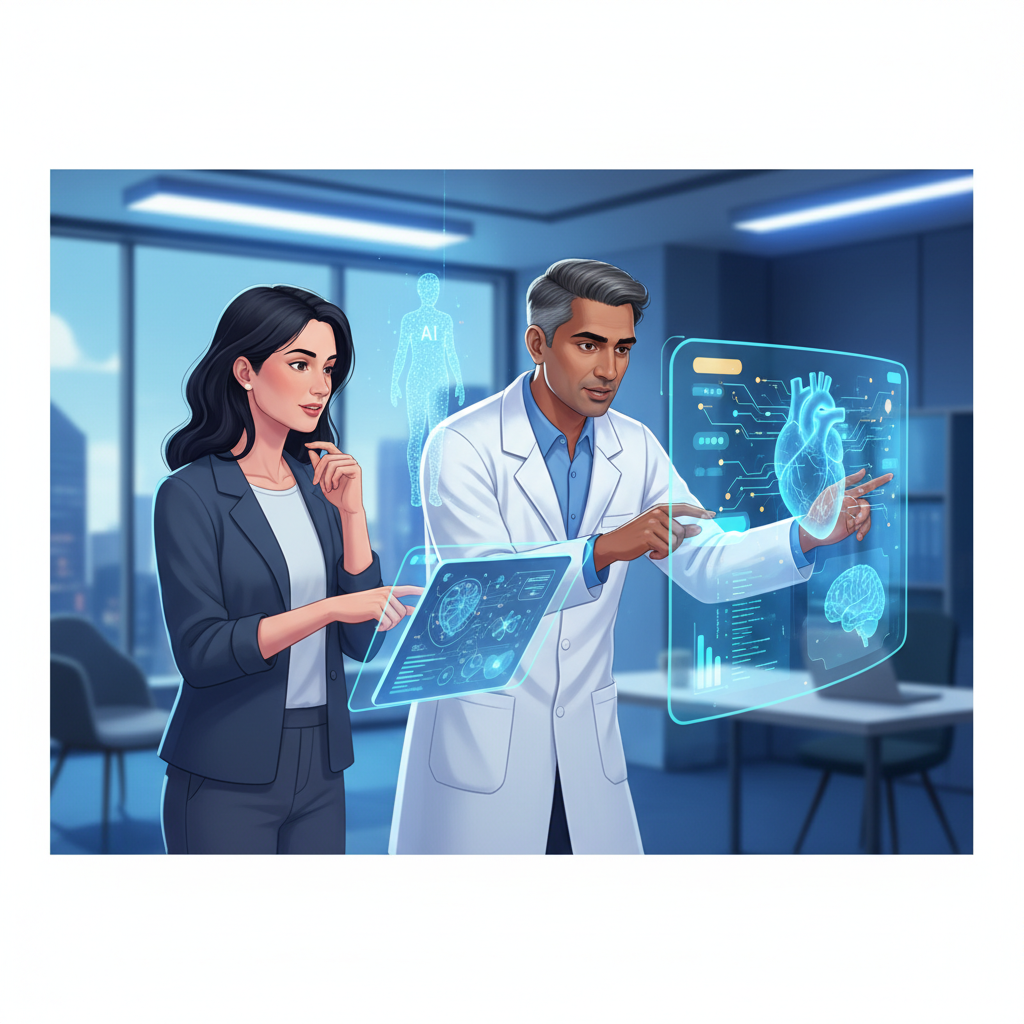
A patient-first FAQ by Dr Aniruddha Malpani
Healthcare is changing rapidly. Artificial intelligence (AI) is entering clinics, labs, and hospitals across the world. But technology alone does not improve care. The real transformation happens when patients become active, informed partners—not passive recipients. Intelligent patients help doctors use AI wisely, ethically, and effectively. Here are the most important questions patients ask me.
1. What does it mean to be an “intelligent patient”?
An intelligent patient is not someone with a medical degree. It is someone who is curious, informed, and engaged in their own healthcare.
- Intelligent patients:
- Ask thoughtful questions
- Seek reliable information
- Understand their options
- Participate in decision-making
They don’t blindly obey, and they don’t blindly distrust. They collaborate. When patients think for themselves, healthcare becomes safer, smarter, and more humane.After all, patients are the largest untapped healthcare resource, and AI can help them to help themselves.
2. How is AI changing modern healthcare?
AI can now:
- Analyse medical reports and scans rapidly
- Predict risks and outcomes
- Suggest treatment options
- Reduce human error
- Save time for doctors and patients
Used correctly, AI improves accuracy and efficiency. But AI is a tool, not a replacement for human judgment. It needs intelligent supervision—from both doctors and patients.
3. Why do doctors need intelligent patients in the age of AI?
Because AI works best when humans ask the right questions.
A passive patient may accept whatever the system suggests. An intelligent patient asks:
- Why is this test needed?
- Are there alternatives?
- What does the AI recommendation actually mean?
- What are the risks and uncertainties?
These questions force doctors to think more carefully, use AI responsibly, and personalise care. In this way, intelligent patients actually improve medical decision-making.
4. Can AI replace the doctor-patient relationship?
No—and it shouldn’t.
Medicine is not just data and algorithms. It is: Trust, Empathy , Context and Values.
AI can process information, but it cannot understand your fears, priorities, or life goals. Only a human conversation can do that. The future of healthcare is AI-assisted, human-centred medicine, where technology supports—not replaces—the doctor-patient bond.
5. How can patients use AI to become better decision-makers?
Patients today have powerful tools available:
- AI chatbots for medical education
- Symptom checkers
- Treatment comparison tools
- Risk calculators
These tools help patients understand their condition before meeting the doctor. This leads to smarter conversations, not longer consultations. An informed patient helps the doctor focus on what truly matters—personalised care.
6. Is there a danger in patients using AI on their own?
Yes—if used blindly.
AI can: Be incomplete, Misinterpret symptoms, Lack context or Provide general—not personalised—answers/
That’s why AI should be used as a guide, not a final authority. Intelligent patients use AI to learn, then discuss insights with their doctor. The goal is collaboration, not self-diagnosis.
7. How do intelligent patients help doctors use AI more effectively?
When patients are engaged:
- They provide clearer medical history
- They notice inconsistencies
- They ask for explanations
- They challenge unnecessary tests
- They clarify goals and preferences
This improves the quality of input, which improves the quality of AI output. Remember: garbage in, garbage out. Intelligent patients help ensure the data and decisions are meaningful.
8. Does patient autonomy improve healthcare outcomes?
Absolutely.
When patients understand and choose their treatment: Compliance improves, Anxiety decreases, Trust increases and Outcomes improve
Autonomy does not weaken the doctor’s role—it strengthens it. A respected patient becomes a cooperative partner. Medicine works best when decisions are shared, transparent, and informed.
9. What kind of doctor-patient relationship should we aim for in the AI era?
Not paternalistic. Not transactional. Collaborative.
In the best relationships:
- Doctors provide expertise and judgment
- Patients provide values and preferences
- AI provides data and analysis
Together, this creates balanced, personalised, intelligent care. Trust grows when both sides respect each other’s role.
10. What practical steps can patients take today?
If you want to become an intelligent patient:
- Learn about your condition from reliable sources
- Use AI tools to understand—not replace—medical advice
- Ask clear, thoughtful questions
- Request explanations in simple language
- Participate in decisions about your treatment
- Be honest and transparent with your doctor
- Focus on long-term health, not quick fixes
- Small changes in patient behaviour can transform healthcare at scale.
11. Will intelligent patients change the healthcare system?
Yes—slowly, but surely.
Healthcare improves when:
- Patients demand transparency
- Patients reject unnecessary treatments
- Patients seek evidence, not marketing
- Patients value partnership over authority
- Technology alone cannot reform healthcare. Empowered patients can.
Final Thought
The future of medicine is not doctor versus patient, and not human versus AI. It is doctors and patients working together, using AI wisely, to make better decisions, reduce errors, and improve outcomes.
When patients gain autonomy and agency, doctors practice better medicine. When doctors respect informed patients, trust grows. And when trust grows, healthcare becomes safer, kinder, and more effective—for everyone. Intelligent patients don’t threaten doctors.They make doctors better.
Explore Dr. Malpani’s AI Twin at https://www.drmalpani.com/chat-w-chatbot/index.html