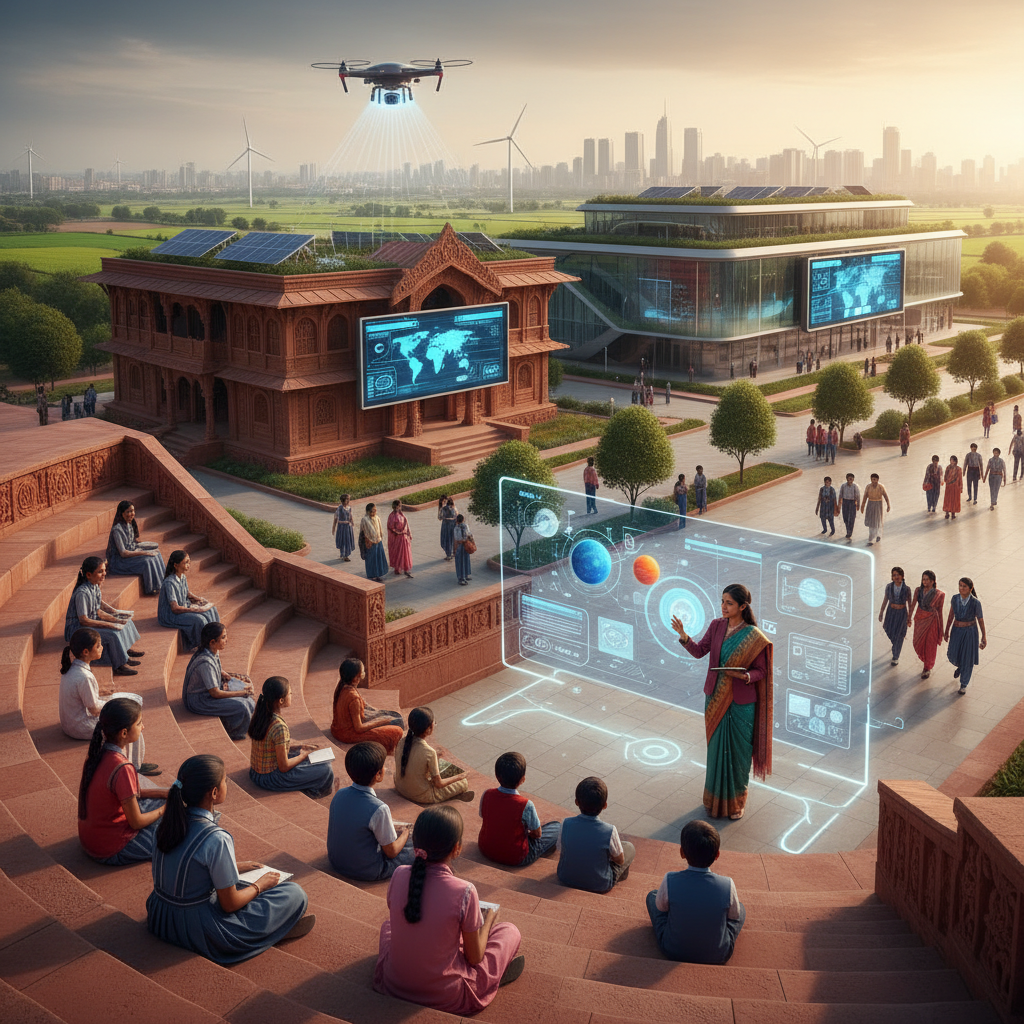
Govt Education Dept Official: Dr. Malpani, thank you for meeting with me. I’ve heard a lot about ApniPathshala and your focus on community microschools. Why do you think this model is the future of education in India?
Dr. Malpani: I’m glad to be here. The simple truth is that traditional schooling is broken. It was designed for the industrial age, with a one-size-fits-all approach. Today’s children live in a rapidly changing world, and they need skills like creativity, critical thinking, and adaptability. Community microschools are the answer because they focus on students as individuals, giving them the autonomy and agency to shape their own learning.
Official: But don’t traditional schools serve a purpose? They provide structure, curriculum, and assessments that ensure uniformity in learning outcomes.
Dr. Malpani: Structure and curriculum are important, but the rigidity of traditional schools often kills a child’s natural curiosity. Microschools aren’t about throwing out structure—they’re about rethinking it. At ApniPathshala, we provide what I call a GPS for self-directed learning. Students set their own goals, and we provide the tools, guidance, and safe spaces they need to achieve them.
Official: A GPS for learning? That’s an interesting metaphor. How does it work?
Dr. Malpani: Imagine a student who’s passionate about robotics. The traditional system might make them wait years to explore that interest because they’re bogged down by irrelevant subjects. With a GPS for learning, the student sets robotics as their goal. We then use custom-designed ApnaPCs, cutting-edge EdTech tools like AI-powered chatbots, and peer collaboration to help them navigate their learning journey.
Official: That sounds innovative, but won’t some students struggle without a teacher guiding them every step of the way?
Dr. Malpani: It’s a common misconception that self-directed learning means leaving students to fend for themselves. In reality, community microschools provide robust support systems. Adults in the space act as facilitators, not traditional teachers. They ensure the environment is safe, encourage collaboration, and step in only when needed. Peer-to-peer learning is another pillar—students learn a lot from each other, often more effectively than they would from a teacher.
Official: But what about ensuring students learn the basics, like math and language skills?
Dr. Malpani: Core competencies are built into the model. For example, if a student is learning coding, they’ll naturally use math and logical reasoning. Writing a blog about their project improves their language skills. The key difference is that these skills are learned in context, driven by the student’s interests, rather than being forced through rote memorization.
Official: That’s a refreshing approach. But how do you make this model accessible to communities with limited resources?
Dr. Malpani: Accessibility is at the heart of ApniPathshala. Our ApnaPCs are specially designed PCs custom built for education. They affordable, robust, and time-tested. Thousands of students learn using these PCs at the 60 ApniPathshala pods all over India. Learning spaces are created within communities, often in collaboration with local stakeholders. We leverage free or low-cost EdTech tools and rely on a shared-resource model to keep costs down. The result? Education that is available, accessible, and affordable for all.
Official: How do you ensure the quality of education in such a decentralized system?
Dr. Malpani: Quality is ensured through a combination of technology, personalization, and accountability. For example, our AI-powered chatbot serves as a 24/7 personalized tutor. It helps students stay on track, answers their questions, and provides resources tailored to their needs. Progress is measured not through traditional exams but through project-based learning, portfolios, and real-world applications.
Official: This sounds promising, but isn’t it difficult to convince parents to adopt such a radical shift from traditional schools? How will they perform in school and traditional exams ?
Dr. Malpani: It can be, but once parents see their children thriving, they become the biggest advocates for the model. Many parents are frustrated with the current system but feel they have no alternatives. Community microschools show them that education can be engaging, meaningful, and tailored to their child’s needs. Interestingly ApniPathshala students actually do far better in their school academics as well , because they can use the flipped classroom model . They watch the free videos available on Khan Academy and www.beyondexams.org to make sure that their basics are sound , and they understand the subject. For students whose major focus is to pass exams, they can review the past year’s questions and model answers, which means they are far better prepared to crack the exam when they sit for it.
Official: Do you see this model replacing traditional schools entirely?
Dr. Malpani: Not entirely, at least not right away. The goal is to complement and enhance the existing system. Over time, as more communities adopt microschools and see their benefits, I believe they’ll become the preferred model of education.
Official: What role does the government have in supporting this initiative?
Dr. Malpani: The government can play a crucial role by creating enabling policies that encourage innovation in education. For example, recognizing community microschools as legitimate educational institutions would go a long way. Providing grants or subsidies for resources like PCs and internet connectivity could help scale the model quickly.
Official: How scalable is this model? Can it work in both urban and rural settings?
Dr. Malpani: Absolutely. The beauty of community microschools is their flexibility. In urban areas, they can supplement traditional schooling, offering after-school programs or specialized workshops. In rural settings, they can serve as the primary mode of education, leveraging local resources and addressing gaps left by government schools.
Official: What about assessments and certifications? Parents often worry about how alternative models fit into the larger educational framework.
Dr. Malpani: That’s a valid concern. We align with frameworks like the National Institute of Open Schooling (NIOS), which provides certifications recognized across India. Additionally, the portfolios and projects students create serve as tangible proof of their skills, making them more attractive to colleges and employers.
Official: How do you see this model evolving in the next decade?
Dr. Malpani: I envision a network of community microschools across India, each adapted to its local context but united by shared principles of student autonomy and agency. With advancements in technology, we’ll see even more personalized learning experiences. The goal is to create a system where every child, regardless of their background, has the tools and opportunities to succeed.
Official: It’s inspiring to hear about your vision, Dr. Malpani. How can we collaborate to bring this to more communities?
Dr. Malpani: Collaboration is key. Whether it’s through policy support, funding, or public awareness campaigns, the government and initiatives like ApniPathshala can work together to transform education in India.
Official: Thank you for sharing your insights. I look forward to exploring ways to support this initiative.
Start from here https://www.teachtoearn.in/start-a-teach-to-earn-learning-pod/