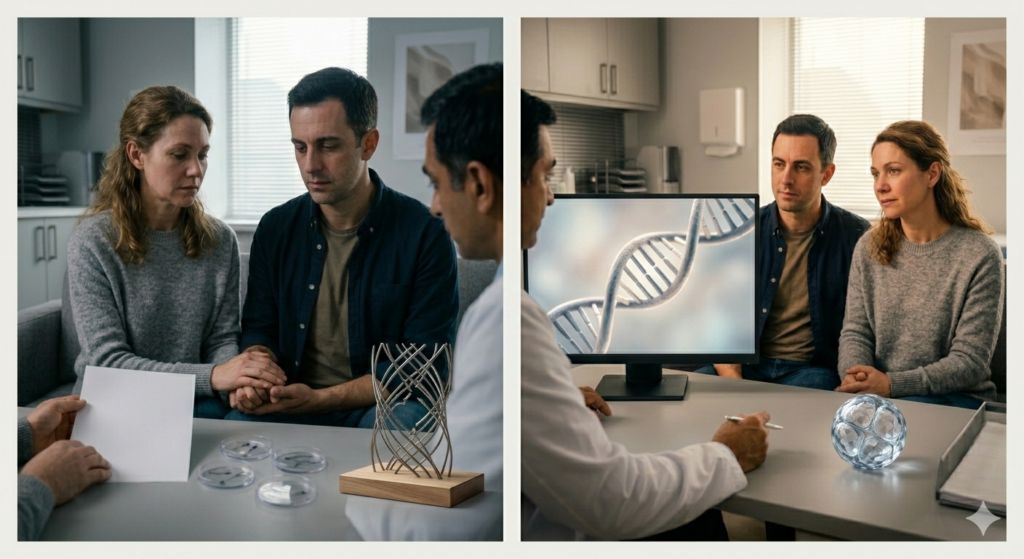
Patient: Dr. Malpani, I know this may sound strange, but I recently read something that left me disturbed. Some people suggest that couples who conceive through IVF should do a DNA fingerprint test after the baby is born. Is that even necessary? Isn’t that a bit extreme?
Dr. Malpani: That’s not strange at all. In fact, I think it’s a very sensible question, and I’m glad you brought it up. I know it might sound paranoid at first, but sadly, in today’s IVF world—especially in India—there are enough unethical practices going on that such a test may be the only way to confirm the truth.
Patient: But why would a couple need to check their own baby’s DNA? Isn’t it obvious that the clinic would have used their eggs and sperm?
Dr. Malpani: Ideally, yes. That’s what every couple assumes—and rightly so. IVF is meant to help you have your own biological child. But unfortunately, not all IVF clinics uphold that trust. There have been numerous reports of clinics using donor eggs, sperm, or even embryos without the patient’s full, informed consent.
Patient: Without consent? That sounds like a major violation!
Dr. Malpani: It is. And it’s more common than people realise. These clinics are often motivated by one thing: success rates. If the woman has poor ovarian reserve, or the man has a low sperm count, or if the couple has had failed IVF cycles in the past, some clinics quietly use donor gametes or embryos to increase the chances of pregnancy.
Patient: But isn’t that illegal?
Dr. Malpani: Absolutely. Using donor gametes without explicit informed consent is both unethical and illegal. But many clinics get away with it because they’re clever in how they cover their tracks.
Patient: How do they manage to fool the patient?
Dr. Malpani: It usually happens at the time of embryo transfer—the moment when patients are emotionally vulnerable and overwhelmed. The doctor may casually mention that the embryos “may not be top quality” or say something vague like, “We’ll do what’s best.” Then they hand over a long, complicated consent form filled with medical jargon. The couple, desperate for a baby and trusting their doctor, signs it without understanding the implications.
Patient: So the doctor hides behind the form and claims that the patient agreed?
Dr. Malpani: Exactly. It’s consent on paper—but not in spirit. That’s not truly informed consent. And sometimes, clinics don’t even bother with consent at all. They simply assume the patient will be happy if they get pregnant, and they won’t ask too many questions.
Patient: But what if the couple does want to know the truth later?
Dr. Malpani: That’s where a DNA fingerprint test comes in. It’s the only definitive way to confirm that the baby is genetically yours—both yours and your partner’s. It’s a simple test, available at many certified labs. You just need a cheek swab from both parents and the baby.
Patient: That sounds emotionally heavy… what happens if the results show the baby isn’t genetically related?
Dr. Malpani: That can be a devastating discovery. Imagine going through nine months of pregnancy—or even years of infertility treatment—only to find out that the baby you thought was biologically yours actually isn’t. Some couples feel betrayed, others feel deep regret, and many are too afraid or ashamed to talk about it publicly.
Patient: But wouldn’t most people just prefer not to know?
Dr. Malpani: Some would, yes. But the truth matters. And the reason I encourage couples to consider this test is not just for peace of mind—it’s also a way to hold unethical clinics accountable. If more patients start demanding transparency and verifying their treatment outcomes, clinics will be forced to follow ethical practices. It’s about protecting future parents from being exploited.
✅ 5 Reasons You Should Consider a DNA Test After IVF
1. To Ensure Your Child is Biologically Yours –
This is the most basic expectation of IVF. A DNA test gives you that confirmation.
2. To Safeguard Yourself from Medical Malpractice –
If you ever suspect something went wrong during treatment, having DNA evidence is your legal and ethical recourse.
3. To Encourage Transparency in the IVF Industry –
The more patients question, the more accountable clinics become.
4. To Protect Future IVF Parents –
Your actions can set a precedent for others who may be too scared or unaware to ask questions.
5. To Honour Your Right to the Truth –
You deserve to know the biological origin of your child. This is not about paranoia—it’s about informed parenting.
Patient: But isn’t this all very distrustful? Doesn’t it damage the doctor-patient relationship?
Dr. Malpani: I understand that concern. But trust must be earned—and verified. When clinics start behaving like profit-driven businesses instead of medical caregivers, it’s only fair that patients protect themselves. A DNA test is not an accusation—it’s a safeguard. Honest, ethical doctors will not be threatened by such a request. In fact, we welcome it, because it strengthens trust through transparency.
Patient: Thank you, Dr. Malpani. I hadn’t considered all this. You’ve given me a lot to think about.
Dr. Malpani: I’m glad. IVF is a deeply emotional journey, and patients should never be manipulated or misled during such a vulnerable time. My mission is to empower you with the knowledge you need to make informed decisions—because ultimately, the goal is not just to have a baby, but to do it with integrity and confidence.
If you are still confused on what to do ? You can get all the information regarding your IVF Treatments from Dr. Malpani directly at https://www.drmalpani.com/chat-w-chatbot/index.html