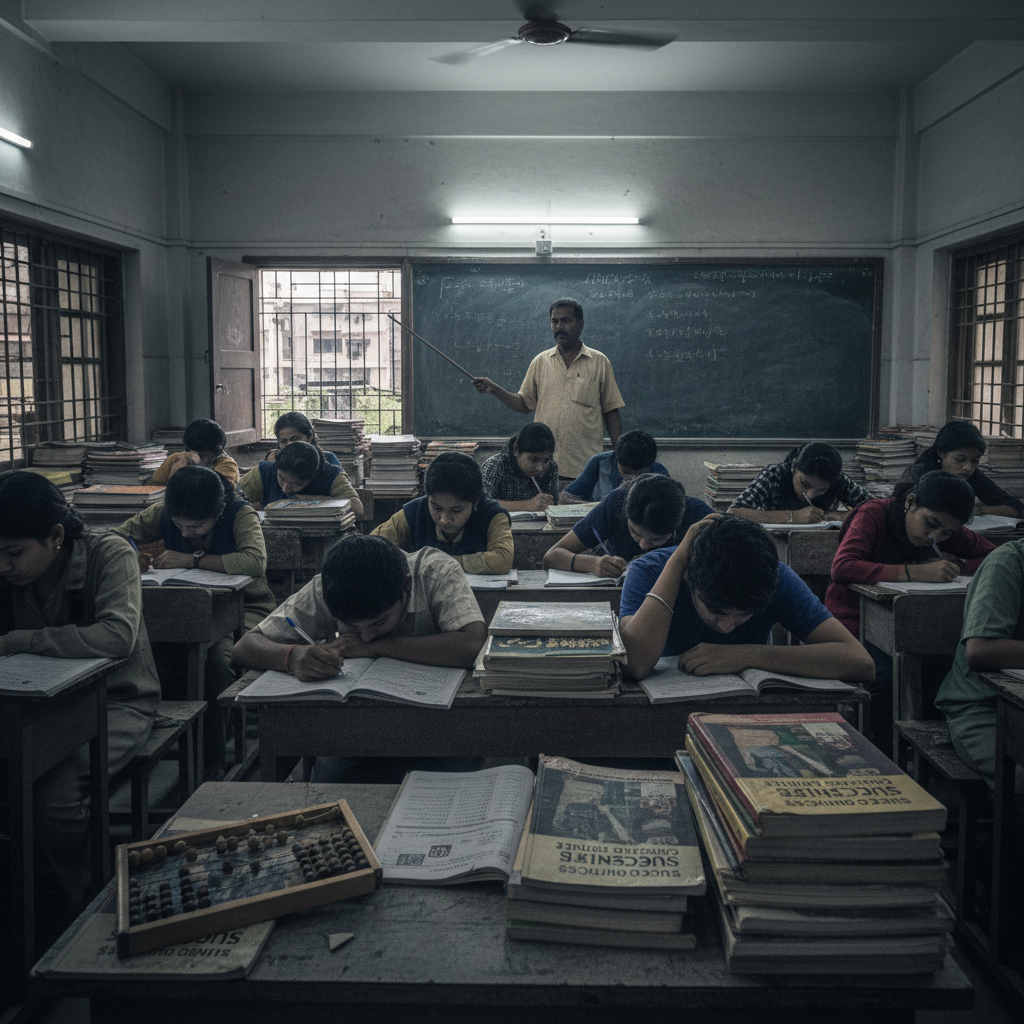
Education Dept Govt Official: Dr. Malpani, thank you for taking the time to meet. I’ve been hearing about your work with ApniPathshala and community microschools. The idea of teacher-less schools is certainly unconventional. Can you explain how this works and why you believe it’s the future of education?
Dr. Malpani: Thank you for the opportunity to share my vision. You’re right—what we’re proposing is unconventional but necessary. Traditional schooling is broken, especially in government schools. Problems like teacher absenteeism, overcrowded classrooms, and an over-reliance on rote learning are holding students back. Community microschools, designed without the need for traditional teachers, empower students to become autonomous, self-directed learners.
Official: But how can students learn without teachers? Isn’t a teacher the cornerstone of education?
Dr. Malpani: That’s what we’ve always believed, just like we once thought cars couldn’t function without drivers. But the rise of driverless cars has shown us that sometimes removing the human element can solve more problems than it creates. Similarly, teacher-less schools don’t mean students are left on their own. Instead, we use technology, peer learning, and facilitators to guide them.
Official: Driverless cars as a model for schools? That’s an intriguing analogy. Can you elaborate?
Dr. Malpani: Certainly. Think about it—drivers are often the cause of accidents, whether due to human error, fatigue, or distraction. Driverless cars, powered by AI, eliminate these risks and ensure safer commutes. Similarly, in traditional schools, the “nut behind the desk”—be it an overworked or undertrained teacher—can hinder a child’s learning. By shifting the focus to student-driven learning supported by technology, we create an environment where students take ownership of their education.
Official: But don’t students need guidance, especially younger ones?
Dr. Malpani: Absolutely. That’s where the GPS for self-directed learning comes in. At ApniPathshala, we provide students with a roadmap to help them navigate their learning journey. They set their own goals, and we support them with:
Custom-designed ApnaPCs tailored for educational purposes.
Cutting-edge EdTech tools, like personalized AI-powered chatbots.
A safe learning space where they can collaborate with peers.
This model allows students to learn at their own pace, explore their interests, and build critical thinking skills—all without being tied to a single teacher’s capabilities.
Official: How does the AI chatbot fit into this model?
Dr. Malpani: The AI chatbot is like a 24/7 personalized tutor. It interacts with students in their language, answers questions, and suggests resources tailored to their needs. For example, if a student is struggling with fractions, the chatbot can provide step-by-step explanations, videos, and even practice problems. It’s patient, kind, and never gets tired—a far cry from an overburdened teacher managing 50 students.
Official: What about social and emotional development? Don’t students need human interaction for that?
Dr. Malpani: Social-emotional learning is a cornerstone of our approach. Students learn from and with each other in a collaborative environment. Peer-to-peer learning is incredibly effective because kids communicate in ways that resonate with their peers. They use relatable examples, local languages, and a sense of camaraderie that fosters growth.
Official: What role do facilitators play in this setup?
Dr. Malpani: Facilitators are the guardians of the learning environment. They ensure the space is safe, provide logistical support, and step in only when absolutely necessary. They’re not “teachers” in the traditional sense; instead, they’re mentors and guides who empower students to discover solutions on their own.
Official: But what about foundational skills like reading and math?
Dr. Malpani: Foundational skills are built naturally through contextual learning. For instance, if a student is building a science project, they’ll need to read instructions, measure materials, and calculate outcomes. These activities make learning purposeful and memorable, unlike rote memorization.
Official: It all sounds promising, but is it scalable, especially in rural areas?
Dr. Malpani: Scalability is one of the biggest strengths of community microschools. We focus on leveraging existing resources—spaces in the community, affordable technology, and local partnerships. By decentralizing education, we make it adaptable to both urban and rural contexts.
Official: How do you address the skepticism from parents who are used to traditional schooling?
Dr. Malpani: We start by showing them the results. Parents who see their children thriving in a microschool environment become our biggest advocates. We also explain that this model isn’t about abandoning structure but redefining it to better suit their child’s needs.
Official: What about certifications and assessments? How do students demonstrate their learning?
Dr. Malpani: We align with frameworks like the National Institute of Open Schooling (NIOS) for certifications. Additionally, students create portfolios and projects that showcase their skills and achievements. These tangible outputs are far more meaningful than standardized test scores.
Official: Do you see this model replacing traditional schools entirely?
Dr. Malpani: Not entirely, at least not right away. The goal is to complement and enhance the existing system. Over time, as more communities adopt microschools and see their benefits, I believe they’ll become the preferred model of education.
Official: How can the government support this initiative?
Dr. Malpani: The government can help by recognizing microschools as legitimate educational institutions. They could run an A/B split test to compare the efficacy of microschools with traditional schools. Or they could allow ApniPathshala to adopt the Govt schools in a Taluka, so we could show how well this works in real life !
Official: Dr. Malpani, your vision is inspiring. How can we collaborate to bring this to more communities?
Dr. Malpani: Collaboration is key. Together, we can create a system where education is truly available, accessible, and affordable for every child in India. www.apnipathshala.org is an open-source model that is easy to scale up !
Official: Thank you, Dr. Malpani. I look forward to working with you to make this vision a reality.