Parent (Aarti): Dr. Malpani, you’ve been talking about the need to rethink our education system—and I completely agree. But I keep wondering: if the old model is broken, what does the future look like? What will the school of tomorrow be like?
Dr. Malpani: That’s a fantastic question, Aarti. And I’m so glad you’re asking it because imagining a better future is the first step toward creating it. The school of tomorrow won’t be a building—it’ll be a learning community. One where the child is at the center, not the syllabus. Where curiosity is the curriculum. And where learning happens everywhere, not just in a classroom.
Aarti: That sounds idealistic, but also a little vague. What will actually change?
Dr. Malpani: Let me paint you a picture. The school of tomorrow won’t be run by rigid timetables or one-size-fits-all textbooks. Instead, children will learn at their own pace, guided by AI-powered tutors such as https://eklavya.io who personalize learning for each child’s strengths, interests, and gaps. It will be more like a digital mentor that adapts to your child—like a good coach who knows when to push and when to step back.
Aarti: AI tutors? You mean like ChatGPT teaching my child?
Dr. Malpani: Not just that—but imagine combining a powerful AI with structured, well-designed learning journeys. Think of tools like Eklavya or Khan Academy or MIT Scratch, integrated on a PC your child can use to explore math, science, logic, art, and even storytelling—at their level, in their language, at their speed.
Aarti: But won’t kids lose the human connection? Aren’t teachers important?
Dr. Malpani: Teachers will still be essential—but not in the old “sage on the stage” model. In tomorrow’s schools, adults will be learning facilitators or coaches, not lecturers. They’ll guide, not dictate. In fact, even parents and retired professionals can play this role in their local communities—without needing an education degree.
Aarti: So you’re saying the school of tomorrow could happen in my home—or in my neighborhood?
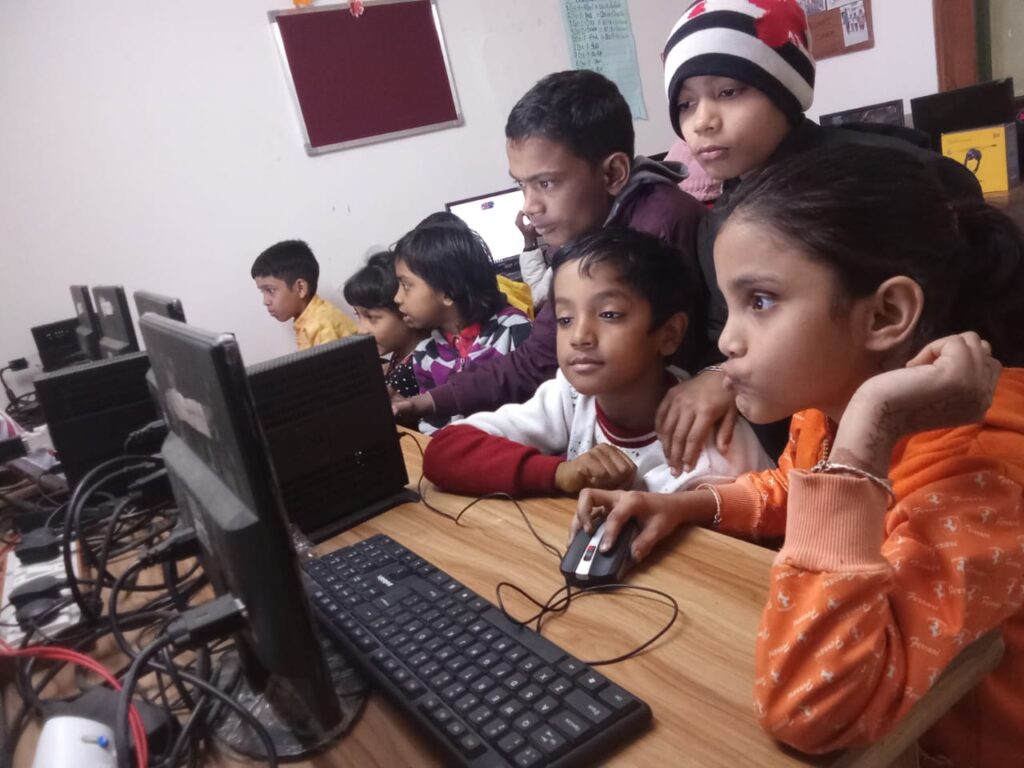
Dr. Malpani: Exactly! That’s the exciting part. With a ₹10,000 educational PC, you can start a digital learning pod in your own living room or a local community space. No more waiting for policymakers to fix things. You can take control today.
Aarti: But what about assessments? How will I know if my child is learning anything without exams?
Dr. Malpani: Good question. Exams in the traditional sense are outdated. They test memory, not mastery. Tomorrow’s schools will focus on real-world projects, online portfolios, peer reviews, and micro-credentials that show what a child can do, not just what they can memorize. Your child’s portfolio will speak for itself.
Aarti: I love the sound of this. But will society accept it? Will my child get into college if they haven’t followed the traditional path?
Dr. Malpani: Society always takes time to catch up—but it will. In fact, many colleges and companies are already shifting toward skills-based admissions and hiring. If your child can build an app, explain a concept clearly, or solve a real-world problem, they will stand out more than someone with just a marksheet. The world is hungry for thinkers, creators, and problem-solvers—not just test-takers.
Aarti: So in this school of tomorrow, kids learn what they want?
Dr. Malpani: Not just what they want—but what they need, in a way that makes them want to learn more. We give them agency. We let them explore, make mistakes, build things, reflect, and grow. Learning becomes joyful, not stressful. That’s how we build confident, lifelong learners.
Aarti: It still feels like a big leap. How do I start?
Dr. Malpani: You start small. Set up one PC. Invite a few kids. Let them explore. Watch how quickly they take off. Add structure gradually—create schedules, explore different subjects, bring in mentors. You don’t need a fancy building or a staff of teachers. You need courage, commitment, and a community.
Aarti: I’m inspired—but also a bit overwhelmed.
Dr. Malpani: That’s normal. But remember—our children only get one childhood. Do we really want to waste it forcing them to cram outdated textbooks, when they could be building websites, designing robots, or learning from the best minds on the internet?
Aarti: You’re right. I think we’ve been underestimating what our kids can do—because the system never gave them a chance.
Dr. Malpani: Exactly. The school of tomorrow trusts the child. It supports them with tools, mentors, and peers. And it respects their pace and path. The best part? You don’t have to wait for “tomorrow” to begin.
Take matters in your own hands by starting your own digital learning pod — your children will not get a second chance!
👉 https://www.teachtoearn.in/start-a-teach-to-earn-learning-pod/