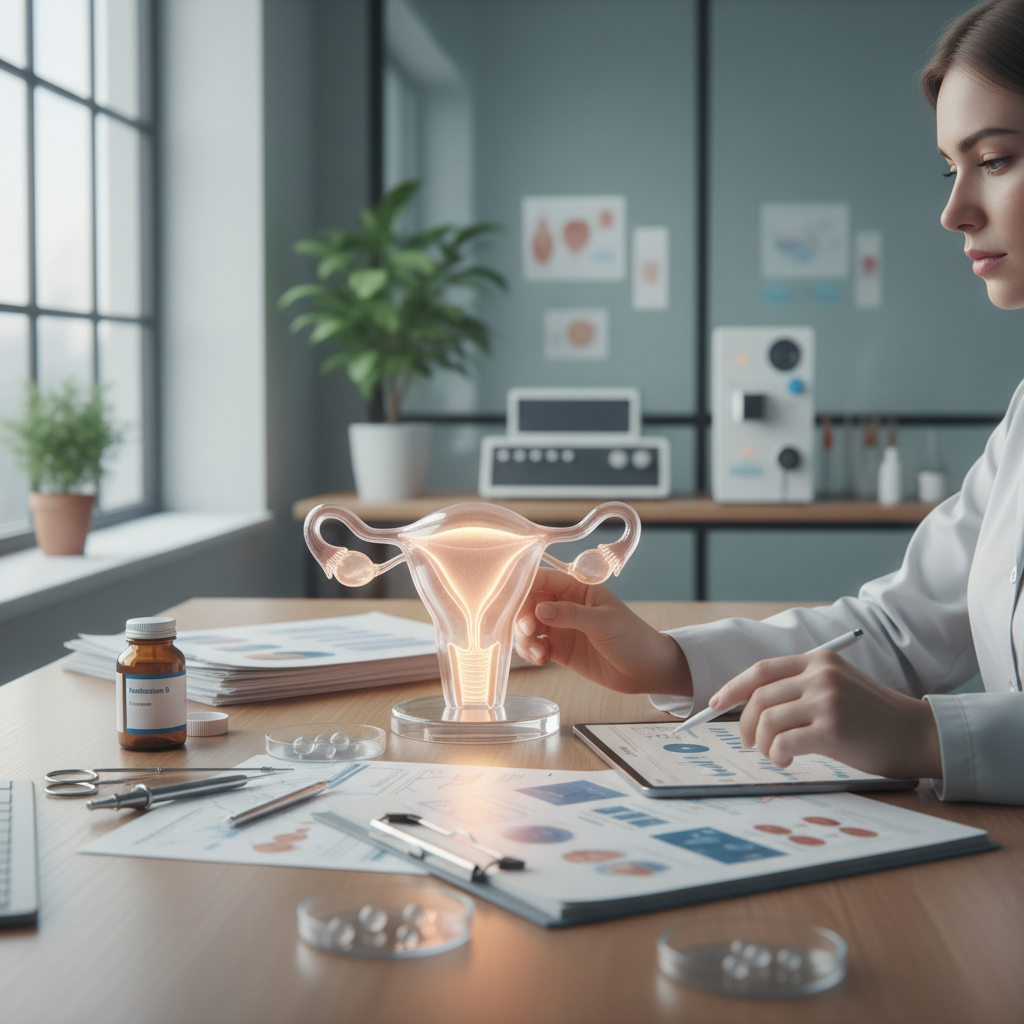
One of the most complex issues faced in the realm of In Vitro Fertilization (IVF) today concerns patients with a suboptimal uterine lining, often described as thin. For patients undergoing IVF, the health of the uterine lining is pivotal for embryo implantation . In most patients, the ultrasound scan shows the lining is thick ( 8 mm or more) and trilaminar, ensuring a receptive environment for embryo implantation. Since the lining regenerates every month, most patients have an optimal uterine lining, making this aspect rarely a hurdle in achieving IVF success. However, a specific patient group struggles with a persistently thin uterine lining, posing significant challenges.
Common Causes of a Thin Uterine Lining
Various factors can lead to a thin uterine lining. Previous uterine infections, such as uterine tuberculosis, have been identified. Increasingly, however, damage from procedures like Dilation and Curettage (D&C) performed after a missed abortion emerges as a prevalent cause. Such procedures can severely damage the endometrial lining, sometimes irreparably, preventing the affected women from achieving a sufficiently thick lining for pregnancy. This situation is particularly tragic when the problem stems from an unnecessary D&C, underscoring the advisability of medical over surgical abortions whenever possible.
The PRP/Stem Cell Controversy
In the quest to treat thin uterine lining, numerous treatments have been explored, though with limited success. A controversial approach gaining traction involves the infusion of Stem Cells or Platelet-Rich Plasma (PRP) into the uterine cavity. Theoretically, the idea holds merit since stem cells have the potential to regenerate new cells, a natural process in the monthly renewal of the endometrium in fertile women. Despite this theoretical potential, the practical outcomes of such treatments have been disappointing.
The desperation of both patients and doctors has led to the widespread adoption of these treatments, further propelled by the ease of creating PRP and the commercial availability of kits for clinic-based procedures. This trend is concerning not only because of the poor outcomes but also due to the ethical implications of charging patients for experimental and unproven treatments. In India, all stem cell treatments are considered experimental, emphasizing that ethical practitioners should not charge for such interventions. Patients interested in exploring these options should consider participating in clinical trials or experimental treatments without financial burdens.
Alternative Evaluations and Treatments
For patients grappling with a thin lining, undergoing a hysteroscopy is a recommended step. This procedure allows doctors to inspect the uterine cavity for adhesions and assess the extent of potential scarring that might impair blood supply to the endometrial layer. Unfortunately, when significant scarring is present, options become limited. Increasing estrogen doses or exploring experimental methods to enhance blood flow, like vaginal sildenafil, are potential avenues, though they often yield disappointing results. For some, surrogacy remains the only viable path to parenthood.
Conclusion
The journey for patients with a thin uterine lining is fraught with challenges and emotional turmoil. While innovative treatments like stem cell or PRP infusions offer a glimmer of hope, their efficacy and ethical application remain contentious. It’s crucial for patients to navigate these options carefully, armed with information and under the guidance of trustworthy medical professionals.
Need more Guidance !
Please get your doubts resolved free using our chatbot, powered by AI trained on Dr Malpani’s 40 years of clinical expertise and experience, at https://www.drmalpani.com/chat-w-chatbot/index.html.
This will ensure you’re on the right path — and could save you significant costs, confusion, and heartbreak in the long run.