Every IVF patient quickly learns one important fact:
The better the embryo quality, the higher the chance of pregnancy.
That’s why couples are delighted when they hear they have beautiful, top-quality blastocysts available for transfer.
On the other hand, when the embryologist reports that the embryos are fragmented or of poor quality, patients are devastated. Many immediately assume that their eggs or sperm are defective.
But is that always true?
Not necessarily.
The First Rule: Ask for Photographs of Your Embryos
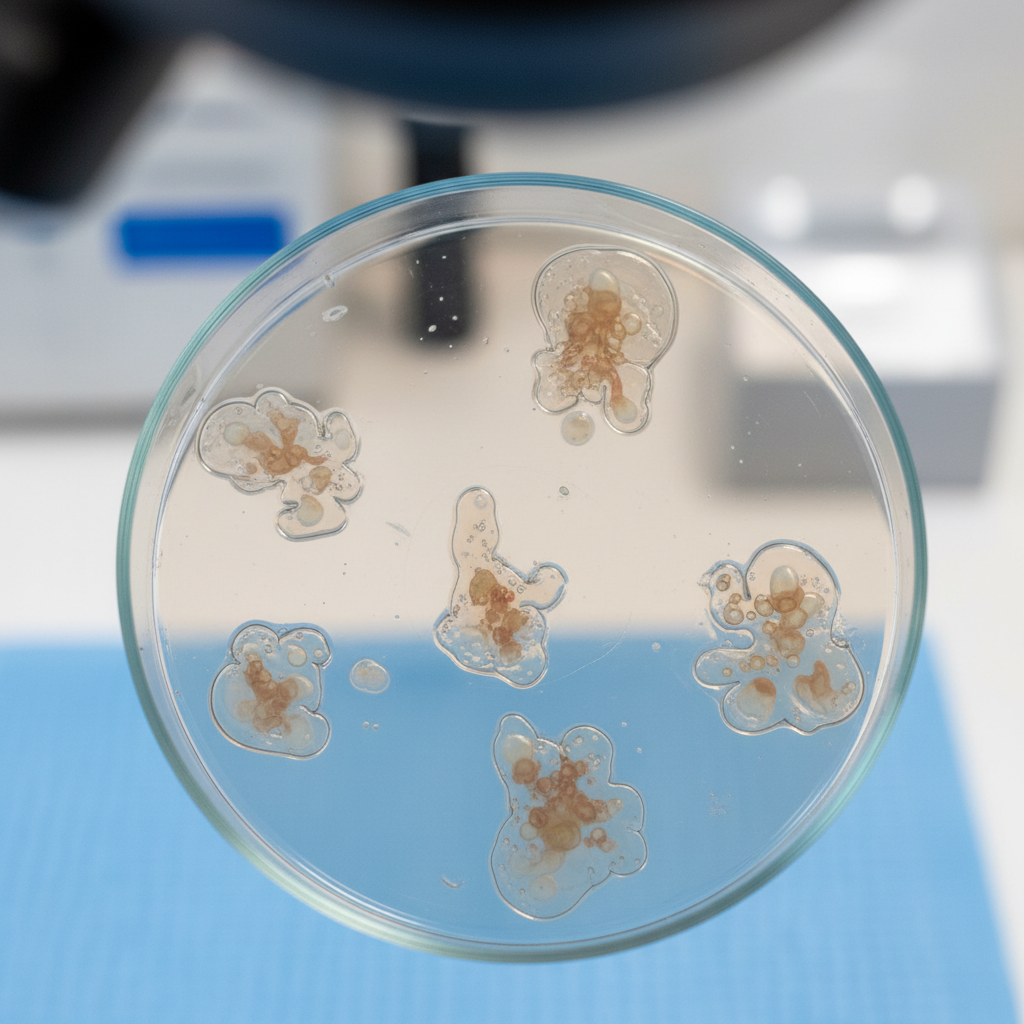
One of the most important pieces of information every IVF patient should receive is photographs of their embryos.
Sadly, many clinics simply provide a written report.
I believe every patient deserves to see their own embryos.
This isn’t because you shouldn’t trust your embryologist. It’s because good documentation promotes transparency.
You don’t need to become an embryologist to distinguish between an excellent blastocyst and a poor-quality one. Once you see the photographs, you can better understand your treatment and make informed decisions.
Information empowers patients.
Why Do Embryos Fragment?
Embryo fragmentation occurs when pieces of cellular material break away from the developing embryo, reducing its quality.
Poor-quality embryos have a lower chance of implanting and developing into healthy pregnancies.
The important question is:
Why did this happen?
Sometimes the Problem Is the Egg
As women get older, egg quality naturally declines.
This is especially true in women with diminished ovarian reserve or poor ovarian response.
Chromosomal abnormalities become more common, and embryos may stop developing or become fragmented.
In these cases, the problem lies within the eggs themselves.
Unfortunately, current medicine cannot completely reverse age-related decline in egg quality.
Sometimes the Problem Is the Laboratory
An embryo spends several days growing inside the IVF laboratory.
The culture environment must be almost perfect.
Temperature.
Air quality.
Culture media.
Incubator stability.
Embryologist expertise.
If any of these factors are suboptimal, embryo development can suffer.
Even healthy eggs and sperm can produce poor embryos in a poorly managed laboratory.
Patients often blame themselves when the laboratory may actually deserve closer scrutiny.
Sometimes the Problem Is Ovarian Stimulation
Embryo quality also depends on the quality of the eggs collected.
And that depends on how well the ovaries were stimulated.
In young women with good ovarian reserve, poor-quality embryos may reflect inadequate ovarian stimulation rather than poor egg quality.
This is particularly relevant in women with polycystic ovaries.
Many doctors are understandably concerned about ovarian hyperstimulation syndrome and therefore stimulate these patients very cautiously.
While safety is important, overly conservative stimulation may result in fewer mature eggs and poorer embryo quality.
Finding the right balance requires experience and clinical judgment.
Don’t Rush to Blame Your Biology
One failed IVF cycle with poor-quality embryos does not automatically mean your eggs are permanently defective.
Nor does it necessarily mean your sperm are abnormal.
The quality of embryos reflects a combination of:
- Egg quality
- Sperm quality
- Ovarian stimulation protocol
- Laboratory conditions
- Embryologist expertise
If any one of these factors is compromised, embryo quality can suffer.
Should You Change Your Eggs—or Your Clinic?
Some clinics are quick to recommend donor eggs after a failed cycle with poor-quality embryos.
Sometimes this advice is appropriate.
Sometimes it is premature.
Before giving up on your own eggs, ask yourself an important question:
Could the problem lie with the stimulation protocol or the laboratory rather than with my biology?
If a young woman with good ovarian reserve consistently produces poor-quality embryos, seeking a second opinion from another IVF clinic with an excellent laboratory may be wiser than immediately moving to egg donation.
Changing clinics may achieve a better outcome than changing eggs.
The Bottom Line
Poor-quality embryos are disappointing, but they should never be viewed in isolation.
Embryo quality reflects not only the biology of the patient but also the quality of the medical care and laboratory environment.
Smart patients don’t just ask how many eggs were collected.
They ask to see photographs of their embryos.
They ask about blastocyst development rates.
They ask about laboratory quality.
Because IVF success depends not only on the patient—but also on the people caring for those precious embryos.
Remember, the best IVF clinics are transparent.
They have nothing to hide and everything to share.
And a picture of your embryo is worth far more than a paragraph in an embryology report.
Please get your doubts resolved free using our chatbot which is powered by AI based on Dr Malpani’s 40 years of clinical expertise and experience at https://www.drmalpani.com/chat-w-chatbot/index.html. This will ensure you’re on the right path and potentially save significant costs in the long run.