1. What do you mean by “pedagogy for parents”?
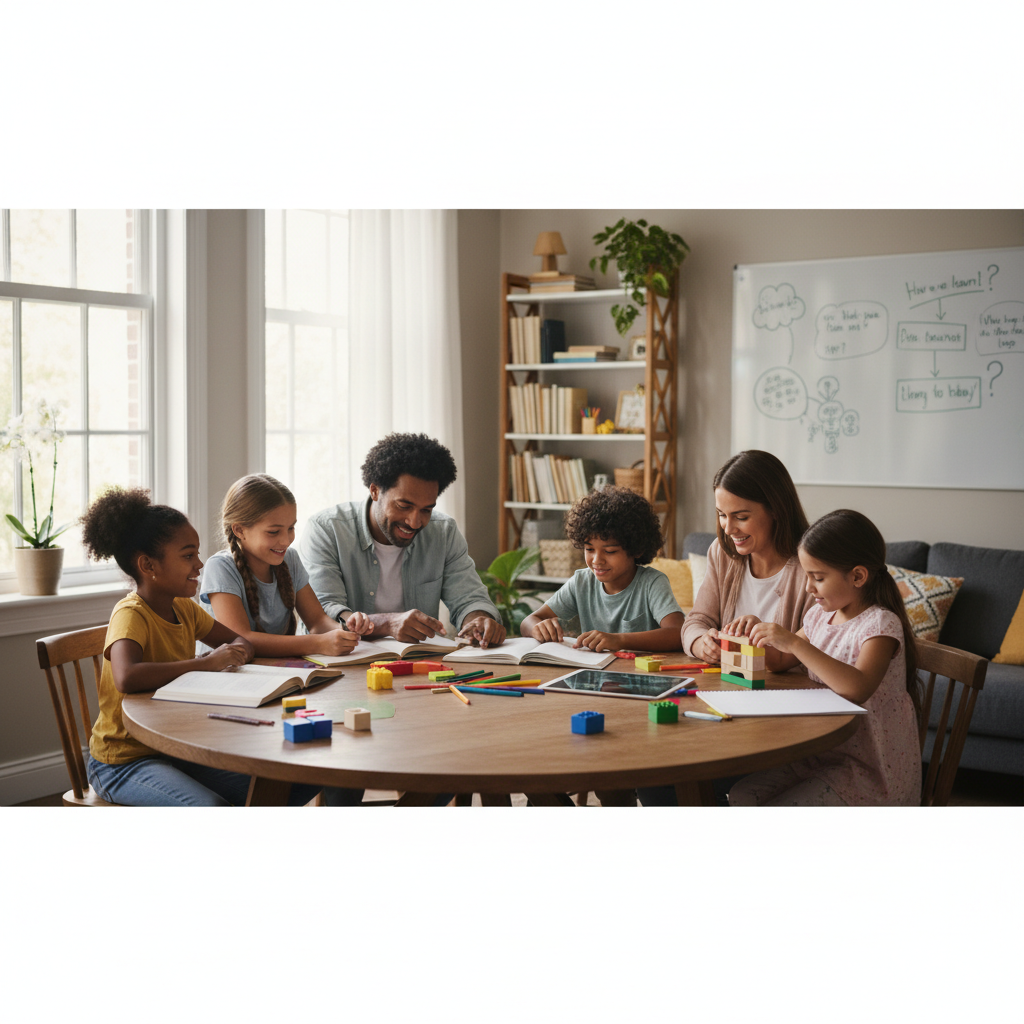
Most people think pedagogy is only for teachers. At Apni Pathshala, we believe the real educators are parents — the ones shaping how children view learning every single day. “Pedagogy for parents” means re-learning how to let our children learn. It’s about shifting from control to collaboration, from instruction to inspiration. Parents don’t need to teach every lesson — they need to create the conditions where curiosity thrives.
2. Why do you say traditional schooling limits a child’s potential?
Because it’s built on obedience, not ownership. Schools train children to wait for instructions, memorize information, and compete for marks. None of that prepares them for real life. A system obsessed with tests rewards conformity and punishes curiosity. Children stop asking “Why?” because they’re afraid of being wrong. At Apni Pathshala, we turn that upside down. Here, being curious is the curriculum.
3. Isn’t freedom without structure chaos?
Not if the freedom is purposeful. We don’t throw kids into an empty room and say, “Learn whatever you want.” We design a safe learning space — equipped with resources, mentors, and community — where exploration is guided, not dictated. Structure exists, but it’s flexible. Think of it like scaffolding: strong enough to support the learner, but temporary so that eventually, they stand on their own.
4. How can parents trust that children will actually learn on their own?
Because curiosity is wired into human nature. You didn’t need a teacher to learn how to walk, talk, or use a smartphone. Given the right tools and trust, children learn astonishingly fast. The challenge is unlearning our adult fear that “if I don’t control it, it won’t happen.” In reality, when children own their learning, they retain more, understand deeper, and apply better.
5. What role do parents play in this model?
Parents are not supervisors — they are co-learners. Your job isn’t to grade or scold, but to observe, question, and cheer. Replace “Did you finish your homework?” with “What did you discover today?” Instead of correcting mistakes, help them reflect on what they could try differently. The best learning happens not when a child gets answers right, but when they wrestle with a problem until it makes sense.
6. What if my child doesn’t show interest in studying?
Then the problem isn’t the child — it’s the system that made learning boring. Nobody is born lazy; we just lose motivation when learning feels meaningless. Ask yourself: What sparks my child’s curiosity? Maybe it’s art, coding, football, or gardening. Use that as the entry point. Once a child experiences the joy of mastering something they care about, the hunger to learn spreads naturally to other areas.
7. Does this mean teachers aren’t important anymore?
On the contrary, teachers are more important than ever — just in a new role. We call them “learning facilitators.” Their job isn’t to lecture but to light sparks. They curate resources, guide discussions, and help each student design a personal learning path. In our pods, one facilitator can handle multi-age groups because learning is peer-driven, not teacher-centered.
8. How do you measure progress without exams?
By observing growth, not grades. We use portfolios, reflections, and real-world projects to track a child’s learning journey. The question isn’t “What marks did you get?” but “What skills did you develop?” and “What problems did you solve?” When students document their work — through videos, blogs, or digital portfolios — they learn to articulate their thinking, which is the true measure of understanding.
9. Won’t this approach make it hard for my child to compete in the real world?
Actually, it does the opposite. The real world doesn’t reward rote learning — it rewards creativity, adaptability, and communication. Employers don’t ask for your board marks; they want to see your ability to think, collaborate, and solve new problems. Self-directed learners are naturally better at this. They don’t crumble when faced with something unfamiliar — they figure it out.
10. How can parents begin this journey at home?
Start small.
Give your child time every day to explore something without supervision.
Encourage questions — and resist the urge to answer them immediately.
Replace rewards and punishments with reflection and conversation.
Model lifelong learning yourself: read, experiment, make mistakes openly.
Most importantly, shift your mindset from teaching to trusting. When you treat your child as a capable learner, they start believing it too.
11. How is Apni Pathshala different from online courses or coaching classes?
We’re not another digital substitute for school. We are a movement to rebuild learning from the ground up — one community, one pod, one child at a time. Each Apni Pathshala Pod is a safe space where students learn through projects, peer discussions, and self-paced exploration using technology like the Apna PC and AI tutors. Our goal isn’t to prepare kids for exams — it’s to prepare them for life.
12. What’s the biggest shift parents need to make?
Stop trying to make your child “the best student.” Help them become the best version of themselves. Success is not topping the class — it’s knowing how to keep learning long after school ends. Once you internalize this, your home becomes the most powerful classroom in the world.
13. How can I get involved with Apni Pathshala?
You can start your own community learning pod, volunteer as a mentor, or simply explore resources to begin your family’s self-learning journey. Visit www.apnipathshala.org to see how families across India are reclaiming education from the system — and giving it back to children where it belongs.
Final Thought
Children don’t need more instructions — they need inspiration, trust, and freedom. Education reform won’t begin in government offices; it will begin in living rooms. Parents are the first reformers. When you choose to give your child agency, you are not just changing their future — you are changing India’s.