1. T = Technology
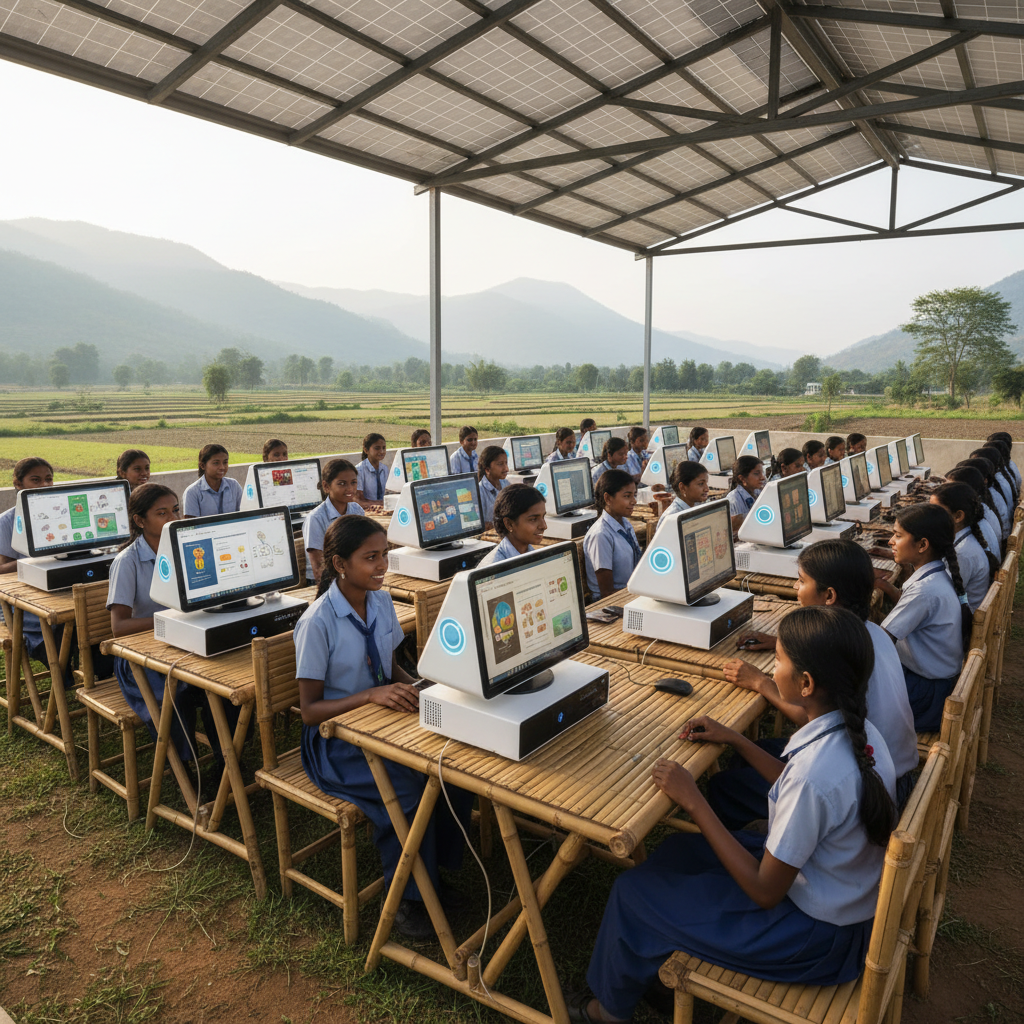
Goal: Make the Education PC (ApnaPC ) the simplest, safest, and smartest device for learning.
Frugal innovation: In-built curated learning tools, student safety software, programs to monitor each student’s learning journey and AI tutors to provide personalised learning. This cloud-based software will be updated as needed.
Local customization: Preload regional languages and state curriculum content. Broadcast messages can also be sent as needed ( for example, to announce exam dates)
Device lifecycle design: Modular components that can be repaired, refurbished, and reused easily.
Smart connect: Cloud based dashboard for tracking learning progress which also populates each student’s personal website
Secure Exams: It will be possible to use these PCs to administer online exams as well, thus reducing the chances of cheating and manipulation in competitive exams
👉 Outcome: Each PC becomes a “learning nerve center” instead of just a gadget.
2. R = Resources
Goal: Pool funds and logistics across public, private, and community channels.
Corporate CSR & HR: Pitch Education PCs as the best employee-benefit or CSR gesture (e.g., “Gift an Apna PC to every worker’s child”).
Philanthropy: Build a donor dashboard showing which students/pods are still unfunded (“adopt a pod”).
Microfinance model: Offer ₹999/month subscription with Aadhaar-based verification and device buyback.
Public partnerships: Tie up with panchayats, anganwadis, and self-help groups for distribution and community pods. Shared access to PCs in a safe learning space makes this affordable, and also helps students learn social skills.
👉 Outcome: Every rupee works twice — once for access, once for empowerment.
3. I = Incentives
Goal: Create pull factors for everyone involved — students, parents, teachers, and funders.
For students: Free AI tutoring, project-based learning badges, and digital portfolios.
For parents: “World-class education comes home to your child”
For teachers/tutors: Earn income by running Teach-to-Earn Pods using these PCs.
For donors/corporates: Real-time visibility of learning outcomes and social impact dashboards.
For Govt: Real-time visibility of each student’s learning needs across the country, in as much granular detail as needed.
👉 Outcome: Altruism meets aspiration — doing good also looks and feels good.
4. S = Systems
Goal: Create a self-sustaining delivery and feedback system.
Community pods: Each pod doubles up as a repair, training, and mentorship hub.
Public-private mesh: State education boards, NGOs, and startups share interoperable APIs (device IDs, student data, learning analytics).
Measurement: Every PC logs anonymized learning time, usage, and outcomes for transparency.
Policy anchor: Advocate for a “Right to Digital Learning” amendment or inclusion in the Samagra Shiksha scheme.
👉 Outcome: Scale without chaos — a governance backbone, not just gadgets.
💡 Putting It All Together
Use TRIS to build a national movement, not a one-off donation drive:
Prototype: 10,000 PCs in 100 ApniPathshala pods.
Partner: With CSR heads, ministries, and local NGOs.
Platform: The online portal becomes the transparent national dashboard.
Policy: Push for state adoption under “Digital Inclusion for Learning” missions.